





















By Aaron Ukodie
There are many reasons why the GSM revolution, which marks 25 years in Nigeria in August 2026, deserves to be celebrated.
For me, this is not merely a celebration of mobile phones or telecommunications technology. It is a celebration of one of the most remarkable public-policy and economic success stories in Nigeria’s recent history.
First, the GSM revolution is one of the few major sectors initiated and overseen by a public agency that has delivered such remarkable and sustained success. From the outset, the Nigerian Communications Commission (NCC) established a regulatory framework that created room for competition, private-sector investment and innovation. Its approach to policy formulation, licensing and market regulation helped build confidence in a sector that was once regarded as difficult and risky.
Second, telecommunications has made an enormous contribution to national wealth. The sector has become a major contributor to Nigeria’s Gross Domestic Product (GDP), attracted billions of dollars in investment, created thousands of direct and millions of indirect jobs, and generated significant tax and regulatory revenues for government.
Third, GSM democratised access to communication. Before 2001, owning a telephone was a privilege reserved for a relatively small section of Nigerians. The arrival of GSM transformed telecommunications from a scarce, largely government-controlled service into a mass-market utility available to ordinary Nigerians.
Fourth, it connected Nigeria to itself and to the world. GSM broke down geographical barriers, making it possible for families, businesses, government institutions, professionals and communities to communicate almost instantly across the country and beyond.
Fifth, GSM became the foundation of Nigeria’s digital economy. The mobile networks built over the past 25 years provided the infrastructure upon which mobile banking, fintech, e-commerce, social media, digital journalism, ride-hailing, online education, remote work and a host of other digital services have flourished.
Sixth, it created an ecosystem far beyond the network operators. The revolution opened opportunities for handset distributors, dealers, retailers, tower companies, fibre operators, software developers, content providers, call-centre businesses, engineers, journalists and thousands of small and medium-sized enterprises.
Seventh, it demonstrated the power of competition. The licensing of multiple operators created a competitive environment that drove down tariffs, expanded coverage, improved services and encouraged continuous investment in technology.
Eighth, it changed the way Nigerians do business. A small trader, farmer, journalist, doctor, student or entrepreneur can now reach customers, suppliers, colleagues and information almost instantly. The mobile phone has become not just a communication device, but an essential economic tool.
Ninth, it has empowered a new generation. Millions of young Nigerians have grown up in a connected environment, using mobile technology to learn, create businesses, build careers, produce content and participate in the global economy.
Tenth, the GSM story is one of Nigerian resilience and innovation. What began in 2001 as a bold experiment in telecommunications liberalisation has evolved into one of the country’s most important infrastructure and economic success stories.
And there is another important reason to celebrate.
Reminders are important for sustainability. Societies and institutions need to periodically look back at what worked, understand why it worked and preserve those lessons for the future. Celebrating successful models is not simply about remembering the past; it is about ensuring that good policies, sound institutions and workable models can be studied, replicated and improved upon.
This is why the eWorld Forum is inviting the entire industry ecosystem to join hands in celebrating 25 years of the GSM revolution in Nigeria.
The celebration is, therefore, more than an anniversary. It is an opportunity to bring together regulators, policymakers, operators, investors, technology companies, infrastructure providers, entrepreneurs, professionals, journalists and millions of Nigerians who have been part of this extraordinary journey.
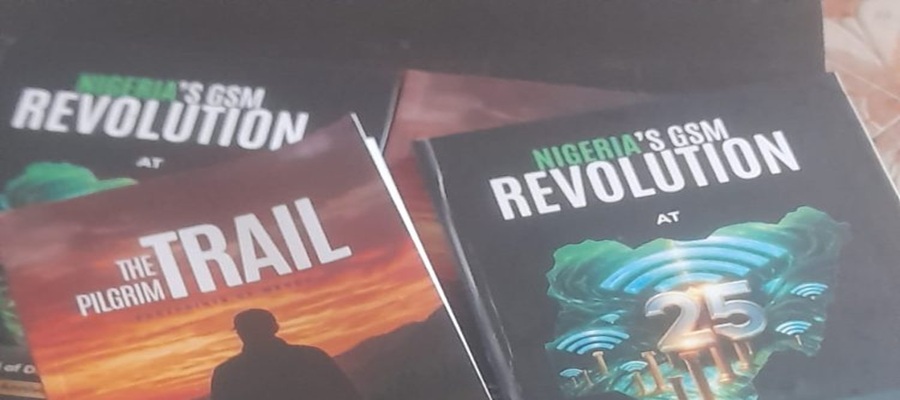
It is in this spirit that the book, Nigeria’s GSM Revolution at 25: The Hall of Digital Pioneers, Players, takes on special significance.
The book is more than a publication. It is a fitting commemorative memorabilia of a defining chapter in Nigeria’s technological and economic history. It captures the people, institutions, pioneers, players and stories behind a revolution that transformed the country.
It provides a record that can be preserved, consulted and passed on to future generations as a reminder of how far Nigeria has come.
In many ways, the book gives the 25th anniversary a lasting physical memory. While the celebration brings the industry together for reflection and recognition, the book preserves the people and stories that shaped the journey.
Twenty-five years of GSM deserves more than nostalgia. It deserves reflection, recognition and celebration.
We should celebrate the policymakers who took difficult and courageous decisions; the NCC and its successive leadership for providing the regulatory framework; the operators and investors who committed enormous capital; the engineers and technicians who built and maintained the networks; the entrepreneurs who created businesses around them; and, most importantly, the millions of Nigerians who turned mobile connectivity into an engine of social and economic transformation.
Twenty-five years after the first GSM calls, the real achievement is not simply that Nigerians can make phone calls.
It is that telecommunications has fundamentally changed how Nigeria lives, works, trades, learns, communicates and connects with the world.
That is a revolution worth celebrating.
And Nigeria’s GSM Revolution at 25: The Hall of Digital Pioneers, Players is a fitting memorabilia of that remarkable journey.
Ukodie is a pioneer technology reporter and author.