
















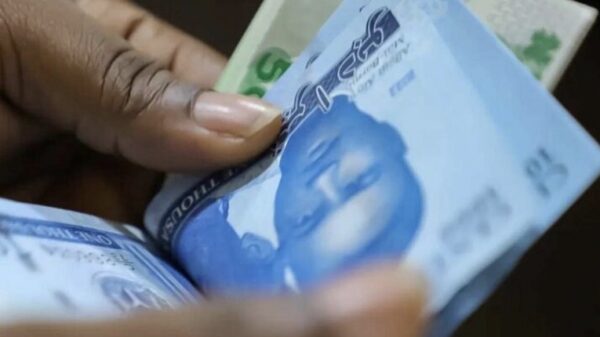


A Federal High Court in Abuja has affirmed the Central Bank of Nigeria’s (CBN) exclusive ownership of the “eNaira” digital currency platform and trademark.
eNaira
Justice James Omotosho, in a judgment delivered on Friday, restrained eNaira Payment Solutions Limited from presenting itself as the owner of the “eNaira” trademark.
The court also ordered the company to immediately adopt a new name that does not contain the word “Naira”.
The suit, marked FHC/ABJ/CS/113/2021, was dismissed, while the court awarded N10 million costs in favour of the CBN following its successful counterclaim.
Justice Omotosho held that although the company had been registered with the Corporate Affairs Commission (CAC) since 2004, its name was misleading because of its close association with Nigeria’s sovereign currency.
“The name chosen by the plaintiff on its incorporation is in the circumstances unregistrable due to the misleading nature of the name, which suggests government patronage,” the judge ruled.
The court further noted that the Trademark Registry had, through a letter dated Nov. 15, 2021, withdrawn approvals earlier granted to the company for applications related to the “eNaira” trademark under classes 36 and 42.
According to the judgment, the company was informed that “eNaira is a national intellectual property and constitutes a symbol and national asset of Nigeria.”
Justice Omotosho ruled that the plaintiff had no superior legal claim to the trademark and therefore could not seek injunctive relief against the CBN.
“A party that has no legal right cannot be entitled to an injunction. The purport of this is that, prima facie, the plaintiff has no valid trademark to the exclusive use of the eNaira trademark,” he held.
The judge also emphasised that under Section 852(2) of the Companies and Allied Matters Act, the CAC has powers to reject or direct changes to company names that suggest government affiliation.
“The ‘eNaira’ name is so closely linked to the legal tender of Nigeria, which is exclusively controlled by the CBN.
“An average person on the street is most likely to think that the plaintiff is an agent of the Federal Government or the CBN,” the court stated.
Justice Omotosho added that the company’s proposed activities involving digital currency operations created the impression that it had official authority to issue or manage a digital version of the naira.
“The proposed business of the plaintiff… no doubt creates the impression that the plaintiff has the authority of the Federal Government of Nigeria to issue and control a digital form of the Naira,” he said.
The judge warned that allowing a private entity to control the “eNaira” name could undermine public confidence and create confusion within the country’s financial system.
“Any digital currency with the name ‘eNaira’ will no doubt create the impression that it is an official digital form of the Naira.
“This would be disastrous for the Nigerian economy and will create skepticism among users, as it is not guaranteed by the Central Bank of Nigeria,” he added.
The court also observed that the CAC had lawfully directed the company to change its name within six weeks of its Dec. 9, 2021 directive, but the company failed to comply.
During proceedings, counsel to the plaintiff, Mr David Ityonyman, argued that the word “Naira” was not exclusive to Nigeria and should not be monopolised.
“Nothing stops India from having a Naira. Also, countries like the U.S. and Canada make use of dollars. None of them has laid claim to the name,” he submitted.
He further argued that the company had used the “Naira” branding internationally for more than two decades before the CBN launched the eNaira platform in 2021.