
























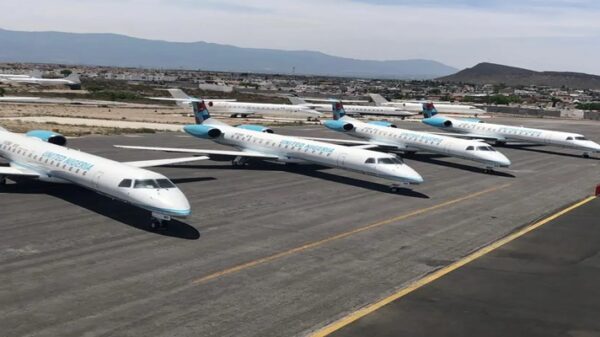



The Nigerian Safety Investigation Bureau has disclosed that crucial data from the flight recorder of a Bombardier Challenger 601 private jet operated by VMO Aero was overwritten before investigators took custody of the aircraft following its emergency landing on a highway in Delta State.
The NSIB Director-General, Alex Badeh, made the disclosure on Friday during a virtual media briefing with journalists.
The incident occurred on July 10 when the private jet reportedly missed the runway at Asaba Airport and landed on a concrete road in Ogwashi-Uku, Delta State.
Badeh said the aircraft was flown back to Lagos before investigators could reach the scene, resulting in the loss of critical data that could have assisted the investigation into the incident.
According to him, the pilot returned the aircraft to Lagos without clearance from Air Traffic Control. The flight back caused the recorder’s circular memory system to overwrite data relating to the Asaba incident.
Badeh explained that although the recorder was designed to retain up to 26 hours of data, only about two hours of low-quality information remained available.
He said investigators were nevertheless exploring other sources of evidence to reconstruct the events surrounding the aircraft’s landing.
The NSIB boss also disclosed that another flight tracking recorder did not function properly, although he cautioned against concluding that the operators deliberately destroyed evidence.
He said investigators were still examining the circumstances and would make their findings known in the final report.
Badeh noted that the NCAA had issued reminders to operators on preserving flight data, while the NSIB had also held workshops with aviation operators on the importance of preserving evidence after incidents.
He further raised concerns over what he described as a lack of trust between some flight crews and safety investigators.
According to him, some crew members are reluctant to provide accurate information because they fear losing their jobs if they admit to making mistakes.
“The crew don’t trust NSIB; they are scared of losing their jobs,” Badeh said, stressing that the bureau’s investigations were intended to improve safety rather than punish individuals for reporting mistakes.
NSIB Raises Funding Concerns
Beyond the Asaba incident, Badeh expressed concern over a proposal to reduce the NSIB’s allocation from the five per cent Ticket Sales Charge.
The Nigerian Airspace Management Agency had proposed at a House of Representatives public hearing that the NSIB’s share be reduced from six per cent to four per cent to increase NAMA’s allocation.
Badeh said the proposed reduction would further strain the safety investigation agency, which he noted already receives the lowest allocation among the relevant aviation agencies.
He warned that the cut would be difficult to sustain given the bureau’s expanded responsibilities.
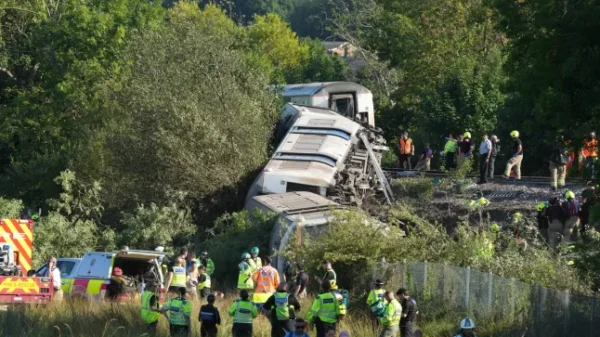
The NSIB now conducts multimodal safety investigations covering aviation, maritime, rail and road transportation.
Badeh also said the agency was nearing the completion of its transition from the Ministry of Aviation and Aerospace Development to the Presidency.
He explained that the administrative process was substantially completed, with proposed legislative amendments awaiting review by the Attorney-General of the Federation before proceeding to the Federal Executive Council and the National Assembly.