























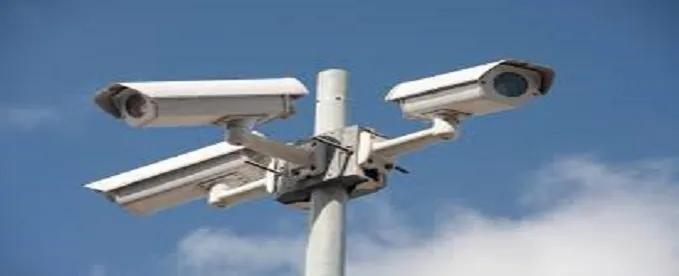
Nigeria is effectively repaying an estimated $36.4 million annually for an Abuja CCTV project that was never fully delivered, with repayments on the Chinese loan expected to run until 2030, according to Foundation for Investigative Journalism (FIJ).
The project, officially known as the National Public Security Communication System (NPSCS), was introduced under former president Goodluck Jonathan in 2010 as a major security infrastructure programme for Abuja amid rising bomb attacks and insecurity in the Federal Capital Territory.
The federal government signed a contract valued at about $470 million with ZTE Corporation for the project before securing a $399.5 million loan from China Eximbank to finance most of it.
According to data from AidData, a research lab at the College of William & Mary in the United States that tracks Chinese development finance globally, the loan carries a 20-year maturity period, a seven-year grace period, and a fixed interest rate of 2.5 per cent.
Based on those terms, repayment is expected to continue until approximately 2030.Corporate Communication Training
FIJ cross-referenced these details with the DMO’s documentation of the loan.
In 2021, the DMO published ‘LOANS OBTAINED FROM CHINA EXIM AS AT SEPTEMBER 30, 2021 AMOUNTS IN MILLIONS’, where it stated that the FG had paid back $122 million and an interest of $96 million.
FIJ estimated the yearly repayment using a standard loan repayment formula often used for long-term loans like sovereign debt and mortgages.
The method assumes the loan is repaid in equal yearly instalments over a fixed period. Each payment covers part of the original loan and the interest charged on the remaining balance.
As the debt reduces over time, the interest charged also drops, although the total yearly payment stays the same.
Using this model, FIJ treated the $399.5 million loan as repayable over 13 years at an annual interest rate of 2.5 per cent.
This was after factoring in a seven-year grace period within the loan’s 20-year lifespan.
Based on these assumptions, the estimated yearly repayment came to about $36.4 million.
This estimate is only a simplified projection. In reality, sovereign loans are often repaid under more flexible arrangements.
Sometimes, there could be semi-annual payments, interest added during grace periods, or repayment plans where larger payments come later.
FIJ understands that the debt has also become more expensive in naira terms because the loan is denominated in US dollars.
When the loan agreement was signed in 2010, the naira exchanged at roughly N150 to $1 in the official market, according to the Central Bank of Nigeria. At that rate, the $399.5 million facility was equivalent to around N59.9 billion.
On Monday, however, the dollar traded above N1,370 at the official market.
Using an exchange rate of N1,371/$, the same $399.5 million obligation is now equivalent to about N547.8 billion.
In effect, the naira value of the debt has increased by roughly N487.9 billion since the loan was signed.
This means the debt burden has grown by more than nine times in naira terms in the past 16 years due largely to the depreciation of the naira against the dollar.
Nigeria is effectively repaying about $36.4 million yearly for the Abuja CCTV project under the loan’s repayment structure.
At the current official exchange rate of roughly N1,371 to the dollar, that yearly repayment translates to about N49.9 billion annually.
When the loan was signed in 2010, however, the naira traded at around N150/$, meaning the same yearly repayment would have cost about N5.5 billion at the time.
The CCTV project has remained controversial since the start of the implementation.
The federal government originally presented the project as a modern surveillance and emergency-response system designed to improve security monitoring across Abuja.
The infrastructure was expected to include city-wide CCTV surveillance, emergency communication systems, command-and-control centres and integrated police communication facilities.
But in 2016, members of the House of Representatives Committee on Police Affairs visited the control centre and found that many installed cameras were either inactive or non-functional.
In 2019, the matter resurfaced when lawmakers asked why Nigeria was still repaying the Chinese loan despite concerns about the operational status of the surveillance infrastructure.
During legislative discussions at the time, Zainab Ahmed, then minister of Finance, stated that the government was still servicing the loan but did not have full information regarding the project’s implementation status. Lawmakers brought the issue back to the fore in April due to insecurity in the Federal Capital Territory.
The issue became the subject of litigation after the Socio-Economic Rights and Accountability Project (SERAP)sued the Federal Government under the Freedom of Information Act, seeking details of the spending and implementation process.
In 2023, Justice Emeka Nwite of the Federal High Court in Abuja ordered the government to disclose information relating to the project, including how the loan was spent and the identities of contractors involved.
On Sunday, the Federal Ministry of Finance had told SERAP, which had urged Taiwo Oyedele to publish details surrounding the project, that, “Records from the Ministry of Police Affairs indicate that while local subcontractors may have been engaged, there is an absence of detailed subcontracting records identifying specific local companies that received funds directly from the Chinese loan.”