














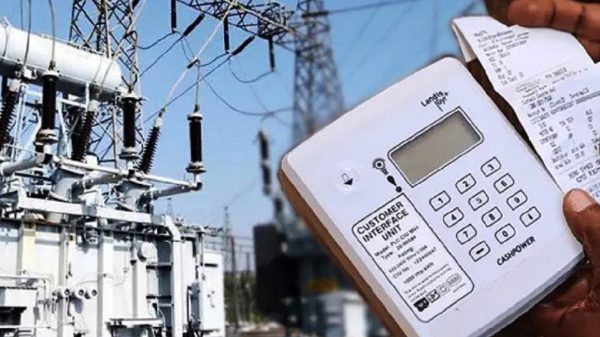





Federal Government has cancelled $717.7 million in undisbursed World Bank intervention financing designed to revive Nigeria’s struggling electricity sector.
The cancellation followed a formal request by the Federal Government and a joint decision by both parties to discontinue financing under the Power Sector Recovery Performance-Based Operation due to evolving sector realities and the inability to achieve key reform milestones.
The development followed an earlier warning by the Accountant-General of the Federation, Dr. Shamseldeen Ogunjimi, that Nigeria may reject loan facilities from the Bank if delays in approval and disbursement persist, stating that prolonged timelines could undermine the country’s willingness to proceed with such arrangements.
According to documents obtained from the World Bank, the development effectively terminates the remaining portion of a $1.52 billion power sector recovery programme. The cancelled amount represents the entire undisbursed balance remaining under the programme.
“The restructuring will result in the cancellation of the entire undisbursed balance in the amount of $717.7m equivalent, and no further disbursements will be made under the Program following approval of this restructuring,” the bank stated.
The Federal Government developed the Power Sector Recovery Programme as a framework to restore the sector’s financial viability and reduce its fiscal burden on public finances. The programme included plans to progressively eliminate tariff shortfalls, improve operational performance among power sector institutions, and strengthen regulatory oversight and accountability mechanisms.
The loan was approved on June 23, 2020, with original financing of about $752.5 million equivalent to improve electricity supply reliability, strengthen financial sustainability, and enhance accountability across the electricity value chain. Following initial progress, the World Bank approved an Additional Financing package of approximately $763.5 million equivalent on June 9, 2023, which became effective on June 19, 2024, extending the project’s closing date to June 30, 2027.
However, while the parent programme largely achieved its results and successfully disbursed its resources, the additional financing struggled significantly to meet critical reform conditions. High technical, commercial, and collection losses across the distribution segment, combined with inadequate cost recovery, created a recurring mismatch between revenues generated by the sector and its actual operating costs.
The World Bank noted that Nigeria’s electricity sector continues to face deep-rooted structural challenges despite years of reforms and financial support, citing weak distribution performance, transmission bottlenecks, underutilization of available generation capacity, and persistent financial imbalances.
Implementation of the original operation delivered notable results initially, reducing tariff shortfalls by 71 percent between 2019 and 2022 (declining from ₦581 billion to ₦166 billion), while regulatory cost recovery improved from 56 percent to 94 percent.
The anticipated reforms under the newer additional package failed to materialize due to major macroeconomic developments that dramatically altered the operating environment. The liberalisation of Nigeria’s foreign exchange market in June 2023 triggered a sharp depreciation of the naira, leading to a substantial increase in the cost of natural gas used for electricity generation. More than 70 percent of electricity supplied to Nigeria’s national grid is generated using natural gas, which is priced in United States dollars.