


























Nigeria has joined other African countries in efforts to strengthen public sector leadership and public financial management through a leadership development programme for senior officials driving financial management reforms.
The programme, implemented by the African Capacity Building Foundation with support from the Gates Foundation, seeks to strengthen the leadership capabilities of public officials while promoting peer-to-peer learning among African leaders involved in public financial management.
Nigeria and Tanzania joined the second cohort of the Leadership and Governance in Public Financial Management programme, while Ethiopia became the ninth country to participate in the third cohort.
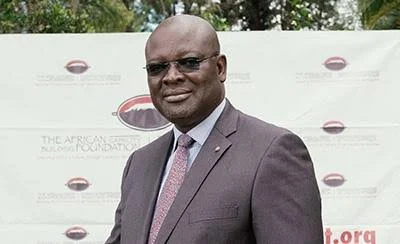
Speaking during a webinar recording obtained by our correspondent on Sunday, the Executive Secretary of the African Capacity Building Foundation, Mamadou Biteye, said the initiative was designed to go beyond conventional technical training.
He said the programme combines self-assessment, personal development plans, individual and group coaching, peer learning, technical assistance and case-based application to real public financial management challenges.
According to Biteye, the approach is intended to ensure that leadership development results in behavioural change and institutional transformation.
“The programme seeks to enhance the leadership capabilities of senior officials, those who are in the heart of PFM reform implementation, while also establishing a platform for peer-to-peer learning between African PFM leaders and information sharing between themselves,” he said.
Biteye disclosed that more than 295 participants from eight African countries had enrolled in the programme since its launch in 2024.
He said stronger leadership was essential to translating policies, strategies and technical reforms into sustainable results, stressing that lasting institutional reforms could not be achieved through systems and technical expertise alone.
“Systems do not reform themselves. Budgets do not implement themselves. Digital platforms do not transform institutions by themselves. Policies do not deliver results by themselves. People do. And when they are equipped, inspired, and supported, institutions change,” he said.
Technical capacity alone not enough
Also speaking, a Senior Programme Officer at the Gates Foundation, Adil Abarabu, said technical capacity alone was insufficient to deliver sustainable public financial management reforms.
Abarabu noted that many of the challenges confronting public financial management officials were leadership-related, particularly managing resistance to change, coordinating across institutional boundaries and sustaining reforms in difficult political environments.
“When we tend to think about strengthening public financial management, we focus on technical capacities, better budgeting, stronger administration, digital systems, strong expenditure management, and so on,” he said.
He, however, stressed that “technical capacity is not enough if you want to target lasting reforms.”
According to him, public institutions are ultimately driven by people, making leadership development a critical component of successful reforms.
Abarabu also noted that government finance had become increasingly important amid global economic uncertainty and declining aid flows.
He said decisions taken by ministries of finance, revenue authorities and treasuries directly affect governments’ capacity to fund essential services, including education, healthcare and social protection.