























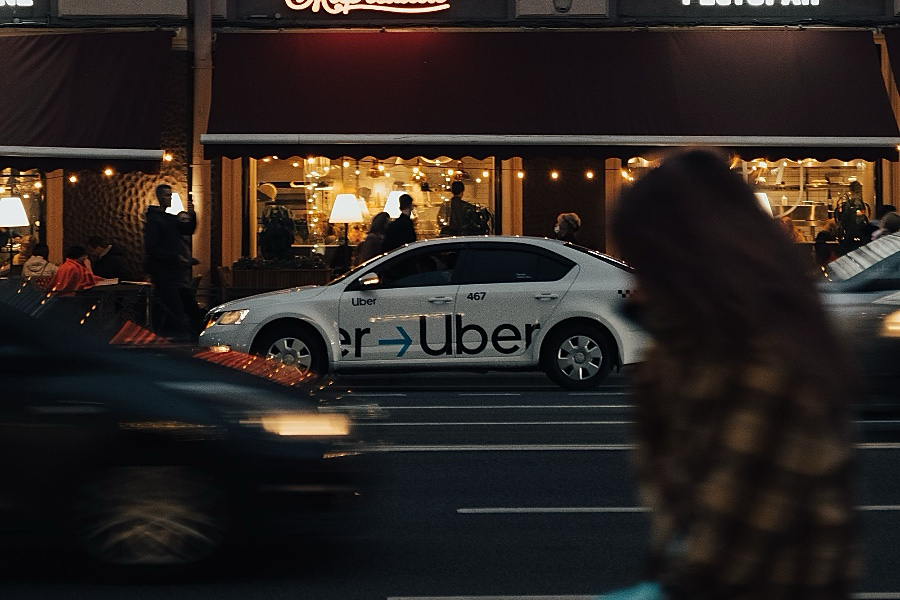
Uber has launched autonomous ride-hailing services in London, less than 24 hours after ending its ride-hailing operations in Nigeria following 12 years in the country.
The London launch is part of Uber’s broader push into autonomous transportation and is being carried out in partnership with British self-driving technology company Wayve, whose artificial intelligence system powers the vehicles.
For the initial rollout, fewer than 20 all-electric Ford Mustang Mach-E vehicles will operate on selected routes across London. A licensed safety operator will remain inside each vehicle to monitor the journey and take control when necessary.
Riders booking UberX, Uber Comfort or Uber Electric in eligible areas may be matched with an autonomous vehicle at no additional cost.
However, the service does not yet represent fully driverless Uber rides in London. Wayve and Uber will require additional regulatory approvals before the safety operators can be removed from the vehicles.
Uber’s global head of Autonomous Mobility, Sarfraz Maredia, said the launch would help the company build trust among consumers and regulators.
“This will build credibility with consumers as well as with the government,” Maredia said.
Wayve CEO and co-founder Alex Kendall described London as an ideal testing ground because of the complexity of its roads.
The launch gives Uber two autonomous ride-hailing markets in Europe, following the company’s existing autonomous service in Zagreb, Croatia.
From Nigeria to Autonomous Mobility
Uber’s expansion into autonomous transportation in London comes shortly after the company announced its exit from Nigeria.
Uber confirmed on Wednesday that it had discontinued its ride-hailing operations in Nigeria following a review of its global business priorities. The decision also affected its operations in Uganda, although the company said it would maintain its presence in other African markets.
The company said it would focus investment on markets where it believes it can deliver the greatest value to drivers and riders.
Uber’s departure leaves Bolt, inDrive and LagRide among the major ride-hailing platforms serving customers in Nigeria.
Bolt has said Nigeria remains an important market for its business and that it intends to strengthen its operations in the country.
Uber’s exit also comes amid rising operating costs for ride-hailing drivers in Nigeria. Fuel prices, vehicle maintenance expenses and platform commissions have continued to affect drivers’ earnings.
In Lagos, drivers have previously raised concerns that rising fuel costs were reducing their income as fares failed to increase at the same pace.
Uber Bets on Self-Driving Technology
Despite leaving the Nigerian market, Uber is increasing its focus on autonomous vehicles.
The company’s partnership with Wayve began in 2024, when Uber invested in the British autonomous driving technology firm. The companies subsequently agreed to work towards deploying Wayve-powered autonomous vehicles across multiple markets.
The London launch represents the first major public deployment of that partnership.
Wayve’s technology uses cameras, radar and artificial intelligence models to perform driving tasks and respond to changing road conditions. The company says its system is designed to adapt to different roads, vehicles, weather conditions and cities.
Uber plans to expand its autonomous vehicle partnerships beyond London. The company also intends to launch self-driving rides using Wayve technology and Nissan Leaf vehicles in Tokyo later this year.
The autonomous push comes as Uber restructures its global operations. The company has recently announced plans to reduce its workforce by about 10 percent while simplifying its management structure.
Uber CEO Dara Khosrowshahi has said the company will continue investing in its core ride-hailing and delivery businesses, as well as autonomous mobility.
For now, autonomous rides are available only on a limited basis in London. When a rider is matched with an autonomous vehicle, the Uber app will notify them and give them the option to accept the trip or choose a conventional vehicle.
Uber will provide rider support, while Wayve will remain responsible for its autonomous driving technology. The companies will also operate a London depot for vehicle maintenance, charging and other fleet operations.
Full driverless operation in London will ultimately depend on further regulatory approval.