












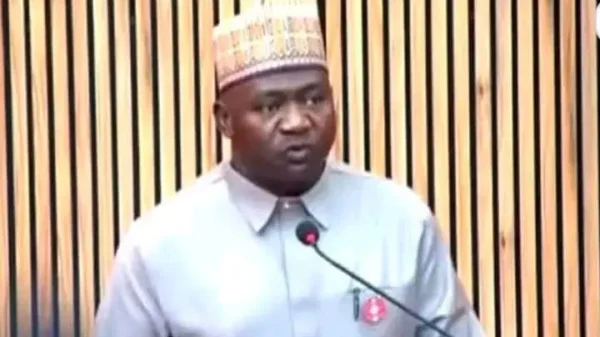










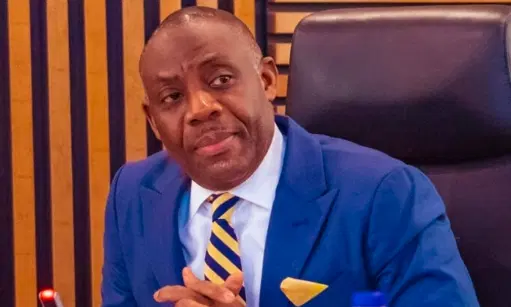
The Minister of Education, Dr Tunji Alausa, has disclosed that National Examinations Council (NECO) examination questions were allegedly obtained and sold for as little as N3,000 before candidates sat for the papers.
Alausa made the disclosure on Thursday during a meeting with the National Association of Proprietors of Private Schools and other stakeholders in the education sector, where he described the level of examination malpractice in Nigeria as “mind-boggling.”
The minister warned parents, teachers, school proprietors, principals, invigilators and students against practices capable of undermining the integrity of public examinations.
According to Alausa, examination malpractice had been tolerated for years, creating an unfair environment in which students who prepared adequately were disadvantaged by those who gained access to examination questions before the tests.
He warned that the situation could eventually force honest students into malpractice as they struggled to compete with candidates who had access to leaked materials.
“It’s sad. Before she (Minister of State for Education) and I came, the acceptance of examination malpractice, cheating and examination leakages in this country was mind-boggling, and the country accepted it. It was a nightmare,” he said.
“The danger was that the good students would also become bad.”
Recalling efforts to tackle examination malpractice, Alausa alleged that examination questions had previously been obtained and sold before candidates sat for their papers.
He referred to former NECO Registrar Ibrahim Wushishi while describing how leaked questions were allegedly circulated.
“The Registrar of NECO at the time had a name. His name was (Ibrahim) Wushishi. You would go to Wushishi… I didn’t know that Wushishi meant going to the dark website,” he said.
“They bought his question for N3,000. That was it. Before the examination. They called him Wushishi and bought the questions for N3,000 before the examination.”
Alausa recounts 2025 experience
The minister also recalled his experience during the 2025 examination period, saying he repeatedly received examination questions allegedly obtained before candidates sat for their papers.
According to him, the development prompted officials to verify the materials with examination authorities, with some eventually confirmed as the actual questions scheduled for that day.
“During that examination period, during the hardest time of my life, I was always worried, waking up. I would wake up to her text. She would send questions to me… She would say, ‘I just got this question,’” he said.
“It could be English or Chemistry. I was always waking up with trepidation every morning, doing work. I would send it to the HNO and ask, ‘HNO, is this correct?’ And the answer I got was, ‘Unfortunately, that’s the question we’re doing today.’”
Alausa said the experience showed that examination malpractice could not be blamed solely on students.
He argued that the entire education ecosystem, including parents, schools, teachers, invigilators and principals, must take responsibility for preventing candidates from gaining unfair access to examination materials.
“You might be in that isolated school, but the school system is also involved. In fact, I don’t blame the students that much. Any child can be bad,” he said.
“But when we have an ecosystem where parents, schools, teachers, invigilators and principals are in full connivance, the students are the smallest players. The people who should put the deterrents in place are the ones involved.”
FG to tighten examination controls
The minister said the Federal Government would strengthen measures aimed at protecting the credibility of public examinations and ensuring that academic qualifications reflect genuine learning and merit.
He said the reforms formed part of President Bola Tinubu’s administration’s efforts to restore standards and reposition the education sector.
“This is a country with the rule of law. President Bola Ahmed Tinubu is transforming this country in a way that’s never been transformed before. This is Nigeria’s renaissance that we’re building to be sustainable into the future,” he said.
The Minister of State for Education, Prof. Suwaiba Ahmad, also urged private school proprietors and other stakeholders to support the government’s efforts to reform the examination system.
Ahmad said tighter examination controls could initially expose weaknesses among students who had become accustomed to accessing leaked questions before external examinations.
She explained that the introduction of serialised examination questions would make it more difficult for candidates to rely on leaked materials while encouraging genuine preparation.
The minister also urged schools to complete their curricula on schedule and promote consistent study among students.
She assured private education stakeholders that the Federal Ministry of Education would continue to engage them as the reforms are implemented.
The government’s renewed focus on examination integrity comes amid longstanding concerns over question-paper leakages, impersonation, collusion and other forms of unauthorised assistance during public examinations.
The Federal Government says the reforms are intended to ensure that public examination results provide a credible assessment of students’ knowledge and abilities while protecting candidates who prepare and compete fairly.