

























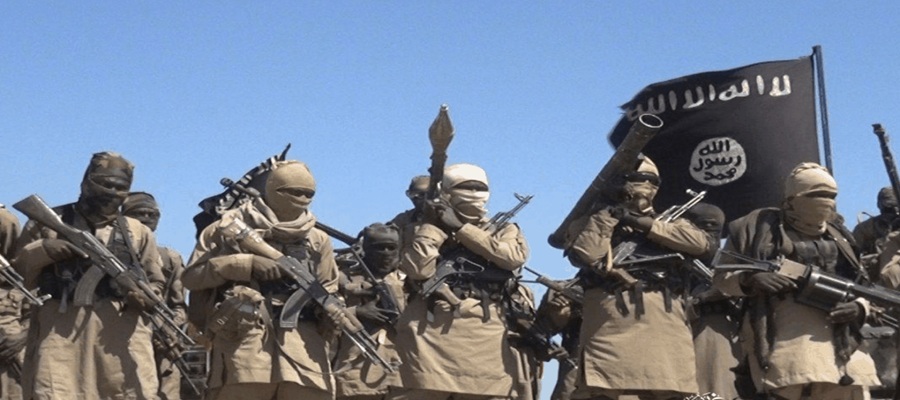
United States has designated a Nigerian national and several businesses among individuals and entities accused of facilitating financial transactions for the Islamic State of Iraq and Syria (ISIS), as part of efforts to disrupt the terrorist group’s global funding network.

ISIS
The U.S. Department of the Treasury’s Office of Foreign Assets Control (OFAC) announced on June 22 that three individuals and six entities operating across Europe, the Middle East and West Africa had been sanctioned for allegedly helping ISIS move funds across international borders.
According to U.S. authorities, the measures are aimed at cutting off financial channels used by ISIS to support attacks, fund regional affiliates and threaten civilian populations, including religious minorities.
Among those designated is Nigerian national Mukhtar Adamu Muhammad, whom U.S. officials described as an ISIS-West Africa financial facilitator involved in conducting money transfers on behalf of the group.
Three Nigerian-based bureau de change firms linked to Muhammad were also sanctioned. They are Nine to Nine Exchange Bureau de Change Limited, Manhattan Bureau de Change Limited and Generation Currency Bureau de Change Limited.
The other individuals named in the action are France-based Miloud Abderrahmane and Syria-based Abdelhakim Boukich, who were accused of facilitating financial and logistical support for ISIS activities.
In a statement, the U.S. government said it remained committed to dismantling ISIS financing networks worldwide.
“We will continue to use every diplomatic and legal tool available to hold ISIS and its supporters accountable, wherever they operate and however they move money,” the statement said.
The U.S. also reaffirmed its counterterrorism partnership with Nigeria, noting that both countries cooperated in the May 16 operation that resulted in the death of Abu-Bilal al-Minuki, identified by Washington as the second-ranking official in ISIS and head of its General Directorate of Provinces.
U.S. Treasury Secretary Scott Bessent said the sanctions demonstrated Washington’s resolve to disrupt the group’s remaining capabilities and prevent it from financing terrorist activities.
The sanctions were imposed under Executive Order 13224, which targets terrorists and those providing support to terrorist organisations.