




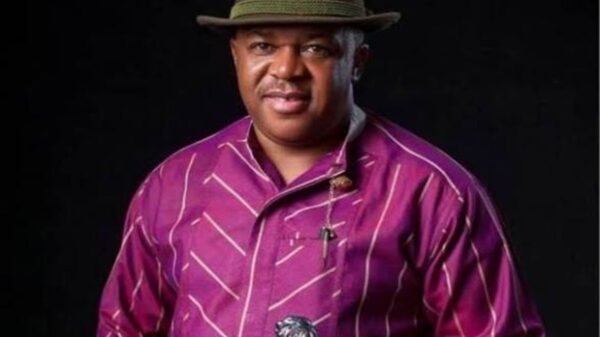



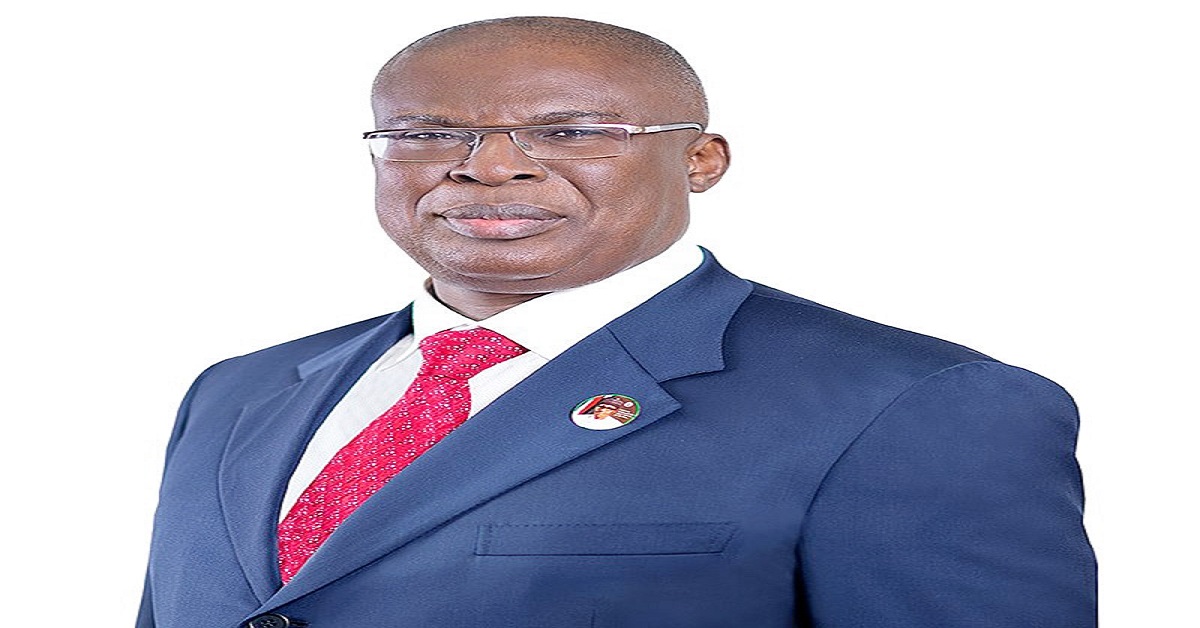








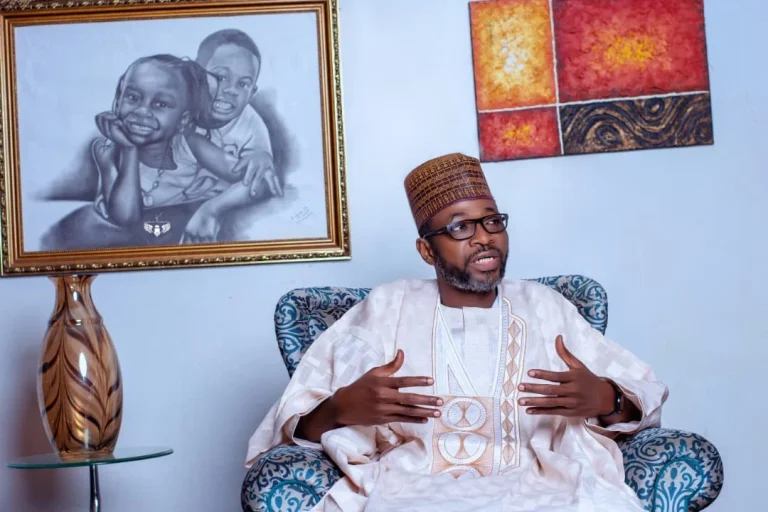
The New Nigeria People’s Party (NNPP) presidential candidate, Suleiman Dikwa, has urged the Federal Government to move beyond the prolonged debate over fuel subsidies and redirect public spending towards investments capable of creating jobs, generating foreign exchange and building productive assets.
Dikwa made the call in a statement titled “Beyond the Subsidy Trap: Why the Atiku-Tinubu Debate Fails Nigeria’s Economic Future,” made available to journalists on Tuesday.
He described President Bola Tinubu’s position on fuel subsidy removal and former Vice President Atiku Abubakar’s proposal for a “redesigned subsidy” as “two sides of the same bankrupt coin.”
According to Dikwa, neither removing fuel subsidies without viable alternatives nor restoring petrol subsidies would address Nigeria’s underlying economic challenges.
“While one equates reform with withdrawing public expenditure, the other equates relief with burning cash at retail fuel pumps; he said neither of the arguments builds the economy,” he stated.
Dikwa argued that Nigeria had depended on petrol subsidies for about four decades as a response to shortcomings in public infrastructure, particularly in power, transportation and logistics.
He said the key issue for Nigerians should not be whether public funds should be spent, but what those funds should be used to create.
“Nigerians on the other hand are not debating whether to spend public money. It is debating what public money should create,” he said.
The NNPP candidate identified agricultural wastage, food imports and the ineffective utilisation of donor funds as some of the structural challenges putting pressure on the Nigerian economy.
He cited estimates of more than N12tn lost annually to agricultural pre- and post-harvest losses, alongside large food import bills that drain foreign exchange on products that could be produced locally.
He also raised concerns about billions of dollars in donor funding, arguing that such resources had not translated sufficiently into self-sustaining industrial infrastructure.
Dikwa said successful economies had used targeted government support to develop strategic industries rather than relying solely on either unrestricted markets or consumer-focused subsidies.
He cited the United States, China and the European Union as examples of economies that had deployed various forms of targeted state support to strengthen domestic production.
According to him, the United States developed its agricultural sector through policies including the 1933 Agricultural Adjustment Act and successive Farm Bills that supported areas such as grain storage, price stabilisation and export credits.
He said China’s rise as a global leader in electric vehicles was similarly supported by state investment in battery research and development, critical mineral processing and manufacturing.
Dikwa also pointed to the European Union’s Common Agricultural Policy, which he said focused on supporting rural infrastructure, processing and export standards rather than simply subsidising consumer prices.
“The global standard is not ‘no subsidy.’ The global standard is subsidy that creates surplus. Palliatives offer the illusion of intervention, just as fuel discounts offer the illusion of relief. Neither builds an economy,” he said.
With the 2027 general elections approaching, Dikwa warned against keeping Nigeria trapped between what he described as “punitive austerity” and “refurbished price controls.”
He advocated a shift towards subsidies that finance productive assets and economic infrastructure capable of generating long-term value.
“A subsidy that fills a petrol tank disappears by evening. A subsidy that builds a processing hub, restores degraded land, or capitalises a community’s productive stock produces value for decades. The next Nigerian subsidy must be an investment, not a bill,” he concluded.