





























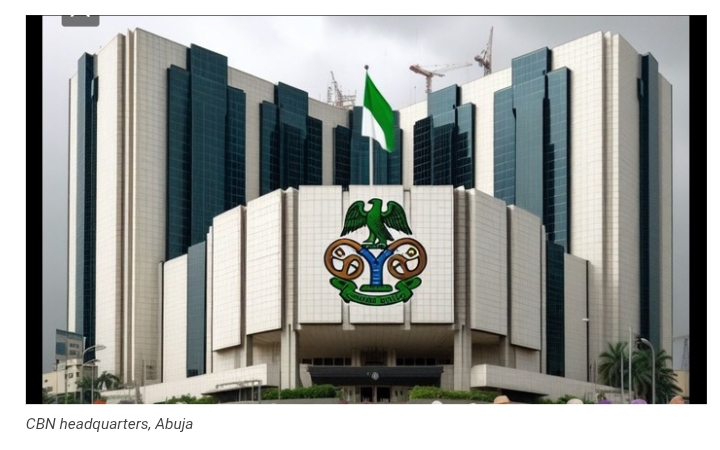
Central Bank of Nigeria (CBN) has introduced a N100 million penalty for banks and other authorised dealers that process foreign exchange transactions without adequate supporting documentation, as part of a comprehensive overhaul of the country’s foreign exchange regulatory framework.

CBN
The new sanction is contained in the fourth edition of the Foreign Exchange Manual released by the apex bank’s Trade and Exchange Department in May 2026.
According to the manual, authorised dealers found guilty of completing foreign exchange transactions with insufficient documentation will be liable to a N100 million fine in addition to N10 million for each affected transaction.
The CBN said the revised manual was designed to strengthen compliance, improve transparency in foreign exchange transactions, enhance market integrity and align Nigeria’s forex administration with evolving economic realities and international best practices.
The updated framework represents the first major review of the manual since 2017.
Under the revised rules, banks that exceed approved Net Open Position (NOP) limits will face graduated sanctions.
A first violation will attract a written warning, while a second and third offences will result in suspension from the foreign exchange market for 10 working days and 90 days respectively.
The apex bank also tightened reporting obligations for authorised dealers.
Banks are now required to submit daily foreign exchange transaction returns by 10 a.m. on the following day and monthly returns within five working days after the end of each month.
Late submission will attract a penalty of N500,000, while failure to submit returns will result in a minimum fine of N5 million and an additional N500,000 for each day the violation continues.
The CBN warned against the diversion of foreign exchange allocations from approved purposes without prior regulatory approval.
It stated that offenders could face financial sanctions, suspension of authorised dealer licences for a minimum of six months, or outright revocation depending on the severity of the infraction.
The revised framework also introduces stricter compliance requirements for importers and exporters.
Importers are required to submit Exchange Control Documents within 90 days of negotiating shipping documents with overseas correspondent banks.
Failure to comply will attract sanctions ranging from a 90-day restriction on access to foreign exchange transactions for first-time offenders to a permanent ban from the market after repeated violations.
Banks that fail to report importer defaults will face penalties beginning with a warning and escalating to N10 million per transaction.
For exporters, proceeds from non-oil exports must be repatriated and credited to domiciliary accounts within 180 days of shipment, while oil and gas export proceeds must be repatriated within 90 days.
The manual stipulates a penalty equivalent to one per cent of the naira value of outstanding export proceeds for exporters who fail to comply.
Banks that fail to ensure compliance by their customers will be liable to a fine of 0.5 per cent of the outstanding amount.
In addition to the sanctions regime, the revised manual introduces measures aimed at improving efficiency in the foreign exchange market.
The allowable advance payment for imports has been increased from 15 per cent to 30 per cent, while import shortfalls or excesses of up to plus or minus 10 per cent of the Cost and Freight value on Form M are now permitted.
The apex bank also removed processing fees for Form NXP used for export declarations and eliminated the mandatory requirement for Form A in remittances funded through personal domiciliary accounts, subject to verification by banks.
Other provisions cover service exports, technology-related remittances, transactions under the Pan-African Payment and Settlement System (PAPSS), non-resident investment accounts and tuition payments of up to 25,000 dollars per semester for students studying abroad.
CBN Governor Olayemi Cardoso said the reforms underscore the bank’s commitment to strengthening macroeconomic stability and modernising foreign exchange administration.
According to him, the review was necessitated by changes in global economic conditions, domestic structural adjustments and ongoing reforms in Nigeria’s foreign exchange market.
Also speaking, Muhammad Abdullahi said the updated framework forms part of broader efforts to rebuild confidence, enhance transparency and improve market efficiency.
“Our goal is to reduce transaction frictions, improve processing timelines, deepen market confidence, encourage formal market participation and create a more seamless experience for legitimate users of Nigeria’s foreign exchange market,” he said.
The CBN expressed optimism that the revised manual would boost compliance, reduce transaction delays, attract investment inflows and strengthen confidence in the Nigerian foreign exchange market.