

























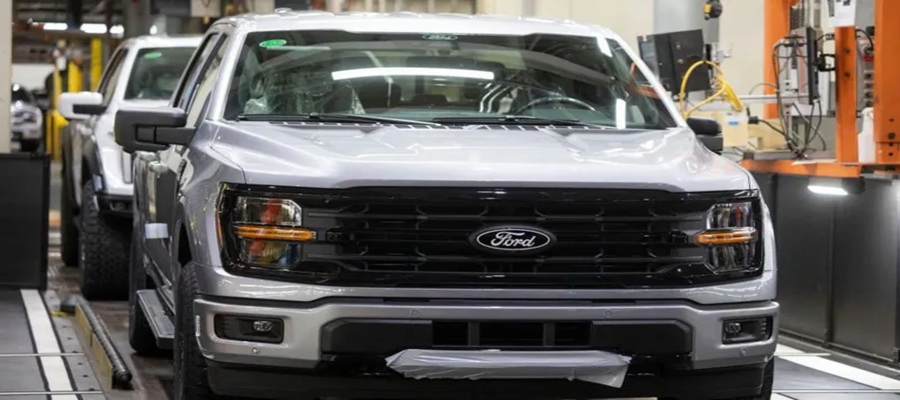
Ford Motor Company has reportedly rehired more than 300 experienced engineers after its artificial intelligence-driven quality inspection systems failed to meet expected performance standards.
The development was disclosed in reports citing senior company executives, who admitted that the firm’s initial reliance on AI for certain quality control functions did not deliver the desired results.
According to the company, the AI systems were introduced across selected operations as part of efforts to improve efficiency, reduce production costs and enhance productivity in vehicle manufacturing.
However, Ford said the technology fell short in matching the expertise and judgment of seasoned engineers, particularly in complex quality assessment processes.
The company’s Vice President of Vehicle Hardware Engineering, Charles Poon, was quoted as saying that the shortcomings highlighted the importance of human experience in training and guiding automated systems.
He noted that while artificial intelligence remains a valuable tool, its effectiveness depends heavily on the quality of data and expertise used in its development.
Poon also acknowledged that the company had previously underestimated the contribution of long-serving engineers, many of whom had accumulated decades of experience across multiple product cycles.
He added that some of the rehired engineers were brought back not only to support production quality checks but also to mentor younger staff and help improve AI training processes.
Ford is among several global automakers that have increasingly integrated artificial intelligence into manufacturing, including the deployment of AI-powered inspection cameras across production plants to detect defects and improve operational efficiency.
Despite the setback, the company recently reported improved performance, ranking as the number one mainstream automaker in the United States in the JD Power Initial Quality Study, a position it had not held since 2010.
The company attributed the improvement to a broader restructuring of its engineering and manufacturing teams, as well as renewed investment in experienced technical personnel.
Ford said it remains committed to leveraging artificial intelligence alongside human expertise as part of its long-term industrial strategy.