






















In a landmark move to restore professionalism and integrity in Nigeria’s education sector, the Federal Government has unveiled a Teacher Ethics and Criminal Record Verification Framework, making background checks compulsory for all teachers in public and private schools.
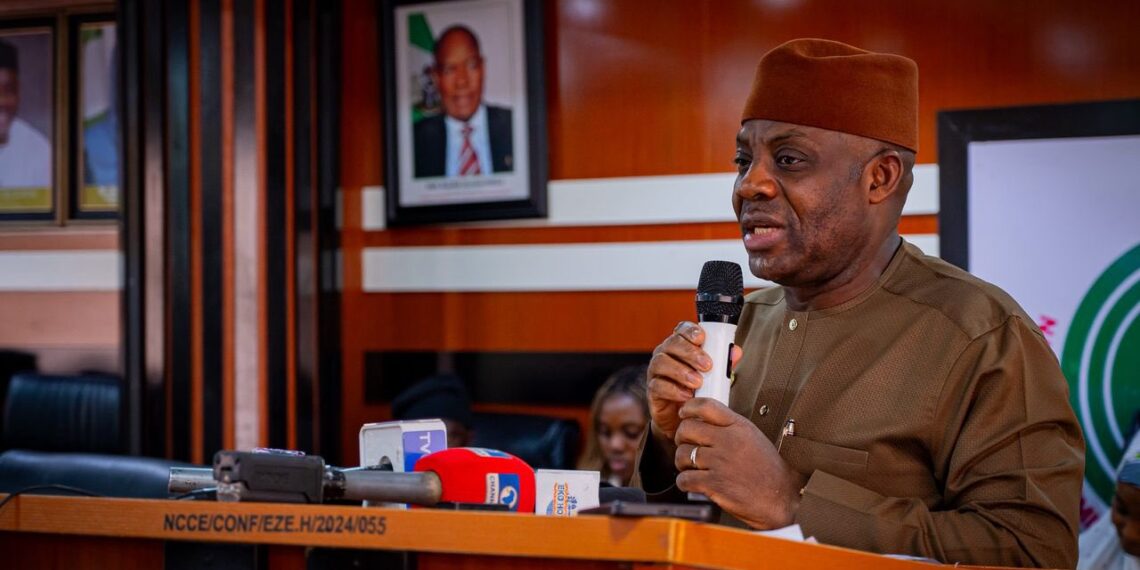
The initiative, announced by the National Orientation Agency (NOA) and spearheaded by Minister of Education, Dr. Tunji Alausa, aims to ensure that only individuals of sound moral character are entrusted with educating Nigeria’s future generations.
“This framework is about accountability,” said Dr. Alausa. “We must be deliberate about who we allow to shape the minds of our children.”
The verification system will be integrated into the Teachers’ Registration Council of Nigeria (TRCN) digital portal, which now serves as a national database for teacher registration, licensing, and monitoring. The portal allows educators to register, access results, and print certificates remotely—eliminating the need for physical visits to state offices.
The TRCN platform also features AI-powered lesson planning tools, a revised Professional Qualifying Examination focused on five core areas including mathematics, literacy, and pedagogy, and state-level investigation panels to address misconduct and uphold ethical standards.
According to TRCN Registrar Prof. Josiah Ajiboye, Nigeria has nearly four million teachers, but only 2.4 million are currently registered with TRCN.
A significant portion of private school teachers reportedly lack the qualifications required for registration, which include a Bachelor of Education (B.Ed.), or a BSc/BA with a Postgraduate Diploma in Education (PGDE) or Professional Diploma in Education.
The TRCN, established under Decree No. 31 of 1993 (now TRCN Act CAP T3 of 2004), is mandated to regulate and control the teaching profession across all levels of Nigeria’s education system.
The new framework is expected to curb impersonation, certificate forgery, and the hiring of unqualified staff—issues that have long plagued Nigeria’s schools. It also signals a broader push toward digitization, transparency, and ethical reform in education.