



























Global oil prices fell below 80 dollars per barrel on Thursday following the signing of a peace agreement between the United States and Iran aimed at ending hostilities and reopening the strategic Strait of Hormuz.
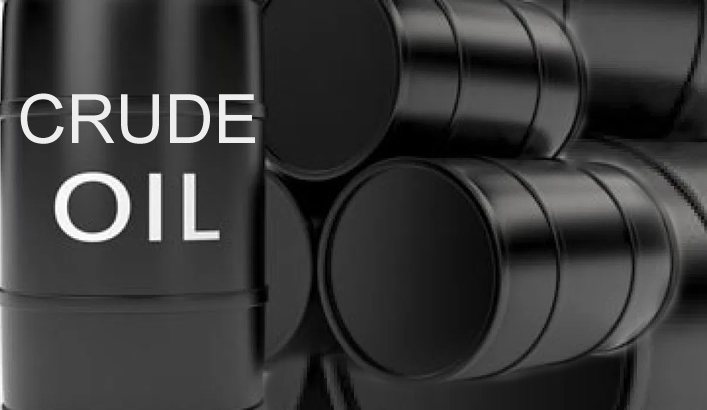
Benchmark Brent crude declined by about two per cent to 77.90 dollars per barrel after briefly falling to 77.10 dollars during trading.
The development followed confirmation by Pakistan’s Prime Minister, Shehbaz Sharif, that both countries had signed an agreement providing for the immediate reopening of the Strait of Hormuz and the lifting of the U.S. naval blockade.
According to Sharif, Iran would reopen the waterway immediately, while the United States would lift restrictions that had affected maritime traffic in the region.
Although a formal signing ceremony is scheduled to take place in Switzerland on Friday, the agreement has already taken effect, guaranteeing free passage through the Strait of Hormuz for an initial 60-day period while further negotiations continue.
The Strait of Hormuz remains one of the world’s most important energy corridors, handling roughly one-fifth of global oil and gas shipments.
Concerns over possible disruptions during the conflict had previously driven oil prices as high as 120 dollars per barrel.
With the latest agreement, crude prices have retreated toward levels seen before the escalation of tensions.
The decline in oil prices also affected energy stocks, contributing to a drop in the benchmark FTSE 100 index in London.
Shares of major energy companies, including BP and Shell, fell by more than one per cent, while other energy-related firms also recorded losses.
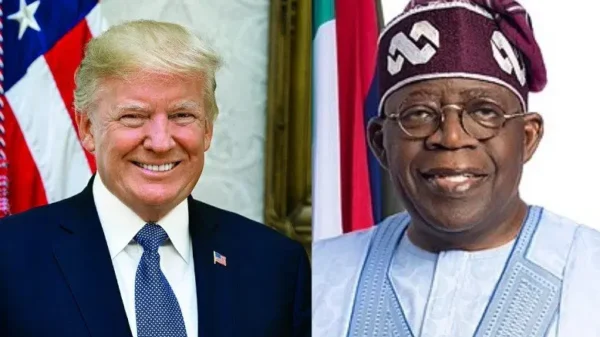
U.S. President Donald Trump confirmed the agreement during a dinner hosted by French President Emmanuel Macron following the G7 summit in France.
Under the terms of the interim arrangement, Iran has agreed not to develop or acquire nuclear weapons and to reduce its stockpile of highly enriched uranium.
In return, the United States will ease certain sanctions, enabling Iran to resume unrestricted oil exports.
Market analysts said expectations of increased Iranian oil supplies contributed to the decline in crude prices.
Ms Susannah Streeter, Chief Investment Strategist at Wealth Club, said the agreement was exerting fresh downward pressure on prices because additional Iranian crude was expected to enter the global market.
She noted that the anticipated increase in supply was occurring at a time when demand growth had been moderated by energy-efficiency measures and consumption restraints in some markets.
Analysts say lower oil prices could ease inflationary pressures globally and potentially reduce fuel and energy costs for consumers after recent increases linked to geopolitical tensions.
However, investor sentiment remained cautious following remarks by newly appointed U.S. Federal Reserve Chairman, Kevin Warsh, suggesting the possibility of future interest rate increases.
The comments contributed to a decline in U.S. equities, with the Dow Jones Industrial Average closing about one per cent lower overnight.
Mr Chris Beauchamp, Chief Market Analyst at IG, said the remarks signalled a more hawkish monetary policy stance than many investors had anticipated.
He noted that financial markets would continue to monitor both the implementation of the U.S.-Iran agreement and developments in global monetary policy.