
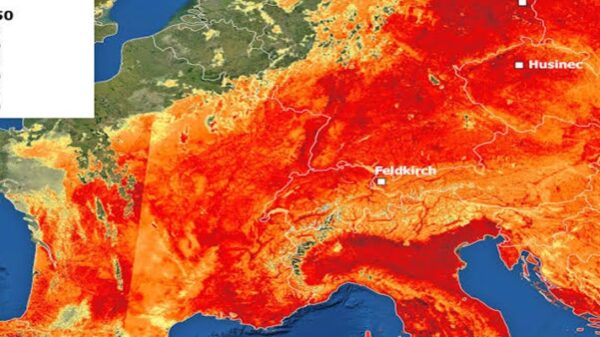





























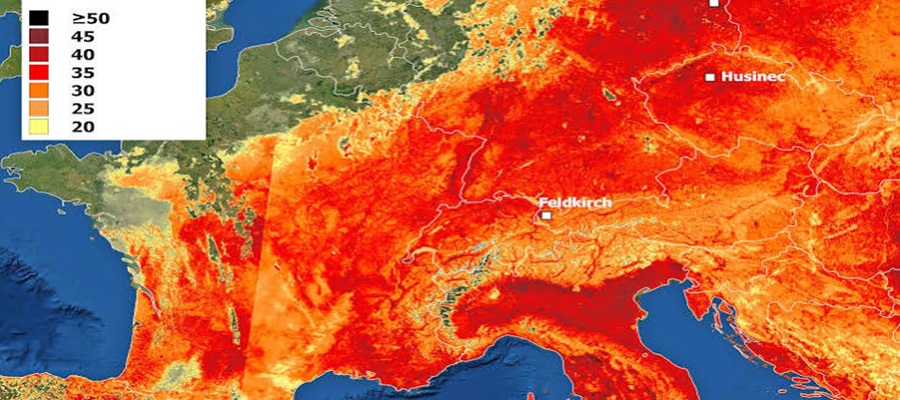
Germany has recorded its highest temperature on record as an intense heatwave continues to sweep across Europe, triggering health alerts, infrastructure concerns and travel disruptions across several countries.
Preliminary data from Germany’s national weather service showed that temperatures reached 41.5°C in the eastern town of Drewitz on Saturday, surpassing the previous national record of 41.3°C recorded just a day earlier near Saarbrücken.
Although the figure is still subject to official verification, it marks what authorities described as an unprecedented heat event in the country.
The extreme weather forms part of a wider heatwave affecting large parts of Europe, with record-breaking temperatures also reported in Denmark, Switzerland and the Czech Republic.
Millions of people across the continent remain under red and amber heat warnings as authorities caution against prolonged exposure to extreme temperatures.
In France, officials said multiple heat-related deaths had been recorded, while hospitals reported increased emergency admissions linked to the heatwave. Authorities also warned that pressure on the healthcare system was expected to persist even as temperatures begin to ease.
The French prime minister’s office said the impact of the heatwave would continue for several days due to sustained hospital admissions and strain on public services.
Reports also indicated an increase in wildfires compared with the same period last year, with hot and dry conditions worsening fire risks in several regions.
In Italy, the health ministry issued red alerts for 18 cities, including Milan, Rome, Venice, Florence and Bologna, with temperatures expected to reach up to 39°C in some areas. Authorities also warned of worsening drought conditions, with water levels in the River Po falling to record lows.
Transport operators across affected countries have also raised concerns over infrastructure strain, including risks of buckling roads and warped railway tracks, prompting efforts to reduce traffic and manage public safety.
In Germany, André Berghegger, chief executive of the German Association of Towns and Municipalities, urged residents to use water responsibly amid rising demand.
“We should rely on voluntary cooperation as long as possible; local authorities should only issue bans if that doesn’t work,” he said.
Meteorological agencies across Europe continue to monitor the heatwave as it moves eastward into Poland, Hungary, Romania and Moldova.