











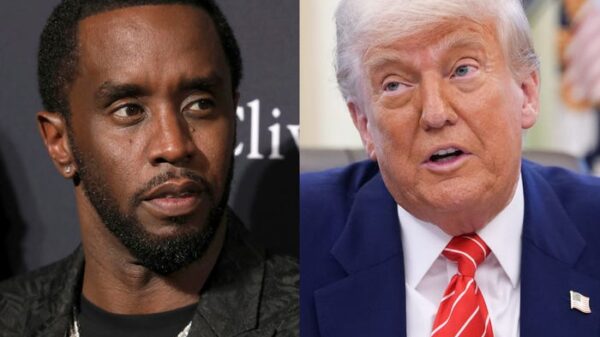
















United States Supreme Court on Friday, June 27, delivered a significant win for former President Donald Trump by limiting the authority of federal district judges to issue nationwide injunctions against executive actions.
In a 6-3 decision, the court ruled that such sweeping judicial orders “likely exceed the equitable authority that Congress has granted to federal courts.” The case stemmed from a challenge to Trump’s executive order seeking to end birthright citizenship for children born on U.S. soil to non-citizen parents.
While the Court did not rule directly on the constitutionality of Trump’s birthright citizenship order, the broader decision significantly enhances presidential power by making it more difficult for individual judges to block executive policies nationwide.
Writing for the majority, Justice Amy Coney Barrett emphasized that the judiciary’s role is not to supervise the executive branch. “Federal courts do not exercise general oversight of the Executive Branch; they resolve cases and controversies consistent with the authority Congress has given them,” Barrett wrote. “When a court concludes that the Executive Branch has acted unlawfully, the answer is not for the court to exceed its power, too.”
The ruling, joined by the court’s five other conservative justices, drew a sharp dissent from the three liberal justices, who warned that the decision weakens judicial checks on executive overreach.
The legal debate centered not on the merits of Trump’s immigration policy, but on whether a single district judge could impose a nationwide block on a presidential directive while a legal challenge is pending. The ruling represents a departure from recent years, during which national injunctions were frequently used by courts to halt presidential actions.
Trump’s executive order, issued on his first day in office, declared that children born in the U.S. to undocumented immigrants or those on temporary visas would not automatically gain citizenship. Lower courts in Maryland, Massachusetts, and Washington state had ruled the order unconstitutional, citing the 14th Amendment, which states: “All persons born or naturalized in the United States, and subject to the jurisdiction thereof, are citizens of the United States.”
The Supreme Court’s decision comes amid mounting conservative criticism of nationwide injunctions. Justice Samuel Alito called them a “practical problem,” noting that hundreds of district judges could each act unilaterally. Solicitor General John Sauer likened the injunctions to a “nuclear weapon,” arguing they upset the constitutional balance of power.
Although previous administrations have also clashed with the judiciary over national injunctions, Trump has faced a historically high number of them, far surpassing what his successor, Joe Biden encountered over a longer period.
The ruling is expected to have long-term implications for executive authority and how future presidents, regardless of party, navigate legal opposition to their policies.