
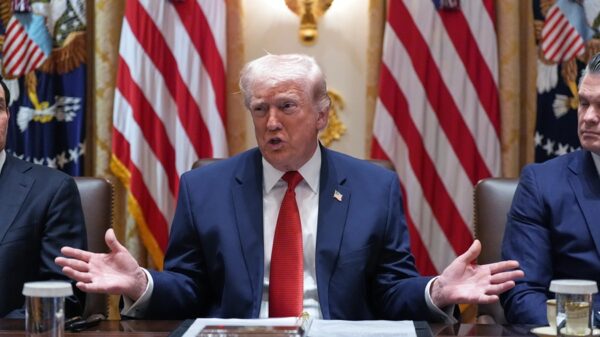























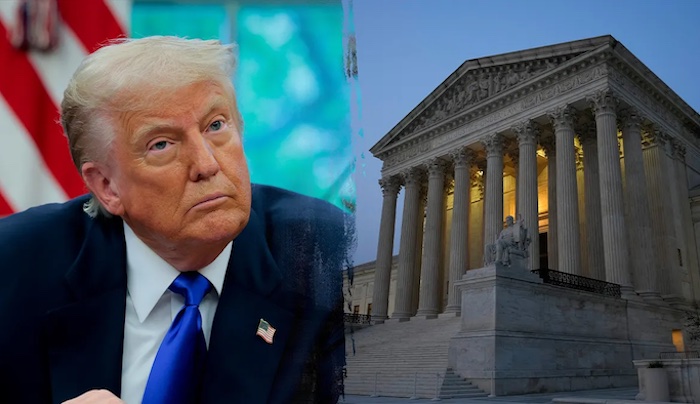
The United States Supreme Court has struck down President Donald Trump’s executive order seeking to end automatic birthright citizenship for children born in the United States to parents who are unlawfully or temporarily in the country.
In a 6-3 decision delivered on Tuesday, the court held that the executive order was inconsistent with the Citizenship Clause of the 14th Amendment to the U.S. Constitution.
Chief Justice John Roberts, who wrote the majority opinion in Trump v. Barbara, said children born in the United States to parents who are either unlawfully or temporarily present satisfy the constitutional requirements for citizenship.
“Under the Constitution, they are citizens at birth,” Roberts wrote.
He noted that the 14th Amendment guarantees citizenship to persons born in the United States and subject to its jurisdiction, adding that the constitutional provision applies regardless of their parents’ immigration status.
The ruling effectively blocks the implementation of Trump’s executive order, which was signed on Jan. 20, 2025, shortly after he began his second term in office.
The order sought to deny automatic U.S. citizenship to babies born in the country to parents who were in the United States illegally or on temporary visas.
Opponents challenged the policy, arguing that it violated the 14th Amendment, which grants citizenship to persons born or naturalised in the United States.
In his judgment, Roberts referred to the historical origins of the amendment, adopted after the American Civil War to guarantee citizenship rights for formerly enslaved people and their descendants.
“Citizenship, then and now, was the right to have rights – to freely participate in our political community. The Framers of the Fourteenth Amendment extended that promise to every free-born person in this land.
“We keep that promise today,” he wrote.
Justice Samuel Alito dissented, describing the decision as one of the court’s most significant rulings while arguing that the 14th Amendment should not automatically extend citizenship to every child born in the United States regardless of parental immigration status.
The judgment marks a major legal setback for Trump, who had made ending birthright citizenship a key element of his immigration agenda.
The ruling reaffirms the constitutional protection of birthright citizenship and preserves the long-standing interpretation of the 14th Amendment.