






























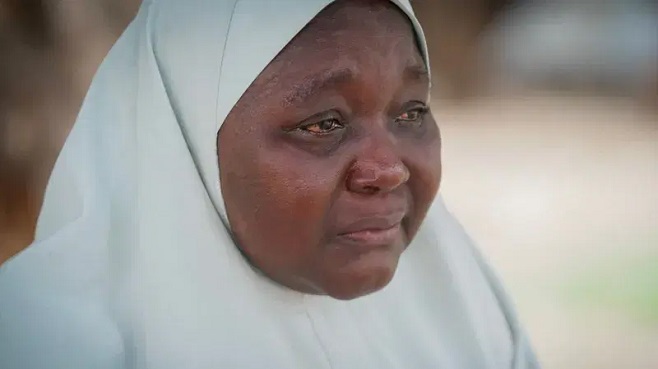
A 55-year-old woman, Fatima, has recounted the terrifying experience of surviving bandit attacks in Zamfara State, saying residents are often trapped between being killed while fleeing or abducted if they remain in their homes.
Speaking to the BBC, Fatima described how armed bandits attacked her community at about 2am, surrounding the village in a coordinated operation.
According to her, the attackers divided themselves into three groups. One group blocked the entrance to the village, another moved into the community, while the third positioned itself behind the settlement to stop residents from escaping.
“If you run into a room, they set the room on fire, and if you come out and try to run, they shoot you,” she said.
“They kept shooting without mercy; shooting at people indiscriminately.”
Fatima said the attackers sometimes arrived in large numbers, with as many as 100 motorcycles carrying about three people each.
She claimed that about 70 people, including children, were killed during an attack on Bia Buki village in June. Among the victims, she said, were her husband and six of her seven siblings.
Several children were also injured while trying to escape through the bush, with some reportedly falling into holes.
Following the attack, Fatima fled with other residents and their children into a nearby forest, which became a temporary refuge for the displaced villagers.
“The forest became our shelter. We ran with our children. If you could not find your own child, you would carry your neighbour’s child,” she said.
The displaced residents later travelled to Gusau, the Zamfara State capital, where Fatima now lives in a temporary camp with her seven children, aged between nine and 30.
She described life in the camp as extremely difficult, citing inadequate shelter, insufficient food and irregular assistance.
“We were wealthy when there was peace. But things have changed and we have become beggars,” she said through tears.
Fatima said some displaced children were forced to leave the camp to collect firewood for sale so they could raise money to buy food. She alleged that 22 of the children involved were subsequently abducted by bandits.
Despite the camp being about 25 kilometres from her home community, she said fear remained a constant part of her life.
“When I first arrived at the camp, the sound of gunshots at night prevented me from sleeping,” she said.
She acknowledged that the security situation had improved slightly following increased patrols by soldiers and government-backed vigilantes, but said residents remained afraid.
Fatima is among an estimated 800,000 people displaced by conflict in north-western Nigeria, where banditry has become a major security challenge.
Armed groups operating across the region are accused of attacking villages and highways, kidnapping residents for ransom, looting communities and imposing levies on farmers before allowing them to access their farms.
In some communities, the armed groups have reportedly established a parallel system of control, collecting payments and interfering in local affairs.
‘Bandits Now Control Communities’
A member of a vigilante group, who spoke anonymously, said the group was recruited by the state government to help protect vulnerable communities.
He said the vigilantes sometimes receive intelligence about the movements of bandits and confront them.
“By the help of God, we fight them and defeat them,” he said, adding that he had participated in at least 20 gun battles with the armed groups.
He said communities continued to contact the vigilantes whenever they came under attack.
However, Fatima remains uncertain about returning home.
She said residents had been told that bandits had established a camp close to their community and that one of their leaders had effectively become an authority in the area.
According to her, some families now approach the bandit leader to settle domestic disputes.
For Fatima, returning home without adequate security could expose residents to renewed violence and further hardship.
“Even if you return, you will only find hardship. There is nothing there, no food. You farm, but when it is time to harvest, they prevent you from harvesting or abduct you,” she said.
Despite everything she has endured, Fatima still hopes to return home someday. But like thousands of other displaced Nigerians, she remains trapped by the fear that going back could mean facing the same violence that forced her to flee.