





























RaveNewsOnline reports that National Information Technology Development Agency has renewed its push to help Nigerian women entrepreneurs turn innovative ideas into fundable businesses through technology, mentorship, and direct links to capital.
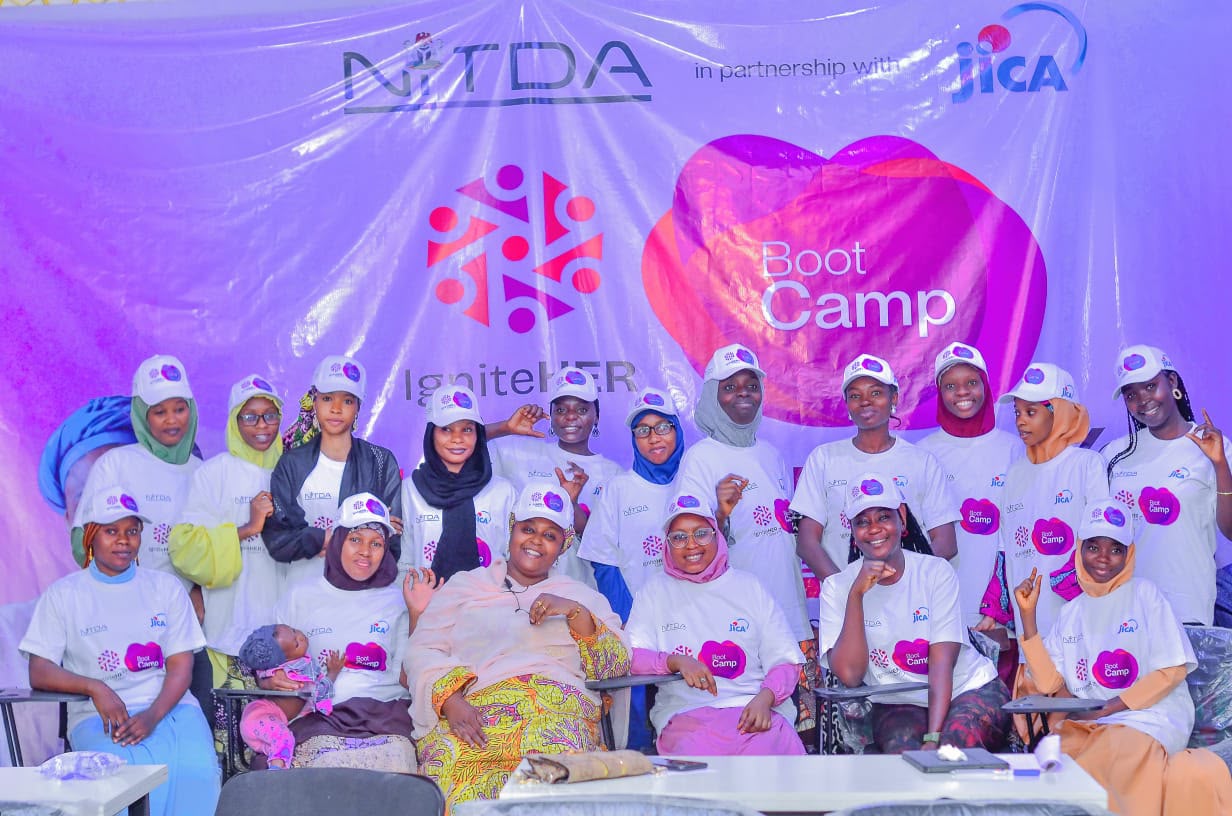
Speaking at the virtual opening ceremony of IgniteHER Boot Camp Cohort 3, NITDA Director-General Kashifu Inuwa announced that 317 women have been selected for the third edition across the North-West, North-East, South-East, and South-South geopolitical zones.
Inuwa framed the initiative around President Bola Ahmed Tinubu’s Renewed Hope Agenda, particularly its focus on human capital development, economic inclusion, and innovation.
Turning policy priorities into lived opportunities is central to NITDA’s mandate, he said, adding that IgniteHER is designed to deliver practical value while building on lessons from earlier editions.
The first two cohorts trained 220 women in total, including an expanded, intensive two-week hybrid boot camp of 111 women in August 2025.
Pointing to tangible momentum from past participants, Inuwa noted that seven women entrepreneurs from the programme gained international exposure in Japan.
Among them was Kemisola Bolarinwa of NextWare Technologies, who went on to raise $500,000 in equity funding from WhiteStat Ventures after the international engagement. For Inuwa, that milestone shows what happens when promising founders are connected to the right networks, insights, and markets.
Rather than treating the boot camp as a routine training course or a path to another certificate, Inuwa urged the new cohort to solve real problems, understand their customers, and build durable enterprises.
NITDA plans to reinforce the bridge between IgniteHER and its Idea Hatch incubation programme, offering mentorship, investment readiness, and market access—especially for founders with minimum viable products in healthcare, agriculture, finance, and fashion.
Technology, he noted, gives entrepreneurs a practical way to reach wider markets and serve communities that have long been overlooked.
Looking ahead, Inuwa said NITDA intends to roll out future cohorts across all six geopolitical zones on its way to nationwide reach across all 36 states and the Federal Capital Territory.
True success, he emphasized, lies not in headcounts or certificates issued, but in measurable business growth, capital raised, new markets entered, and jobs created.
To get there, NITDA is also working to strengthen the broader innovation ecosystem, including setting up seed funding mechanisms for high-potential founders.
He called on implementing partners—including the Japan International Cooperation Agency—alongside mentors and other stakeholders to track and document beneficiaries’ progress carefully so the programme can move from short-term support to lasting economic impact.
Addressing the women directly, he encouraged them to see themselves not simply as trainees, but as founders, employers, innovators, and builders of prosperity who can turn everyday community challenges into viable solutions.
Representing JICA, Ayumi Sato congratulated the participants and urged them to treat their selection as the start of a demanding, transformative journey rather than a finish line.
She encouraged them to absorb practical lessons, work closely with mentors, and lean on one another. Building a product or company often requires rethinking assumptions and stepping outside familiar territory, Sato said, adding that the mix of backgrounds, perspectives, and business ideas in the room is one of the programme’s biggest strengths.
She pointed out that alumni from earlier cohorts have already secured grants and opened conversations with investors, proving that strong networks and practical skills can unlock real opportunities.
When the boot camp wraps up, she told the entrepreneurs, the real work begins—applying what they have learned with courage and determination to grow their ventures and drive broader economic progress in Nigeria.
IgniteHER Cohort 3 Lead Facilitator Nnamdi Nwachukwu described the programme as a flagship NITDA initiative delivered with JICA to equip women founders with digital, innovation, and business-building skills.
He outlined five core goals for the cohort: strengthening digital innovation and entrepreneurship capabilities, preparing women-led startups for investment and venture financing, deepening investment readiness through targeted training, improving founders’ ability to engage investors and scale resilient companies, and building a national pipeline of women-led, tech-enabled startups.
With hubs operating across four geopolitical zones—including locations in Rivers, Kano, Jigawa, and Enugu states—Nwachukwu said the boot camp is structured to help founders sharpen their tech-driven models and step closer to serious investment.