




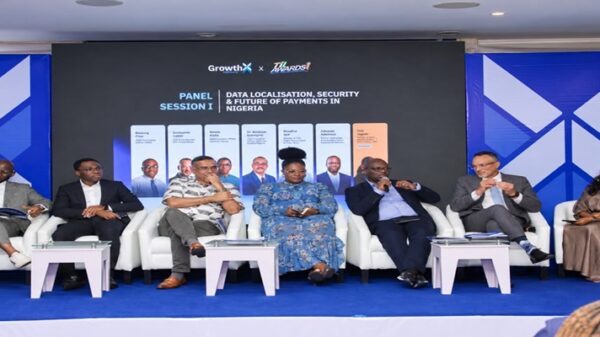
























Blessing Ehize, Chief Technology Officer of First City Monument Bank (FCMB), has welcomed the Central Bank of Nigeria’s (CBN) payment data localisation directive, describing it as an important step towards strengthening Nigeria’s digital and financial infrastructure while emphasising the value of continued industry engagement to support effective implementation ahead of the January 2027 deadline.
Ravenewsonline reports that the CBN has directed banks and fintech companies to ensure that payments data currently hosted outside Nigeria is domiciled within the country from January 1, 2027.
Speaking during a panel session at the inaugural GrowthX by Techeconomy conference in Lagos, Ehize said continued collaboration between regulators and industry stakeholders would help provide implementation guidance and support a smooth transition across the financial services ecosystem.
According to him, additional guidance on key technical and operational considerations would help institutions align their preparations and develop structured transition plans.
He noted, for example, that further clarity around data hosting requirements, including the treatment of specific categories of payments data and hybrid-cloud environments, would support effective planning and execution across the sector.
“As an industry, we are committed to supporting the objectives of the policy,” he said. “Additional guidance on implementation priorities and technical requirements would help institutions align their plans and execute the transition effectively.”
Ehize noted that financial institutions are currently assessing the infrastructure, technology investments and migration strategies required to meet the policy objectives within the stipulated time frame.
He also advocated a phased implementation approach with clearly defined milestones, while expressing confidence in Nigeria’s capacity to achieve the localisation goals.
“Nigeria has the technical capability to successfully implement data localisation,” he said. “A phased roadmap with clearly defined milestones would help institutions prioritise investments, manage transition activities effectively and achieve the desired outcomes.”
He added that a structured approach would support a seamless migration process while preserving service reliability and customer experience across the financial sector.
Ehize’s comments reflect ongoing industry discussions on the operational and technical considerations of implementing payment data localisation and aligning with regulatory objectives.
Also speaking during the session, Hakeem Adeniji-Adele, Deputy Managing Director of eTranzact, said the scale of infrastructure and data involved reinforces the importance of a carefully coordinated implementation approach.
“A phased migration approach could support effective implementation by allowing institutions to prioritise critical workloads while maintaining service continuity throughout the transition process,” he said.
According to Adeniji-Adele, the challenge is less about willingness to comply and more about executing data and infrastructure migration activities efficiently while maintaining operational resilience.
He also acknowledged CBN’s ongoing engagement with financial technology operators and expressed optimism that continued collaboration between regulators and industry stakeholders would support successful implementation across the ecosystem.
Panellists at the session emphasised the importance of planning, ecosystem-wide coordination and phased execution to deliver a seamless transition that advances the objectives of data localisation while maintaining stability across Nigeria’s financial services sector.