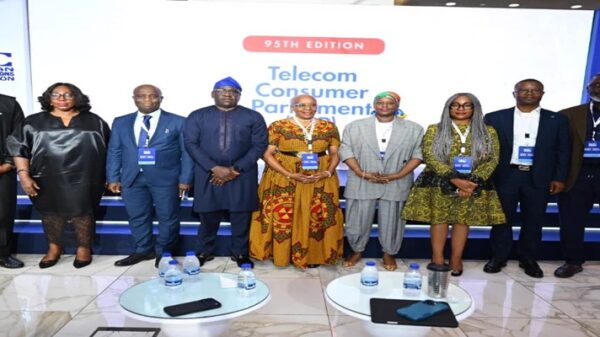





























“We need to appreciate how critical education is to economic development because of the role of human capital,” Maida said. “The President has made it very clear the role of human capital towards achieving the $1 trillion economy goal.”
He said existing government programmes to develop digital skills would have limited impact if people could not afford the connectivity needed to access them.
“This is where this initiative is very critical,” Maida said.
The NCC estimates that even the relatively small daily allowance could have a significant cumulative effect when applied across millions of learners. Maida said the programme was designed as a long-term investment in productivity rather than a short-term cost to telecommunications operators.
“One hundred megabytes of data might sound like a little, but when you look at it over a month and over a year, and cumulatively over the millions of learners and students that are going to access it, it’s really a significant investment by the industry towards the future of this country,” he said.
The programme comes as internet access remains an important component of education, particularly for students relying on digital libraries, online courses, learning management systems and vocational training platforms.
The NCC said the 100MB allowance could also help reduce disparities in access to teachers and educational resources between regions. Maida said connectivity could allow students in areas with shortages of teachers to access educational resources and expertise from elsewhere.
“The gap between certain regions of the country where you would have a deficit in terms of teachers and other regions where you would have a surplus, connectivity is going to bridge that gap,” he said.
The regulator said the free access will initially be limited to platforms that have been assessed, approved, and whitelisted. Eligible services include learning management systems, digital libraries, educational repositories, teacher development platforms and technical and vocational training platforms.
Ayuba Shuaibu, Director of Policy, Competition and Economic Analysis at the NCC, said the Federal Ministry of Education and the commission would jointly approve platforms participating in the programme.
The framework also requires participating platforms to comply with telecommunications, cybersecurity, consumer protection, child protection and data protection rules, while incorporating safeguards for net neutrality and fair competition.
The programme could create a high cost for mobile operators as participation expands. Industry stakeholders have estimated that providing data to five million students could cost about N15bn a month, or N180bn a year.
Maida dismissed the projected cost as a strategic investment, arguing that a more productive population would ultimately create greater opportunities for the telecommunications sector and the wider economy.
“If the economy becomes more productive through these people who access these educational platforms, they are the future innovators in Nigeria, they are the ones who are going to come up with ideas and become leaders of tomorrow,” he said.
The 100MB limit is intended to keep the programme financially sustainable while the NCC monitors usage and assesses its impact, Maida said. Participating platforms are also being encouraged to reduce data consumption by limiting advertisements and optimising the delivery of educational content.
The NCC said it would begin collecting data on platform usage, data consumption, network performance, consumer complaints, service availability and regulatory compliance to determine whether the programme should be adjusted or expanded.
The commission’s chairman, Idris Olorunnimbe, described the initiative as evidence of the Federal Government’s commitment to education, while Education Minister Tunji Alausa commended the NCC for tackling what he described as a significant barrier to digital learning.
credit PUNCH