





















Jemina Idris Bakari travelled from Jalingo to Lagos with stories of the future of her students back home in Taraba.
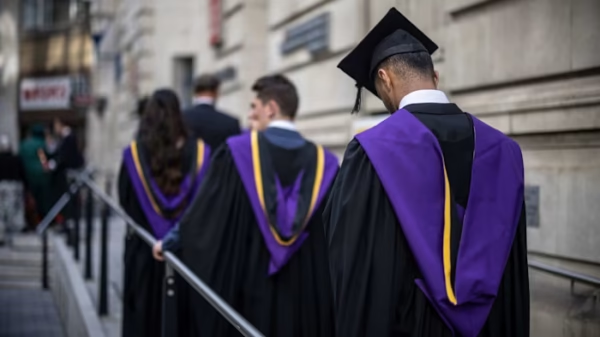
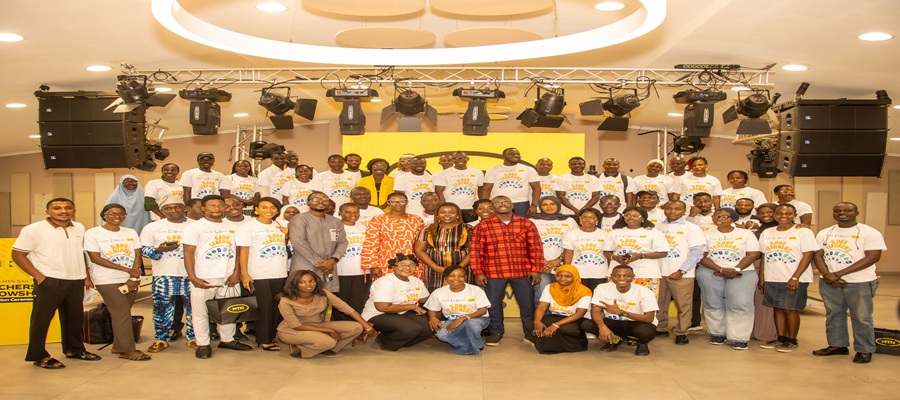
Standing on stage as a valedictorian at her graduation, Bakari and 4,702 others represent a resilient new era of public school teachers who are single-handedly transforming the Nigerian classroom.
She shared her experience during the MTN SAIL Teachers’ Fellowship Graduation ceremony held at the MTN Roof Top on September 10, 2026.
For years, she and other teachers faced the daunting daily task of teaching complex, abstract subjects to disengaged learners while using bare-minimum resources.
The 32-year-old Dorcas Oluwadara Dairo, who teaches Mathematics at Government Boys Science Secondary School in Kaduna State, recalled the emotional toll of trying to keep her students focused.
“Before now, we were already used to the traditional means of just using chalk and board to teach our students,” she explained.
“Especially Mathematics that can be so boring and the students, they almost zone out of class.”
That exhausting narrative shifted dramatically after her participation in a rigorous 16-week digital capacity-building programme.
Today, Bakari and Dairo joined 4,702 of their peers as they graduate from the initiative designed to equip grassroots educators with Artificial Intelligence (AI) and modern teaching methodologies.
Armed with these emerging technologies, these teachers have evolved from being traditional lecturers into dynamic facilitators of digital learning.
The integration of AI has rescued their students’ academic prospects and breathed new life into the teachers’ own professional routines.
Bakari, who is also a Basic Science teacher at Government Day Secondary School Central in Jalingo, noted how technology has finally helped her simplify difficult science topics for her rural learners.
“AI helps in improving our teaching and learning, especially towards generating lesson ideas, and also helps in simplifying some of my abstract concepts,” Bakari noted.
Dairo echoed this, adding, “We can easily form our lesson notes. And then topics that seem abstract and that seem so difficult for our students, we can actually simplify it using the AI tools.”
The most profound impact, however, is visible in the students whose educational trajectories have been altered by their teachers’ dedication.
According to both valedictorians, the shift from rote memorisation to interactive technology has sparked an unprecedented hunger for knowledge in their public school classrooms.
Daradairo proudly observed that her students now “participate better in classes” and are even taking their learning into their own hands.
“With the ideas about AI tools… they can go back also to actually get more information on that lesson, and then their performance has actually improved,” she shared.
For these educators, this graduation is a personal career victory and a lifeline for their respective communities.
Looking ahead to her journey back to Taraba State, Bakari summarised the heavy, yet joyful, burden carried by all 4,702 graduating fellows.
“I feel honoured and grateful because I see it as not only my personal achievement, but a responsibility for me to go back to my school, to make use of what we have learnt and bring a positive change to our schools and community,” she declared.