




















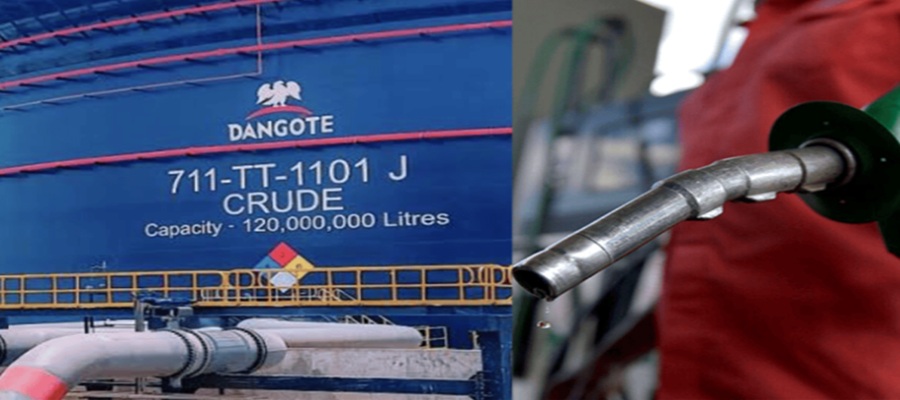
Dangote Petroleum Refinery has approved the recall of hundreds of engineers previously redeployed or sacked following a tense face‑off with staff unions, even as President Bola Tinubu launches a wide‑ranging restructuring of Nigeria’s power sector.
Dangote Refinery
The refinery, located in the Lekki Free Trade Zone, has invited back engineers redeployed across other Dangote Group business units after a dispute over attempts by workers to join the Petroleum and Natural Gas Senior Staff Association of Nigeria (PENGASSAN).
Sources within the company confirmed that the recall is part of a broader reconciliation effort, under a “conditional pardon” scheme that allows the affected staff to return to work on strict assurance of discipline and professional conduct.
Management has warned, however, that any repeat of the earlier industrial misconduct would attract immediate sanctions, underscoring a no‑tolerance stance on actions perceived as saboteur to refinery operations.
The crisis initially flared when management blocked unionisation moves by non‑unionised staff, triggering agitation over job security, welfare conditions and freedom of association.
The labour dispute led to the redeployment and, in some cases, termination of several engineers, feeding into a broader narrative of tension between industrial peace and operational control in Nigeria’s major energy projects.
Tinubu restructures power sector
In parallel, President Tinubu has begun a major reset of the national power sector after months of prolonged grid failures and nationwide blackouts.
The presidency announced the nomination of Mr Joseph Tegbe, an economist and fiscal‑reform expert with over 35 years of experience, as substantive Minister of Power, replacing Mr Adebayo Adelabu, who stepped down to pursue a governorship ambition in Oyo State.
Tegbe, a former senior partner and head of advisory services at KPMG Africa and now Director‑General and Global Liaison for the Nigeria‑China Strategic Partnership, is expected to bring his experience in fiscal policy and institutional reform to stabilise the power supply value chain.
The President also reappointed a former power minister, Mr Lanre Babalola, as Special Adviser on Power and Chairman of the Presidential Task Force on Power Sector Reset and Restoration.
The task force is mandated to redesign the structure of the power sector, enforce a “performance before expansion” framework, cut technical and commercial losses, strengthen tariff discipline, and deliver a 90‑day implementation blueprint for urgent reforms.
The move signals a sharper focus on accountability, revenue assurance and grid discipline as the federal government seeks to restore public confidence and attract long‑term investment into the power sector.
Growing energy governance debate
The Dangote refinery labour standoff and the fresh power‑sector restructuring are now being closely watched as twin indicators of Nigeria’s struggle to balance industrial stability, labour rights and systemic reform in the energy space.
While the refinery attempts to mend relations with its technical workforce, the Federal Government is pushing to synchronise its interventions across the entire electricity value chain, from generation to transmission and distribution.
Analysts say both developments underscore the need for structured dialogue between labour, management and policymakers if the country is to convert its vast energy potential into stable, reliable power for homes and industries.