





























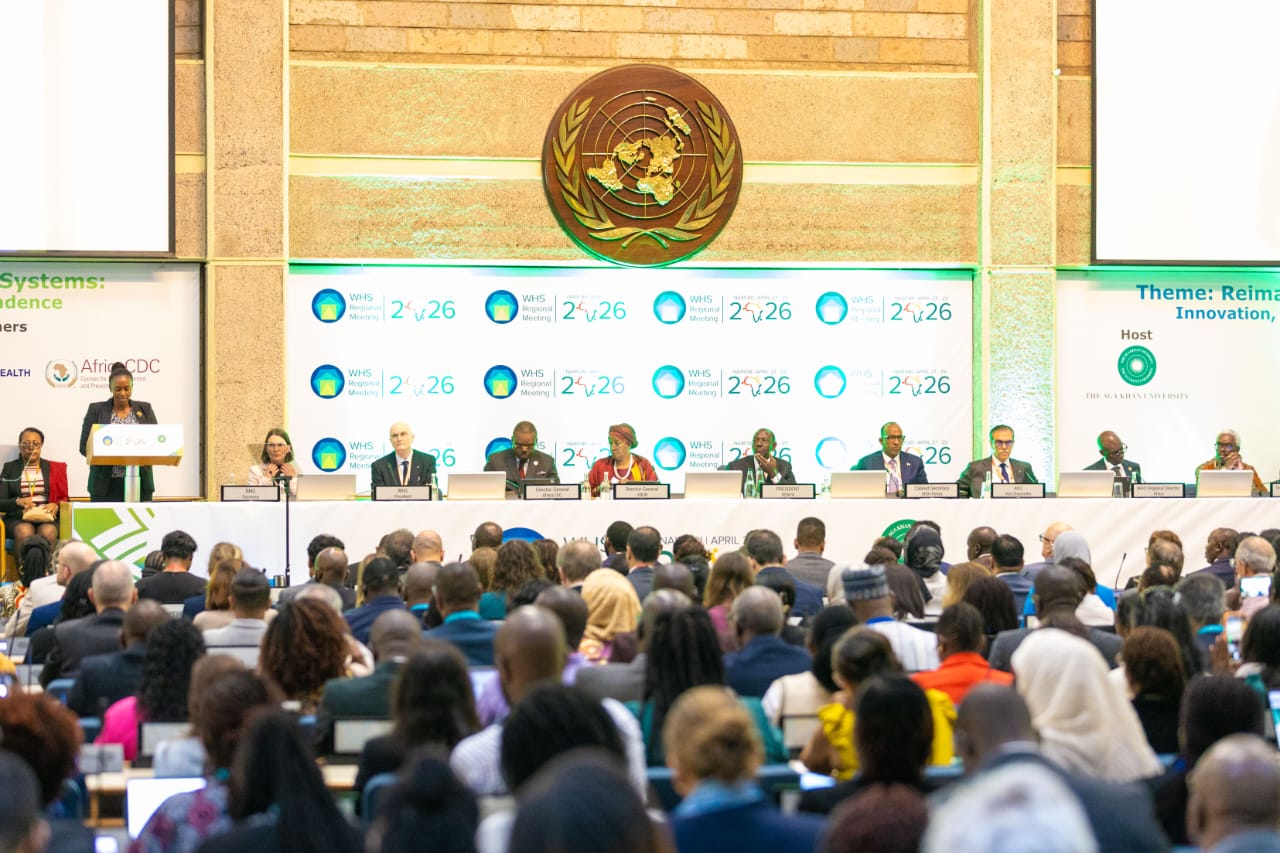
The 2026 World Health Summit Regional Meeting opened in Nairobi on Wednesday with a strong call for coordinated action to build more resilient health systems across Africa.

2026 World Health Summit
The summit, hosted by Aga Khan University in partnership with the World Health Organization (WHO), Kenya’s Ministry of Health, and the Africa Centres for Disease Control and Prevention (Africa CDC), attracted over 2,000 health leaders, policymakers, researchers, and development partners from more than 50 countries.
The meeting is themed: “Reimagining Africa’s Health Systems: Innovation, Integration and Interdependence.”
Speaking at the opening ceremony, Kenya’s President, William Ruto, urged African governments, health institutions, donor agencies, and development partners to move away from fragmented interventions and adopt system-wide reforms anchored on local ownership, strategic investment, and accountability.
Ruto said Africa must reposition itself within the global health architecture by leveraging its strengths and becoming a source of scalable health solutions rather than being viewed solely through the lens of persistent challenges.
“This imbalance is neither sustainable nor tenable. It calls for a decisive shift from fragmented, piecemeal interventions to comprehensive, system-wide transformation backed by coherent strategy, domestic and international financing, and accountable institutions,” he said.
President of the World Health Summit, Prof. Axel Pries, described the Nairobi meeting as a reflection of Africa’s growing influence in shaping global health priorities.
He said the summit was designed to convene leaders across sectors and regions to translate policy discussions into practical actions that strengthen health systems globally.
Also speaking, Prof. Lukoye Atwoli, International President of the World Health Summit Regional Meeting and Dean of Medical College East Africa at Aga Khan University, said the summit marked a shift in Africa’s role in global health governance.
“For too long, Africa has been the subject of health conversations held elsewhere. Today, African institutions, researchers, and policymakers are co-authors of global health policy,” Atwoli said.
President and Vice Chancellor of Aga Khan University, Dr. Sulaiman Shahabuddin, said despite ongoing challenges such as climate change, chronic diseases, inadequate funding, digital inequality, and workforce gaps, Africa’s health sector is increasingly better positioned to integrate systems, deploy technology, and develop talent for quality healthcare delivery.
WHO Regional Director for Africa, Dr. Mohamed Yakub Janabi, said the summit offered an important opportunity to strengthen collaboration and advance universal health coverage through robust primary healthcare systems.
According to him, discussions at the summit are expected to generate a practical blueprint for building a more coherent and integrated health ecosystem across the continent.
Kenya’s Principal Secretary for Public Health and Professional Standards, Mary Muthoni, said global health security must remain a top priority for governments.
“Global health security is not a luxury; it is a prerequisite for national stability. We must move from reactive crisis management to proactive pandemic preparedness,” she said.
Director-General of Africa CDC, Dr. Jean Kaseya, stressed the need for Africa to finance and build resilient health systems at scale to strengthen health security and reduce dependence on external support.
He said the Nairobi meeting provides a strategic platform for mobilising investments, strengthening partnerships, and advancing African-led healthcare solutions.
The summit will feature over 80 sessions focused on health financing, workforce development, digital health innovation, climate and health, and strengthening universal health coverage.
The meeting continues over the coming days with further discussions expected on emerging health challenges and long-term healthcare resilience across Africa.