


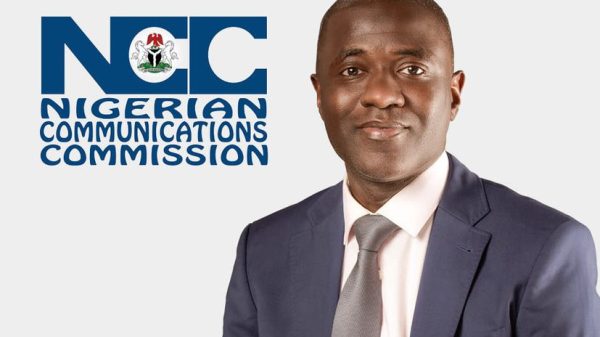

























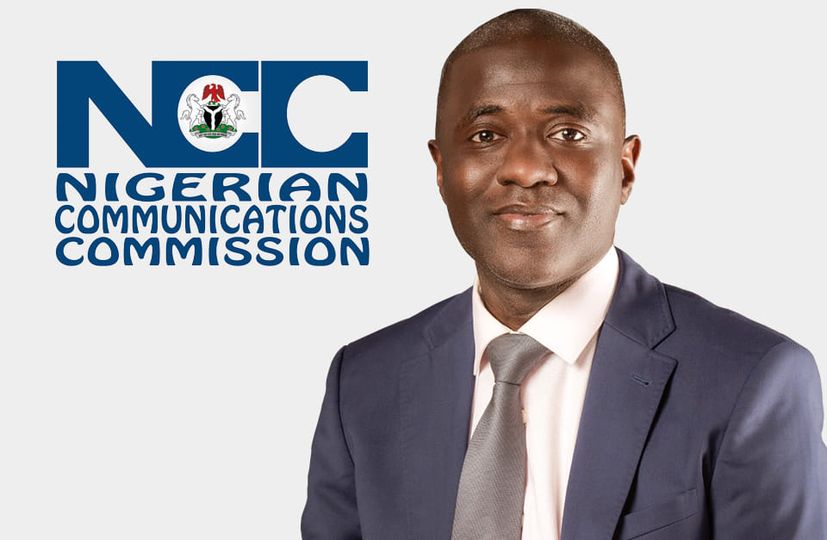
Nigerian Communications Commission (NCC) has identified Artificial Intelligence (AI) and the Internet of Things (IoT) as critical technologies for improving business efficiency, accelerating innovation and supporting Nigeria’s ambition to build a $1 trillion digital economy.
NCC
Aminu Maida, Executive Vice Chairman and Chief Executive Officer of the NCC, made this known at the 17th edition of Nigeria Communications Week and Africa’s Beacon of ICT Merit and Leadership Award held in Lagos.
Represented by Toluwalase Modele Rufai, Acting Controller of the NCC Lagos Office, Maida said AI and IoT had evolved from emerging technologies into powerful tools driving productivity, reducing operational costs and creating competitive advantages across multiple sectors.
Read Also: NCC Releases Draft MVNO Rules to Deepen Competition in Telecom Sector
Speaking on the theme, “Impact of AI and IoT on Business Operational Efficiency,” he described the technologies as indispensable to Nigeria’s economic transformation agenda.
“This year’s theme is not only timely but profoundly important. As Nigeria accelerates its journey toward a $1 trillion digital economy, Artificial Intelligence and the Internet of Things have moved from futuristic concepts to present-day drivers of productivity, cost optimisation and competitive advantage across every sector,” he said.
According to him, AI-powered predictive analytics is helping manufacturers anticipate equipment failures before they occur, reducing downtime and maintenance costs, while IoT-enabled sensors are improving agricultural productivity through real-time monitoring of soil conditions.
He added that connected technologies are transforming logistics and supply chain management by improving visibility, reducing delays, lowering operational costs and enhancing customer satisfaction.
“Across banking, healthcare, smart cities, manufacturing and governance, these technologies are streamlining operations, automating routine tasks and unlocking data-driven decision-making that was unimaginable just a decade ago,” he said.
Maida, however, stressed that the successful deployment of AI and IoT depends largely on the availability of resilient and high-capacity telecommunications infrastructure.
“At the heart of every AI and IoT deployment lies one critical enabler: resilient, high-capacity connectivity. Without secure, scalable broadband networks, the full promise of real-time data exchange, seamless device interoperability and intelligent automation remains unfulfilled,” he said.
The NCC boss said the commission was reviewing the Nigerian National Broadband Plan (NNBP) 2020–2025 to improve efficiency and sustainability within the telecommunications sector.
He disclosed that the commission was also engaging state governments to reduce Right-of-Way charges and administrative bottlenecks in order to accelerate fibre-optic infrastructure deployment nationwide.
According to him, the NCC has made harmonised spectrum resources available to support mobile broadband, fixed wireless access and IoT services, while the 2026–2030 Spectrum Roadmap is expected to create additional opportunities for broadband expansion and emerging technologies.
“With broadband penetration exceeding 52 per cent and growing 4G and 5G adoption, these efforts enhance efficient spectrum management, drive innovation, provide regulatory certainty and position Nigeria in line with global best practices,” he said.
Maida also highlighted the commission’s recently introduced General Authorisation Framework, which provides a regulatory sandbox for innovators to test AI, IoT, blockchain and other emerging technologies in a controlled environment.
He noted that the NCC had strengthened cybersecurity and consumer protection through initiatives such as the designation of telecommunications infrastructure as Critical National Information Infrastructure (CNII), adoption of a Zero-Trust cybersecurity framework and implementation of guidelines for secure AI and IoT deployment.
The NCC chief emphasised the need for collaboration among government agencies, regulators, operators, technology providers, academia and investors to address challenges such as inadequate power supply, skills shortages, data privacy concerns and consumer protection issues.
Also Read: NCC Boss to Take Centre Stage at Nigeria’s ‘ICT Oscars’ Event
“The NCC remains fully committed to creating an enabling, predictable regulatory environment that attracts investment, spurs innovation and delivers inclusive growth,” he said.
Maida urged stakeholders to work collectively towards building a digitally empowered nation where AI and IoT technologies not only improve business efficiency but also transform lives, strengthen the economy and position Nigeria as a leader in Africa’s digital future.
The event brought together regulators, industry leaders, innovators and other stakeholders to discuss emerging trends, policy directions and technological innovations shaping Nigeria’s digital economy.