
























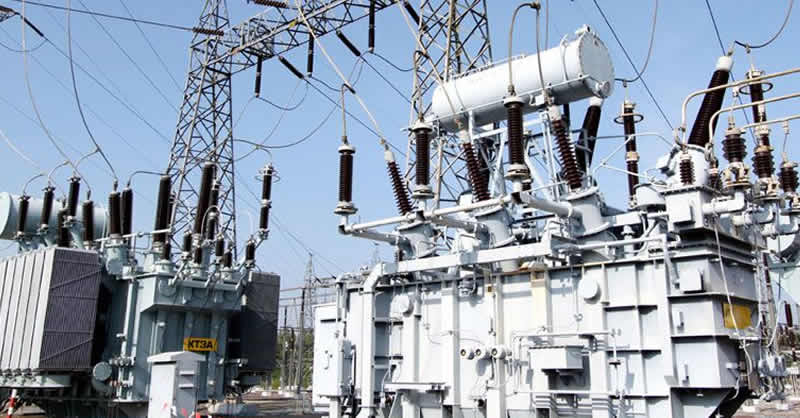
Federal Government has threatened to disconnect power-generating companies (GenCos) from the national grid if they fail to activate Free Governor Control (FGC) across all generating units, in a move aimed at curbing repeated system collapses and ensuring grid stability.
The Nigerian Electricity Regulatory Commission (NERC) issued the warning in Order NERC/2025/094, signed on August 26 by Vice-Chairman Musiliu Oseni and Commissioner for Legal, Licensing & Compliance, Dafe Akpeneye. The directive, which takes effect on September 1, 2025, mandates GenCos to comply with FGC requirements or face sanctions.Nigerian fashion trends
FGC is a turbine governor control system that allows power plants to automatically adjust their output in response to changes in grid frequency. By stabilising the grid, the system ensures demand and supply remain balanced, preventing widespread outages.
Under the new rules, any GenCo that fails to implement FGC on its generating units by November 30, 2025, will be fined 10 per cent of the invoice associated with the defaulting unit for every day of non-compliance. A generating unit that remains in breach for 90 consecutive days will be disconnected from the grid until certified compliant by the Nigerian Independent System Operator (NISO).
NERC said the measures were introduced after the national grid suffered eight disturbances in 2024, including five full system collapses and three partial outages. Investigations by the Transmission Company of Nigeria linked the incidents to widespread non-compliance with FGC requirements among GenCos.
To enforce compliance, the regulator has directed all grid-connected power plants to install fast-acting governor systems and operate them in real time. GenCos are also required to procure Grade Level 5 IoT-enabled meters capable of monitoring active power, reactive power, voltage, frequency, and power factor. These must be installed by October 31, 2025, after which NISO will integrate them within 20 days.
NISO will track compliance using real-time data, compile hourly performance records, and submit monthly reports to NERC. Defaulting operators will have penalties applied directly through the market settlement process, with proceeds remitted into the Ancillary Service Account.
The commission stressed that its authority is rooted in the Electricity Act 2023, which empowers it to set and enforce operating codes that guarantee safety, security, and reliability in the electricity sector.
NERC also reminded GenCos that the Grid Code requires every generating unit to be fitted with fast-acting governors capable of primary control. “Where a generating unit becomes isolated from the system but is still available to supply demand, it must be able to provide primary control to maintain frequency and voltage,” the order stated.
The commission added that failure to enforce FGC compliance would continue to expose Nigeria’s fragile power sector to instability, with devastating consequences for consumers and the economy.