




























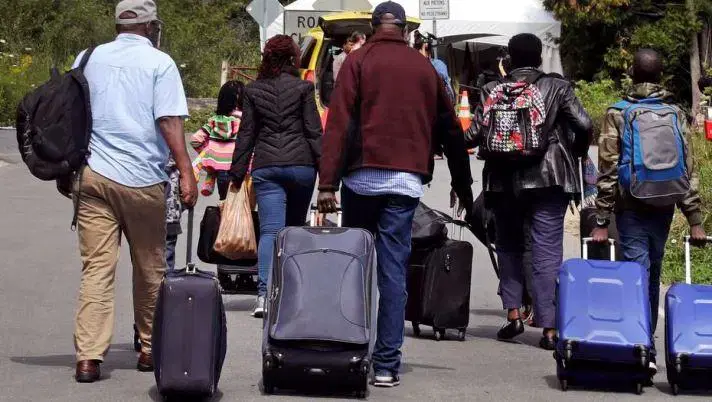
Moving abroad can require a significant financial commitment, but some countries and local governments are offering grants and other incentives to attract new residents, workers, entrepreneurs and families.
The programmes are generally aimed at reversing population decline, revitalising rural communities, attracting skilled workers, encouraging entrepreneurship and bringing abandoned or vacant properties back into use.
For eligible applicants, the incentives can be worth thousands of dollars or euros. However, most programmes come with strict conditions, such as securing employment, establishing a business, purchasing or renovating a property, or agreeing to live in a particular community for a specified period.
Here are five countries offering notable relocation incentives in 2026.
1. Ireland
Ireland offers significant financial assistance to people willing to renovate vacant or derelict properties and put them back into use.
Under the Vacant Property Refurbishment Grant, eligible applicants can receive up to €50,000 to renovate a qualifying vacant property. Those taking on a derelict property may be eligible for up to €70,000.
The potential support is even higher for qualifying properties on offshore islands, where grants can reach €60,000 for vacant properties and €84,000 for derelict properties.
However, the scheme is not simply a cash payment for moving to Ireland.
Applicants generally need to own the property or be in the process of purchasing it. The property must also satisfy conditions, including requirements relating to how long it has been vacant and when it was built.
The property can be used as the applicant’s home or, subject to the scheme’s rules, made available for rental.
The programme was also expanded in 2026 to cover certain conversions of vacant commercial and public buildings into residential accommodation.
2. Japan
Japan is using relocation incentives to encourage people to leave heavily populated metropolitan areas and settle in regional communities.
Under the country’s Regional Revitalization Migration Support Programme, eligible people living in Tokyo’s 23 wards or commuting there from the surrounding Tokyo area can receive financial support when relocating outside the Tokyo metropolitan area.
The support is intended for people who move for employment, establish a business or satisfy other programme requirements.
Under the national framework, support can reach ¥1 million for a relocating household and ¥600,000 for an individual. Families may also qualify for additional assistance of up to ¥1 million per child under 18.
The exact amount and eligibility requirements vary depending on the participating prefecture or municipality.
Foreign nationals should note that the programme is not an automatic payment for anyone who decides to move to Japan. Applicants must meet specific residency, employment, entrepreneurship and location requirements.
Individual municipalities may also offer additional incentives to attract new residents.
3. Portugal
Portugal has introduced relocation assistance aimed at encouraging workers and entrepreneurs to settle in inland areas rather than concentrating in the country’s major cities.
The Emprego Interior MAIS programme provides financial support to eligible workers who move their residence to an inland territory because of employment, self-employment or the creation of a business.
The programme can also cover certain people relocating from abroad, provided they meet the relevant immigration and programme requirements.
Depending on the applicant’s circumstances, assistance can include a direct financial payment, additional support linked to family members and a contribution towards transporting household belongings.
Government information has previously placed the maximum support at around €4,827, although the actual amount depends on individual circumstances and the applicable rules.
Portugal also provides certain tax benefits for people who establish permanent residence in qualifying inland territories.
Foreign applicants should remember that receiving relocation assistance does not automatically grant the right to live or work in Portugal. Immigration requirements must still be satisfied.
4. Italy
Italy has attracted considerable attention for relocation programmes aimed at reviving small towns and communities facing population decline.
Unlike some countries with nationwide schemes, Italy’s incentives are often introduced by individual regions or municipalities. They can include assistance for purchasing or renovating homes, moving to rural communities or establishing businesses.
One example is Calabria’s “Abita Borghi Montani Calabria” initiative, which aims to encourage people to transfer their residence to participating mountain villages or establish and maintain businesses there.
In February 2026, the Calabria regional government said agreements had been signed with 64 municipalities, while 89 municipalities had been admitted to the initiative.
The programme has a total allocation of €5 million, with funding focused largely on new business activities, as well as support for pensioners and remote workers.
Because Italian relocation incentives differ from one municipality or region to another, applicants should carefully check the specific rules before making plans.
There is therefore no single nationwide programme under which Italy simply pays foreigners to move to the country.
5. Switzerland
Switzerland is another country that has gained international attention for relocation incentives offered by small communities seeking to attract new residents.
One of the best-known examples is Albinen, a mountain village that has offered financial incentives to qualifying people who settle there and meet strict conditions.
The programme has been widely reported as providing approximately CHF25,000 per adult and CHF10,000 per child.
However, applicants must meet several requirements. These can include age and residency conditions, purchasing or constructing qualifying property and committing to remain in the village for a specified period.
People who leave before completing the required commitment may have to repay the money.
The scheme is therefore better viewed as a long-term settlement incentive rather than free cash for anyone wanting to relocate to Switzerland.
What applicants should know
The popular phrase “countries that pay you to move there” can make these programmes sound much easier than they actually are.
In reality, governments and local authorities are generally offering financial assistance in exchange for activities that support their economic or population goals.
That could mean renovating an abandoned home in Ireland, moving from Tokyo to a regional community in Japan, taking up employment in Portugal’s interior or establishing a business in an Italian village.
Applicants may also need substantial funds of their own.
For example, Ireland’s property grant is intended to contribute towards eligible refurbishment costs. A prospective applicant may still need to purchase the property and finance expenses that are not covered by the grant.
Immigration is another crucial consideration. A relocation incentive does not automatically provide a foreign national with permission to enter, live or work in a country.
Nigerians and other applicants living outside the destination country should therefore check visa, residence and work-permit requirements separately before committing money to a relocation plan.
Ultimately, the most attractive programmes are likely to be those that fit an applicant’s existing plans — whether that involves remote work, entrepreneurship, property investment, employment or moving abroad with a family.
With careful planning and a clear understanding of the eligibility requirements, relocation incentives can reduce some of the financial burden of moving abroad while helping governments revitalise communities in need of new residents.