
























As political parties and presidential candidates signed the 2027 National Peace Accord, stakeholders and Nigerians have welcomed the initiative but warned that its effectiveness will depend on enforcement, accountability and compliance beyond the signing ceremony.
The accord, signed in Abuja by representatives of major political parties and presidential candidates ahead of the 2027 general elections, commits political actors to issue-based campaigns and peaceful conduct.
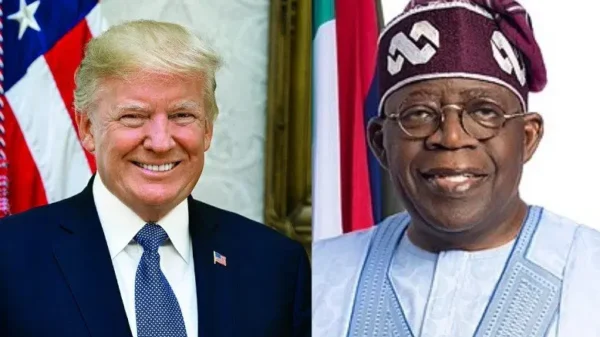
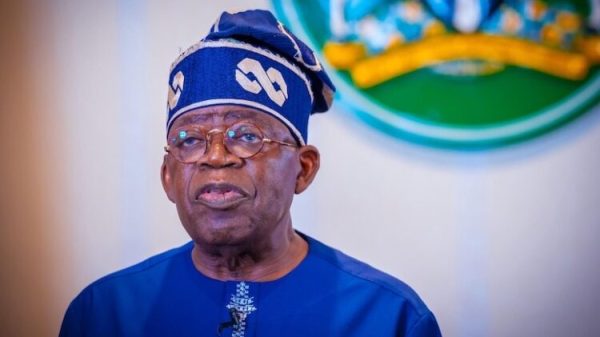
President Bola Tinubu, the presidential candidate of the All Progressives Congress, APC, was represented at the ceremony by the Secretary to the Government of the Federation, George Akume. The APC National Chairman, Nentawe Yilwatda, also signed the document, alongside the presidential candidates of the Nigeria Democratic Congress, NDC, Peter Obi; African Action Congress, AAC, Omoyele Sowore; and Social Democratic Party, SDP, Adewole Adebayo.
The signatories pledged to base their campaigns on issues affecting Nigerians and refrain from instigating or sponsoring violence, hate speech and other actions capable of undermining the electoral process.
However, reactions obtained by Vanguard showed that while the accord was broadly regarded as useful, many stakeholders questioned whether politicians would honour the commitments after signing.
‘Prosecution, not signatures, will deter offenders’
A human rights lawyer and Principal Partner of Idris Faro and Co., Idris Faro, described the accord as a good initiative but argued that it had become largely ceremonial.
According to him, politicians had repeatedly failed to adhere strictly to previous accords, while violence and other electoral offences continued to occur during elections.
“Not until politicians are jailed for political violence, it will continue recurring,” Faro said.
He argued that prosecuting electoral offenders would have a greater impact than repeatedly signing peace agreements.
Faro noted that the National Peace Accord was not itself created by the Electoral Act and did not carry statutory penalties. He said offences such as ballot-box snatching, assault, tampering with electoral materials and unlawful possession of firearms were already prohibited by law.
He therefore called for the effective establishment and operation of an Electoral Offences Commission, saying offenders must face proportionate punishment.
BOOT Party wants voters included
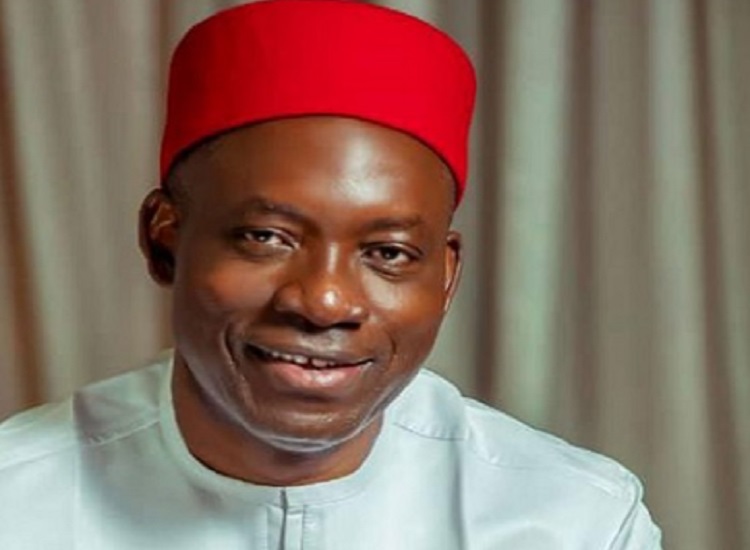
The National Chairman of the Because Of Our Tomorrow, BOOT, Party, Sonny Adenuga, said the peace initiative should extend beyond political parties and candidates to include all participants in the electoral process.
“I did not attend because it is the same issues that have been since the Peace Accord was initiated,” Adenuga said.
He argued that voters should be sensitised against allowing themselves to be used by politicians and that peace-building should continue throughout the electoral cycle rather than being restricted to election periods.
Accord now a working document — Analyst
Public affairs analyst Dr Ebriku John Friday described the accord as a relevant working document that could help reduce tension ahead of the elections.
He said political parties and candidates were expected to abide by its provisions in the interest of Nigerians and the electoral process.
Friday expressed optimism that the 2027 elections could be conducted peacefully, stressing the importance of allowing Nigerians to choose their leaders in a safe environment.
He also argued that the establishment of an Electoral Offences Commission would complement the Peace Accord rather than replace it.
IPC: Accord can promote accountability
The Executive Director of the International Press Centre, IPC, Lanre Arogundade, said the accord could have a positive impact if civil society and the media monitored compliance.
He said the document commits parties and candidates to issue-focused campaigns free from hate speech, incitement and disinformation.
Arogundade cited former President Goodluck Jonathan’s role in facilitating a peaceful transfer of power after the 2015 presidential election as an example of how political commitments could contribute to electoral stability.
However, he advocated the establishment of an Electoral Offences Commission capable of investigating, arresting and prosecuting perpetrators of electoral misconduct.
Peace Accord still relevant — Bassey
Public affairs commentator Henry Bassey also defended the relevance of the initiative but acknowledged its limitations.
“The real test is what happens when someone breaks it,” he said, arguing that agreements were taken more seriously when violations carried consequences.
According to him, the Peace Accord can help reduce tension, but it cannot replace the Electoral Act or other laws that provide penalties for electoral offences.
“We need both. The Peace Accord says, ‘Please don’t break the rules’; an Electoral Offences Commission says, ‘If you break the law, you will face the consequences’,” Bassey said.
NDYC: Accord must move beyond ceremony
The National Coordinator of the Niger Delta Youth Congress, Israel Uwejeyan, said the 2027 Peace Accord was significant because it addressed emerging threats to democracy beyond physical violence.
He said the latest initiative placed greater emphasis on issue-based campaigns, responsible political communication, misinformation, disinformation, social-media conduct, protection of vulnerable groups and respect for the Constitution and electoral laws.
Uwejeyan, however, said the real value of the accord would depend on continuous monitoring, public reporting and consequences for breaches.
“The Accord must move from a culture of signing to a culture of compliance,” he said.
He argued that any candidate who violated the agreement after signing it should face an immediate public response and, where the conduct amounted to a criminal offence, investigation and prosecution.
Nigeria, he said, needed political actors who respected democratic rules, institutions that enforced those rules impartially and citizens who were confident that no politician was above the law.
‘Participation gap weakens accord’
Human rights lawyer and Principal Partner of Cornerstone Advocates, Toluwa Odheke, described the signing as commendable but largely formal, noting that similar accords had been signed ahead of previous elections.
Odheke said the National Peace Committee had facilitated several peace accords since its establishment in 2015, including national and sub-national agreements.
He identified the participation of the European Union as one of the notable features of the 2027 process, alongside the organisers’ stronger emphasis on the Constitution, Electoral Act, INEC guidelines and other electoral laws.
However, he raised concerns over the absence of some major political figures from the ceremony, arguing that an accord would be weaker if leading contenders did not participate.
Odheke also questioned the likelihood of strict compliance, noting that some signatories themselves had previously expressed doubts about the effectiveness of peace accords.
He stressed that the agreement was essentially a moral and political commitment rather than a statute with direct legal sanctions.
“If a candidate incites violence or engages in hate speech, that candidate may be prosecuted, but under the Electoral Act or the Cybercrimes Act, not under the peace accord as such,” he said.
He maintained that the accord’s principal strength was its reputational and political effect, while an Electoral Offences Commission would provide the enforcement mechanism currently lacking.
Credible elections require more than signatures
Public affairs analyst Patrick Onoja said the Peace Accord had evolved into a broader framework for preventive engagement, accountability and electoral risk management.
He said the 2027 process must move beyond the symbolism of political leaders signing documents in Abuja.
According to Onoja, the accord must reach political parties, candidates, campaign organisations, agents and grassroots structures where much of the electoral contest takes place.
“The ultimate measure of the 2027 Peace Accord will therefore not be the number of signatures obtained at the ceremony,” he said.
Rather, he said, its success would be determined by whether political actors kept their commitments when elections became highly competitive and the temptation to deploy hate speech, violence, ethnic profiling or misinformation was greatest.
The bigger challenge
The broad consensus among the stakeholders is that the Peace Accord remains useful as a mechanism for dialogue, confidence-building and public commitment to peaceful elections. However, signing the document alone is unlikely to guarantee credible elections.
For the accord to have a lasting impact, stakeholders argue that it must be backed by continuous monitoring, voter education, institutional independence, effective investigation and prosecution of electoral offences, and meaningful consequences for political actors who violate electoral laws.
The 2027 election will therefore test whether the Peace Accord can evolve from a ceremonial pledge into a practical instrument for accountability and peaceful democratic competition.