















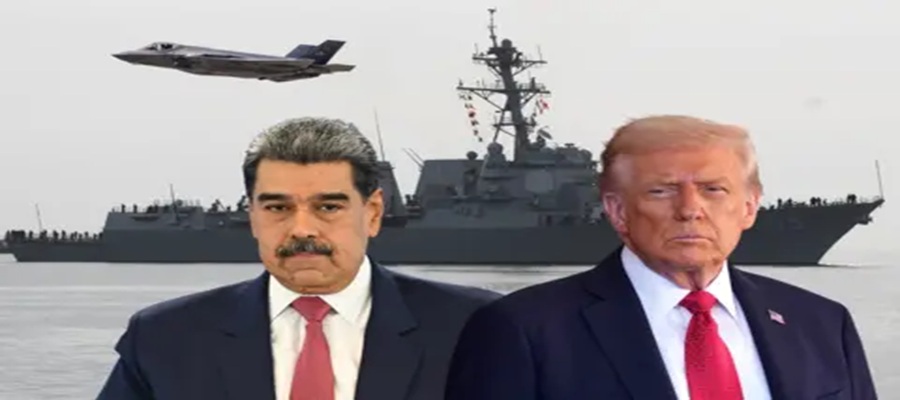
U.S. President Donald J. Trump has announced the successful capture of Venezuelan President Nicolás Maduro and his wife, Cilia Flores, in a large-scale military operation conducted overnight on Friday in Venezuela’s capital, Caracas.
Trump
Trump disclosed the development in a post on his Truth Social platform, stating that the United States “successfully carried out a large scale strike against Venezuela and its leader, President Nicolas Maduro, who has been, along with his wife, captured and flown out of the Country.”
The operation, dubbed Operation Absolute Resolve, involved over 150 aircraft, elite U.S. Delta Force commandos and FBI Hostage Rescue Team personnel, who raided Maduro’s fortified compound amid explosions that shook key military installations including Fort Tiuna and La Carlota Air Base around 2 a.m. local time.
According to media reports and official statements, the strikes followed a massive U.S. military buildup in the southern Caribbean, featuring guided missile destroyers, a missile cruiser, a Marine Corps amphibious ready group and the deployment of the USS Gerald R. Ford, the world’s largest aircraft carrier, in recent months.
The U.S. leader attributed the mission’s success to coordination with U.S. law enforcement, noting it came amid an escalating campaign since early September targeting alleged drug-trafficking vessels in the Caribbean and Pacific, as well as the seizure of oil tankers linked to Venezuelan ports in late December.
Casualty figures from the raid stood at least 80 Venezuelan personnel and 32 Cuban nationals killed, with Maduro and his wife extracted by low-flying helicopters to the USS Iwo Jima before transfer to New York’s Metropolitan Detention Center in Brooklyn.
Maduro Faces U.S. Charges
Maduro, indicted on narcoterrorism, cocaine trafficking and corruption charges, is scheduled for an initial court appearance in New York, with Attorney General Pam Bondi leading the prosecution.
Trump emphasised the operation’s aim to neutralise threats from the Maduro regime, declaring the U.S. would temporarily “run” Venezuelan oil infrastructure to facilitate a power transition while maintaining a naval quarantine.
Secretary of State Marco Rubio clarified no direct U.S. governance, but stressed leverage through oil blockades, while Defense Secretary Pete Hegseth hailed the troops for securing resource access without a full-scale invasion.
Venezuelan Transition Under Rodríguez
In Caracas, Venezuela’s Supreme Court swore in Vice President Delcy Rodríguez as interim president, backed by military loyalists who denounced the raid as a “barbaric kidnapping” and demanded Maduro’s immediate release.
Rodríguez pledged “peaceful coexistence” with Washington but rejected imperialism, as opposition leader María Corina Machado urged transition to exiled rival Edmundo González amid a tense calm with shuttered businesses and four detained Americans still held.
Airspace restrictions were lifted post-operation, but Rodríguez vowed continuity of socialist policies while exploring dialogue.
International Backlash Mounts
The strikes drew sharp global reactions, with allies like Israel endorsing the action and adversaries including China, Russia and North Korea condemning it as a violation of sovereignty, prompting a UN Security Council emergency session.
U.S. Democrats, led by Senate Minority Leader Chuck Schumer, criticised the lack of congressional approval, while worldwide protests erupted, countered by celebrations among Venezuelan exiles in Florida.
Observers note the raid escalates U.S. regional dominance, potentially reshaping Latin American geopolitics and oil markets as Delcy Rodríguez navigates leadership amid economic sanctions.