































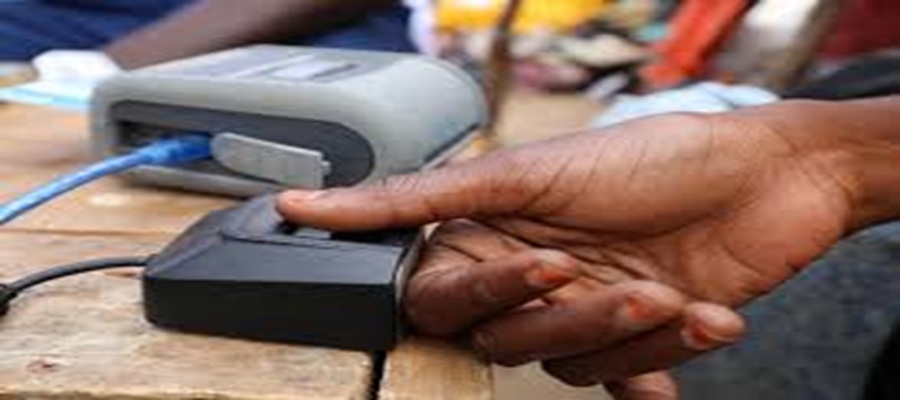
Millions of citizens across Africa are being denied access to essential services due to the rapid imposition of biometric digital-ID systems, a new report by the African Digital Rights Network has revealed.

Biometric
The study, published by the Institute of Development Studies (IDS), found that citizens are increasingly required to provide biometric and personal information as a condition for accessing fundamental rights and government services such as voting, education, healthcare, and social protection payments.
According to the report, marginalised groups including persons with disabilities, the illiterate, and those unable to afford mobile data or electricity for phone charging face significant barriers to registration, deepening existing inequalities.
It noted that many citizens also refuse to enrol due to fears of data breaches and mistrust of governments, with biometric identifiers such as fingerprints, iris scans, and facial recognition raising privacy concerns.
Dr Tony Roberts, Research Fellow at IDS and co-editor of the report, said: “Worryingly, fundamental human rights, like education, healthcare and the right to vote are rapidly becoming conditional on enrolment in biometric digital-ID systems.”
He added that some visually impaired citizens are forced to pay others to help them use their digital-ID on mobile phones to access social protection payments.
‘Gbenga Sesan, Executive Director of Paradigm Initiative and co-editor of the report, said: “Many citizens do not want to enrol for a biometric digital-ID because they have good reason not to trust their governments with their biometrics and personal information.”
The report highlighted examples of massive data breaches and cases where personal data was used to surveil critics and opposition leaders.
It warned that most systems, estimated to cost at least US$1 billion across Africa, lack adequate legal frameworks, robust digital security, and accountability mechanisms for remedy when errors or breaches occur.
The authors concluded that governments must adopt strong legislation to protect citizens’ rights and privacy before rolling out biometric IDs, stressing that systems should be developed with citizen participation rather than imposed top-down.
The report, Biometric Digital-ID in Africa: Progress and Challenges to Date – Ten Country Case Studies, covers Botswana, Namibia, Malawi, Côte d’Ivoire, Senegal, Democratic Republic of the Congo, Liberia, Ethiopia, Egypt, and Tunisia.