



















By Blaise Udunze
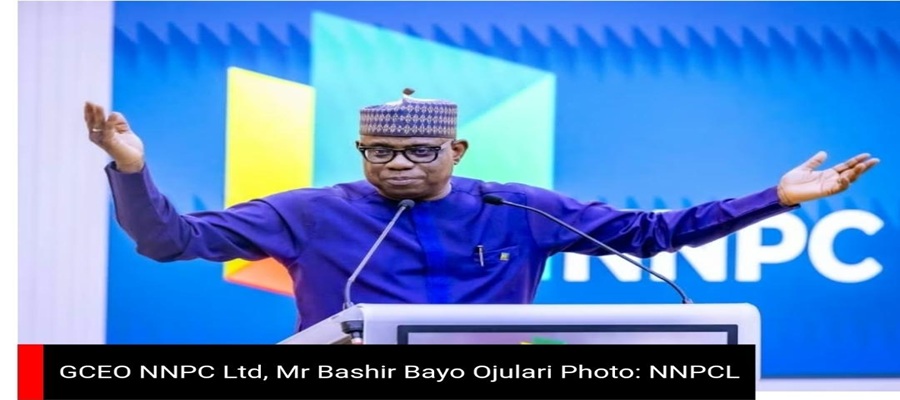
When the Federal Government approved the write-off of about $1.42 billion and N5.57 trillion in legacy debts owed by the Nigerian National Petroleum Company Limited (NNPC Ltd) to the Federation Account, it was rightly described as a landmark decision. After years of disputes, reconciliations, and contested figures, Nigeria’s most important revenue institution was, at least on paper, given a cleaner slate.
NNPC
The approval, contained in a report prepared by the Nigerian Upstream Petroleum Regulatory Commission (NUPRC) and presented at the last year November meeting of the Federation Account Allocation Committee (FAAC), effectively wiped out 96 percent of NNPC’s dollar-denominated obligations and 88 percent of its naira liabilities accumulated up to December 31, 2024. It resolved long-standing balances arising from crude oil liftings, joint venture royalties, production-sharing contracts, and related arrangements.
Judging it critically, the decision carries both promise and peril, but can be viewed from the perspective of a country desperate to restore confidence in public finance management. It offers an opportunity to reset relationships, clean up accounting records, and move forward under the Petroleum Industry Act (PIA). Yet, it also exposes deep structural weaknesses in Nigeria’s oil revenue governance, weaknesses that, if left unaddressed, could turn today’s debt relief into tomorrow’s fiscal regret.
Context matters. The debt write-off comes not during a period of revenue abundance, but at a time when Nigeria’s upstream revenue performance is under severe strain. According to the same NUPRC document, the commission missed its approved monthly revenue target for November 2025 by N544.76 billion, collecting only N660.04 billion against a projected N1.204 trillion.
Royalty receipts, the backbone of upstream revenue, tell an even starker story. It is alarming that against an approved monthly royalty projection of N1.144 trillion, only N605.26 billion was collected, leaving a shortfall of N538.92 billion. Cumulatively, by the end of November 2025, the revenue gap stood at N5.65 trillion, with royalty collections alone falling short by N5.63 trillion. These figures underscore how fragile Nigeria’s fiscal position remains, even as trillions of naira in historical obligations are being written off.
To be fair, the debts forgiven were not incurred overnight. They are the product of years of disputed remittances, lacking transparent accounting practices, and overlapping institutional roles, particularly under the pre-PIA regime. As petroleum economist Prof. Wumi Iledare has repeatedly observed, the former Nigerian National Petroleum Corporation combined regulatory, commercial, and operational functions, making revenue reconciliation cumbersome and frequently contested.
That legacy continues to haunt the system, as witnessed with the ongoing dispute between NNPC Ltd and Periscope Consulting, the audit firm engaged by the Nigeria Governors’ Forum, over an alleged $42.37 billion under-remittance between 2011 and 2017, which illustrates how unresolved the past remains. Though NNPC insists all revenues were properly accounted for as claimed, Periscope maintains that significant gaps persist, forcing FAAC to mandate yet another reconciliation exercise. This recurring pattern of audits, counterclaims, and stalemates has weakened trust in the federation revenue system and eroded confidence among states that depend on oil proceeds for survival.
Crucially, the debt write-off does not mean NNPC has turned a corner financially. Statutory obligations incurred between January and October 2025 remain on the books, amounting to about $56.8 million and N1.02 trillion. Although part of the dollar component was recovered during the period under review, the accumulation of new liabilities so soon after reconciliation raises uncomfortable questions about whether old habits are being replaced with genuine fiscal discipline.
More troubling still is what NNPC’s own audited financial statements reveal about its internal financial health. Despite recording a profit after tax of N5.4 trillion on revenues of N45.1 trillion in 2024, the company’s inter-company debts ballooned to N30.3 trillion, representing a 70 per cent increase within a single year. This is not debt owed to external creditors but largely obligations between NNPC and its subsidiaries, effectively the company owing itself.
Records show that of 32 subsidiaries, only eight are debt-free, and the rest, particularly the refineries, trading arms, and gas infrastructure units, remain heavily indebted to the parent company. There was a recurring cycle where profitable units subsidise chronically underperforming ones, and accountability steadily erodes because cash that should fund maintenance, expansion, and efficiency improvements is instead trapped in internal receivables.
The refineries offer a stark illustration whereby the Port Harcourt Refining Company alone owed N4.22 trillion in 2024, more than double its 2023 figure, while Kaduna and Warri refineries followed closely, with debts of N2.39 trillion and N2.06 trillion respectively. Despite the repeated failed turnaround maintenance with many years of rehabilitation spending, none have operated sustainably at commercially viable levels. Their continued dependence on financial support from the parent company highlights the cost of postponing difficult restructuring decisions.
And, for this reason, international observers have long warned about these structural weaknesses. One of the critics, the World Bank, has repeatedly flagged NNPC as a major source of revenue leakages. It further noted that the persistent gaps between reported earnings and actual remittances to the Federation Account. Even after the removal of petrol subsidies, the bank observed that NNPC remitted only about 50 per cent of the revenue gains, using the rest to offset past arrears. Such practices, while perhaps defensible in internal cash management terms, undermine fiscal transparency and weaken Nigeria’s macroeconomic credibility.
This is why the central issue is not the debt write-off itself, but what follows it because debt forgiveness is not reform. Without firm safeguards, it risks entrenching the very behaviours that created the problem in the first place. As Prof. Omowumi Iledare has warned, the scale and pace of the inter-company debt build-up represent a governance test rather than a mere accounting anomaly. Allowing subsidiaries to operate indefinitely without settling obligations is incompatible with the idea of a commercially driven national oil company.
The fact remains that if NNPC wants to function as a true commercial holding company under the PIA, it must enforce strict settlement timelines, restructure or divest non-viable subsidiaries, while clearly separating legacy debts from new obligations. With this, it holds subsidiary leadership accountable for cash flow and profitability. Independent, real-time audits and transparent reporting must become routine features of governance, not emergency responses triggered by controversy.
There is also a broader national implication. At a time when Nigerians are being asked to accept higher taxes, reduced subsidies, and fiscal tightening, large-scale debt write-offs without visible accountability risk undermining the legitimacy of the entire revenue system. Citizens cannot be expected to bear heavier burdens while systemic inefficiencies in the country’s most strategic sector persist.
Of a truth, the cancellation of NNPC’s legacy debts could mark a turning point in Nigeria’s fiscal governance, but only if it is not treated as its conclusion but the beginning of reform.
If discipline, transparency, and commercial accountability follow, the decision may yet help reposition NNPC as a profitable, credible, and PIA-compliant institution. If not, today’s clean slate will simply defer the reckoning until the next reconciliation, the next audit dispute, and the next fiscal crisis.
Blaise, a journalist and PR professional, writes from Lagos and can be reached via: [email protected]