











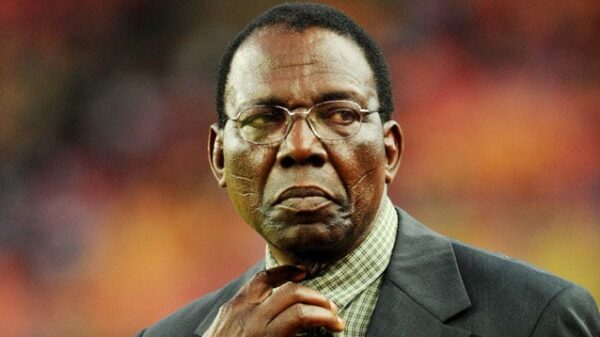









Phillip Shaibu, Director General of the National Institute of Sports (NIS), has accused the Federal Government of deliberately excluding the institute from national sports funding, despite record budgetary allocations to the sector in recent years.
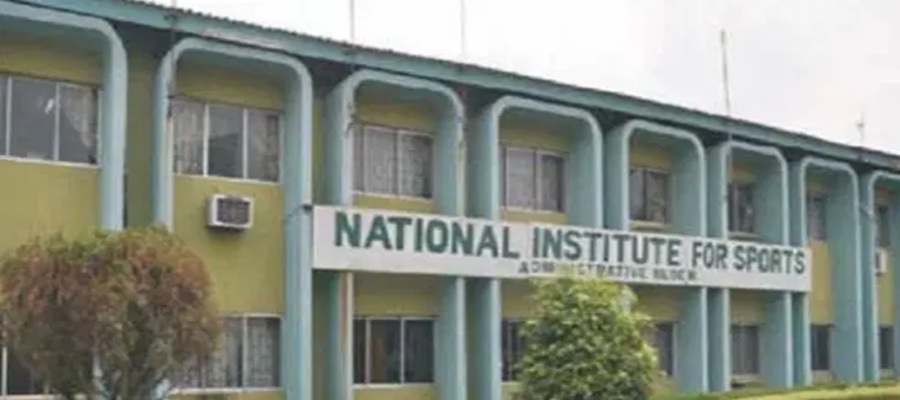
NIS
Shaibu raised the alarm on Monday, January 5, during an appearance on Sunrise Daily, noting that sports funding under President Bola Tinubu’s administration marked the highest allocation the sector has ever received. However, he lamented that the NIS has consistently been omitted from these budgets—a trend persisting for decades.
“Sports funding has seen one of the highest allocations in this administration. The last budget was the highest the sports sector has ever had, but NIS was not captured in that funding, and it has been like that for decades,” Shaibu stated.
He described the exclusion as intentional, pointing fingers at former sports ministers and the current budgeting framework, which he said prioritises consumption over infrastructure development and maintenance. Shaibu called on the National Assembly to summon past sports ministers to account for their roles in the institute’s decline.
“I call that all the former Ministers of Sports should be called to come and account for their role in destroying NIS. It was deliberate because the budgeting system encourages consumption and does not encourage infrastructural development or maintenance,” he added.
Flaws in Nigeria’s Sports Administration
Shaibu argued that Nigeria’s sports governance structure is fundamentally flawed, with government overreach in daily operations rather than focusing on infrastructure. Drawing on economic principles, he emphasised that government’s role should be to create enabling environments, allowing the private sector to build on solid foundations.
“In simple economics, government has no business in business but has business in providing enabling environments. In sports, the government has no business in the daily running of sports, but they have business in developing and building the infrastructure. That infrastructure is what the private sector will leverage on,” he explained.
Upon assuming office five months ago, Shaibu inherited a 51-year-old institute lacking a clear development plan. He quickly developed a roadmap, addressing funding gaps through public-private partnerships (PPPs), as private sector frustration over Nigeria’s poor sports performances waned.
“Everyone is tired of praying and fasting for our sports for us to win tournaments, so a lot of private sector players are interested in making NIS work,” he said.
Achievements Amid Funding Constraints
Despite a lean budget, Shaibu highlighted innovative strides, including reviving the long-dormant Abuja office without direct federal funding. The office now hosts modern facilities and successfully ran its first three-month coaching programme in 30 years, graduating students on December 18.
“We brought the Abuja office back to life with no resources… The office is back and well renovated without budget and can compete with any office in Nigeria in terms of standard,” he disclosed.
Shaibu warned that Nigeria’s sports ecosystem—reliant on NIS for producing players, coaches, and referees—remains crippled without adequate funding. “NIS is the critical sector that produces the players, the coaches, the referees. It’s the training institute for the sports ecosystem. When that system is not functioning, don’t expect anything better in Nigerian sports because the engine room for sports is not functioning,” he cautioned.