























Virtual reality (VR) technology could improve healthcare and industrial training in Nigeria by providing workers with opportunities to practice critical tasks, identify hazards and respond to emergencies in simulated environments.
The technology allows trainees to experience realistic scenarios without exposing patients, workers or equipment to the risks associated with practicing certain procedures in real life settings.
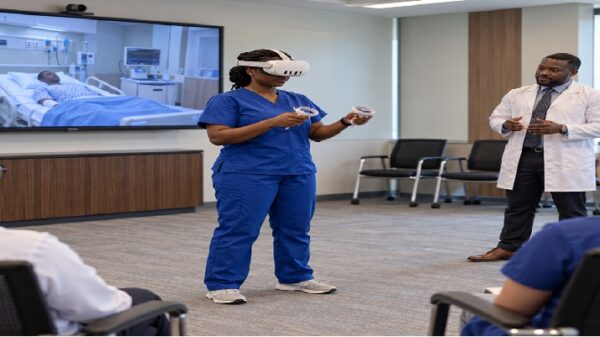
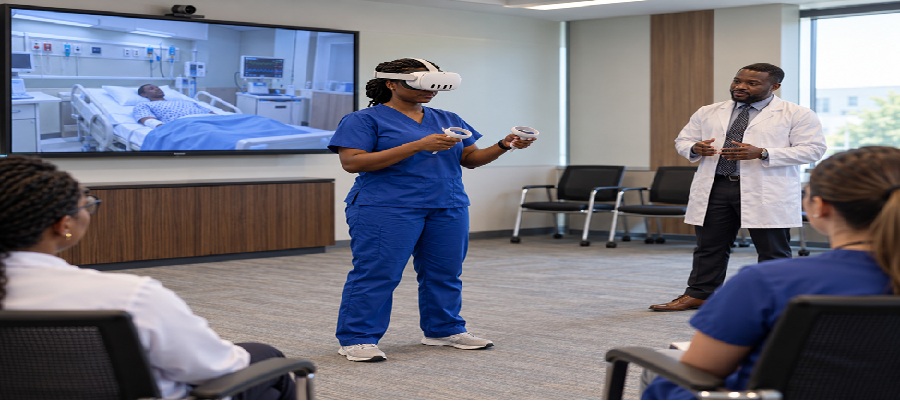
In healthcare, for instance, medical students and other healthcare professionals can use VR simulations to practice recognizing signs of a deteriorating patient, making clinical decisions, escalating care and communicating effectively during patient handovers.
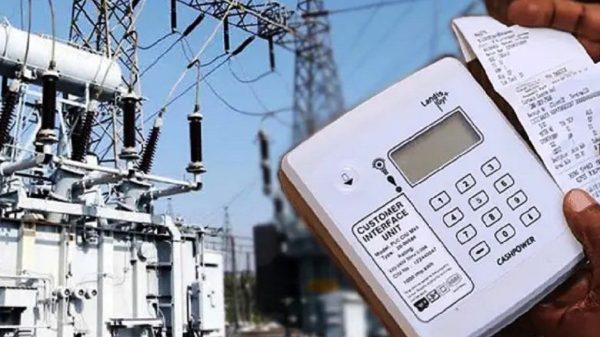
Similarly, industrial workers can use the technology to familiarize themselves with facilities, identify workplace hazards and rehearse safety procedures, including equipment isolation and responses to fires or machinery failures.
Insightful3D, a Nigerian company that develops immersive training solutions for healthcare and industrial organisations, is among the emerging players exploring the application of the technology to professional training.
Mr. Owolabi Olatunji, Managing Partner at Insightful3D Studio, said the technology could help bridge the gap between theoretical instruction and practical experience by allowing workers to rehearse difficult or potentially dangerous situations in a controlled environment.
According to him, immersive simulations can provide opportunities for repeated practice, enabling trainees to review their decisions, learn from mistakes and improve their responses before confronting similar situations in the workplace.
He said the potential value of VR training lies not merely in creating realistic digital environments but in helping people develop the skills and confidence required to perform their duties safely and effectively.
However, experts say the effectiveness of the technology depends largely on the quality of the simulations, the accuracy of the procedures presented and the extent to which the training reflects real world conditions.
In hospitals, clinical scenarios must be developed and reviewed by qualified professionals to ensure that they reflect accepted medical practices and established treatment guidelines.
In industrial environments, safety officers and operations teams must also verify that simulated equipment, facility layouts, hazards and operating procedures accurately represent conditions at the worksite.
An inaccurate or outdated simulation could reinforce incorrect practices rather than improve performance.
Research into immersive learning has shown promising results, although questions remain about the extent to which improvements recorded during simulations translate into long term competence in real life situations.
A 2026 review of immersive VR in undergraduate medical education reported encouraging findings on immediate clinical skills performance but rated the certainty of the evidence as low.
Similarly, a separate review of safety training in high risk industries identified benefits in skills practice and hazard recognition, while noting limitations in the available evidence on the durability of learning gains and their transfer to actual workplace conditions.
These findings underscore the importance of combining VR based instruction with supervised practical training and workplace assessments.
For Nigerian hospitals and industrial organisations considering the technology, a practical starting point would be to identify specific tasks that require frequent rehearsal or involve risks that make repeated live training difficult.
Organisations could then establish measurable training objectives, assess trainees performance in the simulated environment and subsequently evaluate whether the skills acquired translate into improved performance on the job.
Such an approach would help ensure that VR serves as a complement to established training methods rather than a replacement for hands on experience.
As organisations seek more effective ways to prepare workers for complex and high risk situations, the technology could provide an additional tool for strengthening professional training, improving hazard awareness and promoting safer working practices.
For companies such as Insightful3D, the opportunity lies in developing simulations that address clearly defined training needs and demonstrate measurable benefits for the people and organisations that use them.