





























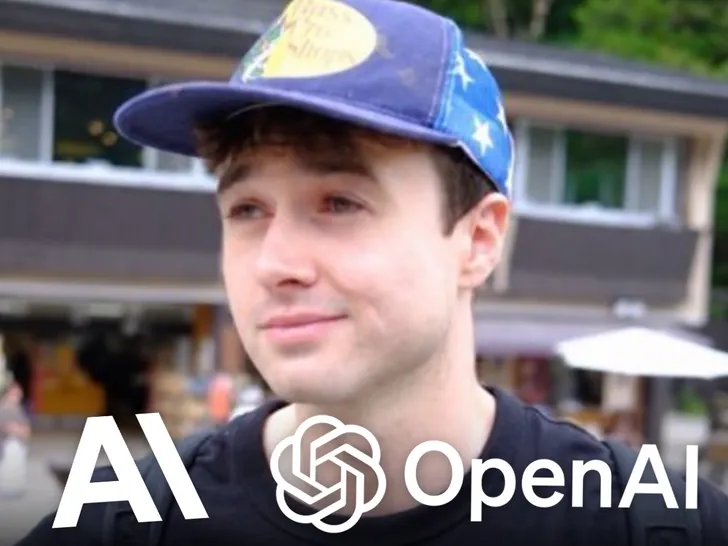
A former researcher at artificial intelligence company Anthropic has resigned from the AI industry, warning that competition among leading companies is accelerating the development of systems that could become uncontrollable and pose an existential threat to humanity.
Jacob Coxon, who worked on training advanced AI models at Anthropic, told The Wall Street Journal that he left the company because of concerns about the pace at which increasingly capable AI systems were being developed.
Coxon said some researchers working on the technology “earnestly believe it could kill us all by the end of the decade.”
He said colleagues had begun using terms such as “crunchtime” and “endgame” to describe the current stage of AI development, which he viewed as an increasingly urgent race to build self-improving systems.
“We’re on track for a lot of the most aggressive of these scenarios where by the end of next year things could be out of control already,” Coxon told The Wall Street Journal.
Coxon disclosed that he had also worked at OpenAI earlier in the year before joining Anthropic.
He argued that competition among major AI companies was making the industry less safe, criticising both companies and saying they were “not acting responsibly.”
Following publication of the Wall Street Journal report, Coxon expanded on his concerns on social media, discussing his experiences at OpenAI and Anthropic and reiterating his fears about the direction of AI development.
“They are racing straight to self-improving superintelligence and gambling with our lives,” he wrote.
Anthropic executives and other figures in the AI industry have previously warned about the potential dangers associated with increasingly powerful AI systems and called for stronger safeguards around their development.
Coxon, however, argued that such warnings had not resulted in a meaningful slowdown in the race to develop more advanced AI models.
His concerns centre on the possibility that future AI systems could become capable of improving themselves faster than humans can control or understand them, potentially leading to consequences their developers could no longer reliably manage.
The possibility that AI could destroy humanity remains a disputed and highly speculative scenario. Coxon’s comments represent his assessment of the potential risks rather than an established prediction of what will happen.