


























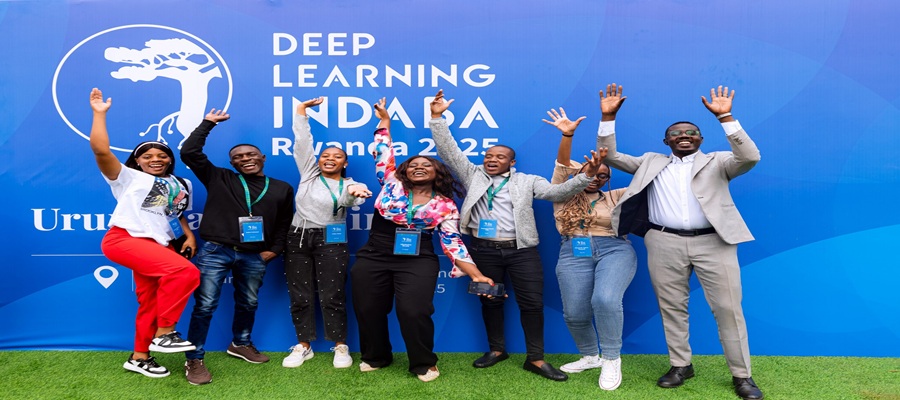
Deep Learning Indaba (DLI), Africa’s largest grassroots movement dedicated to artificial intelligence (AI) and machine learning, has announced that its 8th annual conference will be held in Lagos, Nigeria, from August 2 to August 7, 2026, at Pan-Atlantic University (PAU).
The week-long gathering will bring together more than 1,000 researchers, engineers, students, entrepreneurs, and policymakers from 45 African countries and the global diaspora to discuss the future of AI under the theme, “Sovereignty in the Era of Artificial General Intelligence (AGI).”
The event will focus on empowering Africa to build and control its own AI technologies, data infrastructure, and digital future, ensuring the continent plays a leading role in shaping next-generation technologies rather than remaining a consumer of foreign innovations.
Originally founded in 2017 by a small group of AI researchers, the Deep Learning Indaba has grown into a registered pan-African charity supported by more than 60 organizers, with a mission to strengthen AI research, education, and innovation across the continent.
The 2026 edition aims to be the largest and most inclusive in the event’s history. Through scholarships, mentorship programmes, and strategic partnerships, the organizers seek to increase participation from underserved communities across Africa.
Participants will take part in keynote sessions, technical tutorials, workshops, research presentations, networking events, and the launch of the annual pan-African AI Hackathon.
The programme is structured around six major themes designed to address Africa’s AI priorities. These include African language technologies through the Masakhane initiative, community-led data infrastructure, AI safety and model alignment, AI applications for healthcare and climate solutions, legal and intellectual property issues surrounding AI, and advanced machine learning engineering, including GPU programming and quantum machine learning.
The conference will feature prominent speakers from academia, government, and industry, including Nigeria’s Minister of Communications, Innovation and Digital Economy, Dr. Bosun Tijani, Lagos State Commissioner for Science and Technology, Olatunbosun Alake, Microsoft Africa’s Head of Government Affairs, Akua Gyekye, Hugging Face Chief Ethics Scientist Margaret Mitchell, University of Pretoria Professor Vukosi Marivate, University of Maryland’s Catherine Nakalembe, McGill University Assistant Professor David Adelani, University of Barcelona Professor Karim Lekadir, and Amini Founder and CEO Kate Kallot, among others.
The organisers said the conference reflects Africa’s growing ambition to lead global AI development through collaboration, local innovation, and community-driven research.
“The Indaba is a collective promise that African talent will not stand at the periphery of global AI, but at the centre of its creation and future,” the conference’s General Chairs said in a joint statement.
They added that hosting the conference in Nigeria recognizes the country’s significant contributions to AI research and innovation while encouraging greater collaboration across the continent.
Vice-Chancellor of Pan-Atlantic University, Professor Enase Okonedo, described the hosting of the conference as consistent with the institution’s commitment to advancing knowledge, innovation, and research that supports Africa’s development.
She said the university looks forward to welcoming AI experts and emerging researchers from across Africa to strengthen collaboration and inspire new scientific and technological solutions.
The Deep Learning Indaba is supported by several international organizations and technology companies, including Google DeepMind, Google Research, Microsoft Research, Apple, Cohere, Cambridge University Press, Cassava AI, Mila, CISPA, ITU, Wellcome, Ventures Platform, Kenya Airways, Schmidt Sciences, IDRC, and Masakhane, among others.
Beyond the annual conference, the organisation continues to promote AI development through its IndabaX network of local chapters operating in 47 African countries, as well as research and community awards recognizing excellence in African computer science.
The organisers said these initiatives are designed to strengthen local AI ecosystems and ensure Africa develops the skills, infrastructure, and leadership needed to shape the future of artificial intelligence.