





























The Comptroller-General of the Nigeria Customs Service (NCS), Bashir Adeniyi, has disclosed that the Service intercepted 399 pump-action rifles and hundreds of firearm components concealed in a shipping container at the Tin Can Island Port, Lagos, in July 2026.
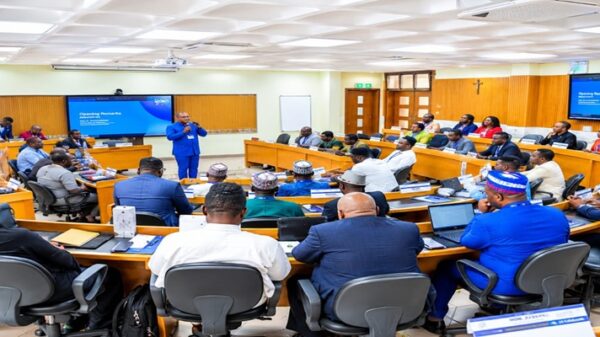
Adeniyi made this known on Tuesday, October 20, while delivering the 3rd Distinguished Personality Lecture of the TETFund Centre of Excellence in Security Management (TECESM), University of Ibadan, Oyo State.
The lecture was titled, “Why Customs Matters: Revenue, Security and Nationhood in a Borderless World.”
According to Adeniyi, the seizure of the rifles underscored the importance of technology-driven intelligence and risk-management systems in detecting prohibited goods and strengthening national security.
He added that the intercepted weapons had been handed over to the National Centre for the Control of Small Arms and Light Weapons, while suspects linked to the case were facing trial at the Federal High Court.
The Customs chief argued that, contrary to the widespread belief that globalisation was making national borders less relevant, increasing international trade and interconnectedness had made effective border management more critical.
He identified revenue generation, national security and nationhood as the three fundamental pillars underpinning the operations of the Nigeria Customs Service.
Adeniyi explained that customs duties contributed to funding public infrastructure, education, healthcare and other essential services through revenue allocations to the three tiers of government.
He disclosed that the Service collected approximately N3.2 trillion in 2023, N6.105 trillion in 2024 and N7.28 trillion in 2025, surpassing its revenue target of N6.58 trillion for the latter year.
The Comptroller-General said the Service had set a revenue target of N11.07 trillion for 2026, adding that improved compliance, digitalisation, risk management and effective enforcement would be critical to achieving the goal.
He, however, stressed that revenue growth should not come at the expense of legitimate trade, noting that the Service was working towards a system that would facilitate compliant businesses while preventing revenue leakages.