

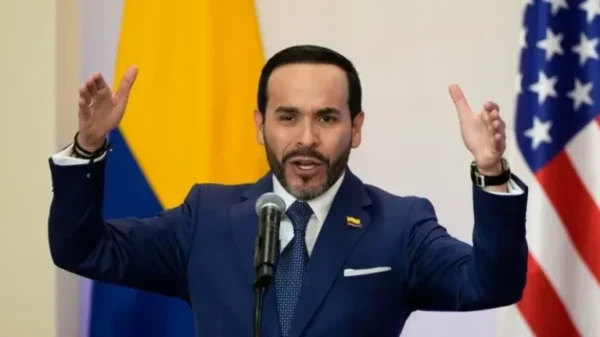






















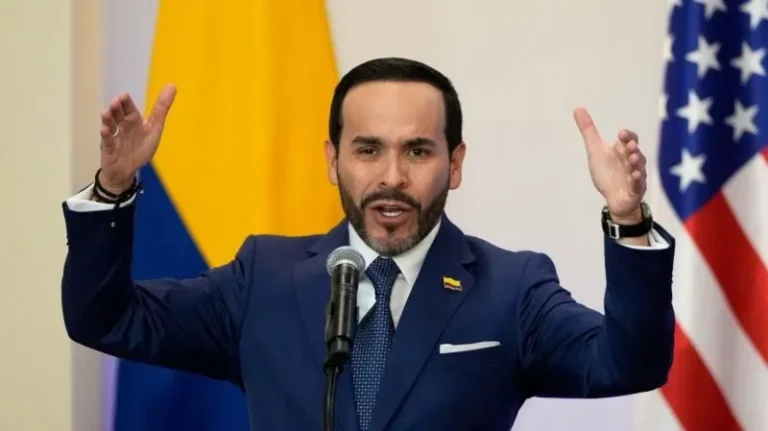
Colombian President Abelardo de la Espriella has signed a decree lifting a decade-long restriction on the public carrying of legally owned firearms, fulfilling a key campaign promise to take a tougher stance on crime.
Under the new measure, Colombians who hold valid permits to carry registered firearms will be allowed to take their weapons outside their homes without obtaining additional authorization.
De la Espriella defended the decision, arguing that law-abiding citizens should not be left defenseless while criminals continue to carry illegal weapons.
“It is not right that criminals are armed to the teeth while decent people can’t defend themselves,” the president said.
However, he stressed that the decree does not amount to unrestricted access to firearms. Existing regulations governing the legal ownership, registration and possession of guns will remain in place.
While signing the decree, De la Espriella said the decision fulfilled a promise he made during his presidential campaign.
“A man’s word is his honour, and I have honour, that’s why I keep my word,” he said.
The restriction was first introduced in December 2015 by then-President Juan Manuel Santos as a temporary security measure during the Christmas and New Year period. It was subsequently renewed by successive administrations, including those of Iván Duque and Gustavo Petro, despite their differing political positions.
Under the previous system, even citizens with valid firearm-carry permits were prohibited from taking their weapons outside their homes unless they obtained additional authorization.
Reports cited by Spanish newspaper El País indicate that the policy change could affect nearly 700,000 Colombians who already hold legal firearm-carry permits. They will be allowed to carry their registered weapons outside their homes for as long as their permits remain valid.
The move has sparked criticism from some political figures. Green Alliance Senator Ariel Ávila described the decision as a “grave error,” warning that legally owned firearms could eventually fall into the hands of criminals.
Ávila also questioned the broader principle of allowing civilians to carry weapons, arguing that the state should remain primarily responsible for protecting citizens.
De la Espriella rejected claims that the policy would worsen insecurity. He said security forces would continue targeting illegal firearms and criminal groups.
According to the president, authorities have seized more than 15,000 illegal firearms so far this year. He said many of the weapons were linked to breakaway factions of the FARC rebel group and the Gulf Clan criminal organization.
De la Espriella maintained that the new policy strikes a balance between preserving controls on legal firearm ownership and giving authorized citizens greater ability to protect themselves.
The measure represents a significant shift in Colombia’s firearms policy after years of restrictions on the public carrying of legally registered weapons.