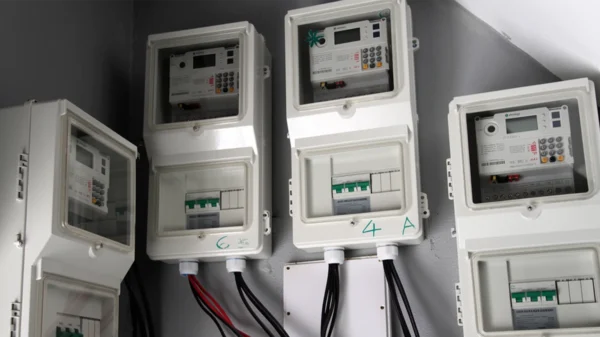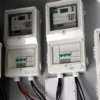
















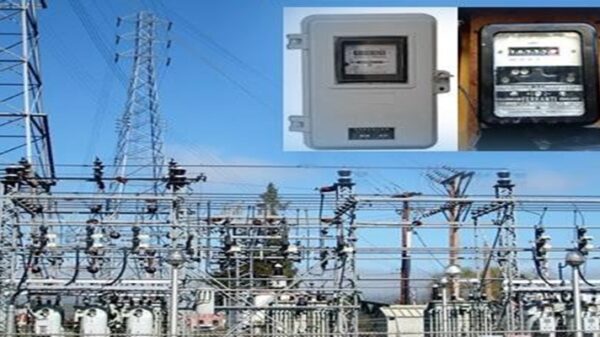



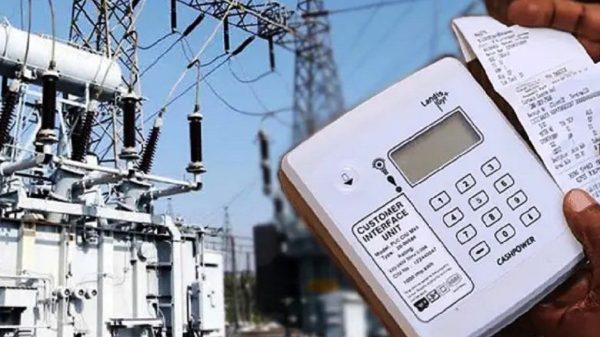

Nigeria’s electricity metering rate rose to 64.69 per cent in October 2026, following the installation of 307,149 meters by electricity distribution companies (DisCos) in September and October.
However, more than 4.5 million active customers remain without meters, leaving a significant portion of electricity consumers exposed to estimated billing.
The latest metering factsheet released by the Nigerian Electricity Regulatory Commission (NERC) showed that the national metering rate increased from 63.99 per cent in September to 64.69 per cent in October, representing a 0.70 percentage-point improvement.
The report showed that DisCos installed 162,455 meters in September and another 144,694 in October.
By the end of October, Nigeria had 8,352,714 metered customers out of 12,912,114 active electricity customers. This left approximately 4,559,400 customers without meters, representing 35.31 per cent of the active customer base.
The figures highlight the scale of the country’s metering challenge despite ongoing government and regulatory efforts to expand coverage.
October Meter Installations Slow
Although the two-month total exceeded 307,000 installations, the monthly figures point to a slowdown.
DisCos metered 144,694 customers in October, down from 162,455 in September. This represents a decline of about 10.9 per cent in monthly installations.
Ibadan Electricity Distribution Company (IBEDC) recorded the highest number of new meter installations in October, with 47,814 customers, compared with 46,190 in September.
Benin DisCo followed with 16,546 installations, while Enugu recorded 12,243. Port Harcourt and Abuja added 10,829 and 10,357 meters, respectively.
Kano recorded 9,949 new installations, followed by Jos with 9,450 and Ikeja with 9,133. Eko, Kaduna and Yola added 6,814, 6,393 and 5,166 meters, respectively.
Eko, Ikeja Lead Metering Coverage
A breakdown of metering performance showed considerable differences among the country’s 11 electricity distribution companies.
Eko DisCo recorded the highest metering rate at 91.68 per cent, followed by Ikeja at 88.37 per cent and Abuja at 83.24 per cent.
Port Harcourt recorded 72.49 per cent, while Benin and Ibadan posted 66.02 per cent and 61.87 per cent, respectively. Enugu’s metering coverage stood at 53.08 per cent.
The weakest performances were recorded in Jos, Yola, Kano and Kaduna, with metering rates of 40.34 per cent, 41.02 per cent, 43.71 per cent and 44.71 per cent, respectively.
The disparity suggests that progress in metering remains uneven across the country, with some distribution companies considerably ahead of others.
Metering Gap Remains a Challenge
The persistence of a 4.56 million-customer metering gap raises questions about the pace at which distribution companies can extend coverage to households and businesses.
Metering is central to improving transparency in electricity billing, helping consumers pay for actual consumption rather than estimated usage. It can also reduce billing disputes between customers and distribution companies.
NERC defines active electricity customers as consumers who have either purchased electricity or received a bill at least once within a 12-month period.
While the increase to 64.69 per cent represents progress, the latest figures show that more than one in every three active electricity customers still lacks a meter.
The challenge for the electricity distribution companies and regulators is therefore not just to sustain new installations but to accelerate deployment enough to close the remaining gap.