
























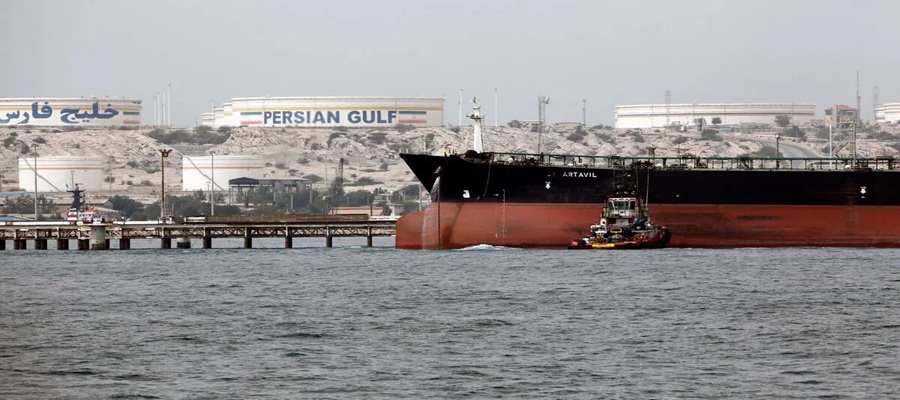
United States has revoked a temporary sanctions waiver that allowed Iran to export crude oil and petroleum products, following a series of attacks on commercial vessels in the Strait of Hormuz.
The policy reversal announced on Tuesday marks a fresh escalation in Washington’s pressure on Tehran amid ongoing diplomatic efforts aimed at resolving tensions between both countries.
The U.S. Treasury Department terminated a special operating licence introduced in June, which had permitted Iran to produce, market and transport crude oil and related petroleum products until Aug. 21.
A U.S. official, who spoke on condition of anonymity, told AFP that Iran’s actions in the Strait of Hormuz were “wholly unacceptable” and would attract consequences.
The official added that the broader U.S.-Iran memorandum of understanding remained performance-based, stressing that Tehran would only receive economic benefits by demonstrating compliance and cooperation.
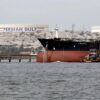
The development followed reported attacks on three tankers near the coast of Oman, with the United Kingdom Maritime Trade Operations security agency confirming that an unidentified projectile struck a commercial vessel, causing a fire onboard.
At least one of the attacks was reportedly carried out using a drone, while the incidents raised fresh concerns over the safety of one of the world’s most important maritime trade routes.
Qatar confirmed that one of the affected vessels was its liquefied natural gas carrier, Al-Rekayyat, and accused Iran of being responsible for the attack.
Qatari Foreign Ministry spokesperson, Majed Al Ansari, said the country held Iran legally responsible for the incident and any resulting damages.
“We hold Iran fully legally responsible for this attack and for any resulting damages or repercussions,” Al Ansari said in a statement posted on X.
Iran rejected the accusation, describing Doha’s position as unacceptable in a statement issued through its state news agency, IRNA.
The tanker attacks disrupted more than a week of relative calm in the region following a fragile ceasefire arrangement between Washington and Tehran.
The incidents also triggered concerns in global energy markets, with crude oil prices rising by more than two per cent as traders assessed possible disruptions to supply routes.
Security analyst Andreas Krieg of King’s College London said the attacks appeared aimed at discouraging commercial vessels from using a proposed alternative transit corridor along Oman’s territorial waters.
“We are now in a sensitive period where potential alternatives to an Iranian toll or fee system are being explored,” Krieg told AFP.
He said the strikes represented a challenge to international maritime rules and the existing ceasefire arrangements.
The Strait of Hormuz, a narrow waterway linking the Persian Gulf with the Gulf of Oman, remains a major global energy route, with a significant portion of the world’s oil and gas shipments passing through it.
Under a 14-point memorandum of understanding, Iran and Oman, alongside neighbouring Gulf countries, are expected to hold discussions on establishing a new administrative and maritime framework for the strategic waterway.
Qatar, which initially stayed away from mediation efforts due to security concerns, has recently played a more active diplomatic role by hosting indirect talks between U.S. and Iranian representatives.
The latest U.S. decision is expected to further complicate efforts to stabilise relations between Washington and Tehran.