





















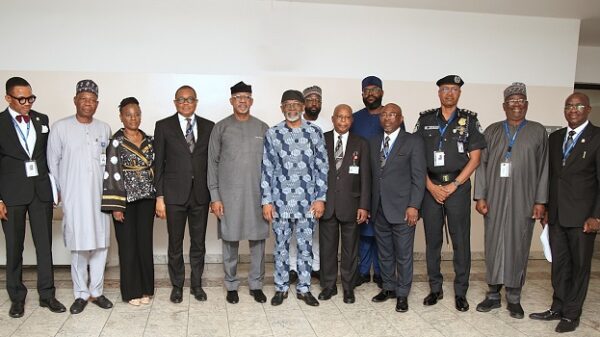





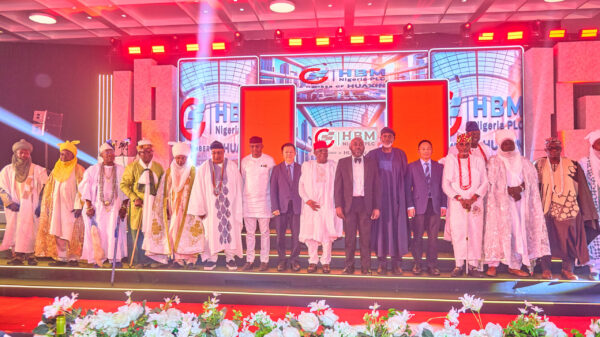



Katsina State Government has entered into a strategic partnership with UK-based green technology company, Conflow Power Group Limited (CPG), for the deployment of 50,000 solar-powered smart streetlights embedded with artificial intelligence (AI) computing capabilities across the state.

The project, described as one of the first of its kind in Africa, is expected to position Katsina as a pioneer in distributed AI infrastructure by integrating street lighting, edge computing, surveillance, and public connectivity into a single platform.
The technology, known as iLamp, is designed as a solar-powered smart streetlight equipped with embedded low-power computing chips capable of handling AI-related tasks. According to Conflow Power Group, when deployed as a network, the connected lampposts can collectively function as a distributed AI data centre, enabling processing power to be spread across thousands of units rather than concentrated in a traditional facility.
Chairman of Conflow Power Group, Mr. Edward Fitzpatrick, said the innovation was developed as a cleaner and more sustainable alternative to conventional data centres, which typically consume significant electricity and water resources.
He explained that each iLamp contains batteries charged through cylindrical solar panels, supplying renewable energy to onboard computing systems powered by energy-efficient AI chips.
“NVIDIA has created chips compact and efficient enough to be powered by as little as 15 watts, making it possible to integrate computing directly into streetlights,” Fitzpatrick was quoted as saying.
He noted that beyond lighting, the smart lampposts can also host AI-enabled cameras and sensors for public safety, traffic monitoring, and urban management applications.
Under the Katsina deployment, the iLamps are expected to feature cameras capable of detecting traffic violations such as speeding, illegal parking, and seatbelt non-compliance. The system may also support public Wi-Fi, Bluetooth connectivity, and digital monitoring services, subject to Nigeria’s regulatory and data protection requirements.
Special Adviser on Power and Energy to Katsina State Governor, Dr. Hafiz Ibrahim Ahmad, described the agreement as a landmark step in the state’s digital transformation agenda.
He said the deployment would not only improve public lighting and safety but also open up new revenue streams for the state through AI computing services and technology-enabled traffic enforcement.
“Today, Katsina becomes home to the only distributed AI data centre of its kind on the African continent. This means safer streets, real-time crime and terrorism prevention, free public internet, and new economic opportunities for our people,” Ahmad said.
According to the agreement, revenue generated from leasing computing power from the iLamp network to AI firms and digital service providers will support investors financing the infrastructure rollout, while Katsina is also expected to earn from traffic-related enforcement systems linked to the platform.
Conflow said an assembly plant for the iLamp units is also being established in Katsina as part of the deal, a move expected to support local job creation, technology transfer, and industrial development. While the units will initially be manufactured in Morocco, Taiwan, and Latvia, local assembly is projected to deepen Nigeria’s participation in emerging AI infrastructure markets.
Industry analysts, however, note that while the technology could support lighter AI workloads and edge computing closer to users, it is unlikely to replace conventional hyperscale data centres needed for advanced AI model training and large-scale cloud operations.
Experts say the iLamp model may instead complement traditional infrastructure by serving as decentralised access nodes, reducing latency for local AI applications and lowering dependence on grid-powered facilities.
The initiative comes amid growing global scrutiny of the energy and environmental footprint of AI systems, with governments and technology firms increasingly exploring sustainable alternatives for powering next-generation digital infrastructure.
With the agreement, Katsina joins a small group of jurisdictions experimenting with unconventional data infrastructure models, potentially positioning Nigeria as an early mover in Africa’s emerging AI and smart city ecosystem.