





















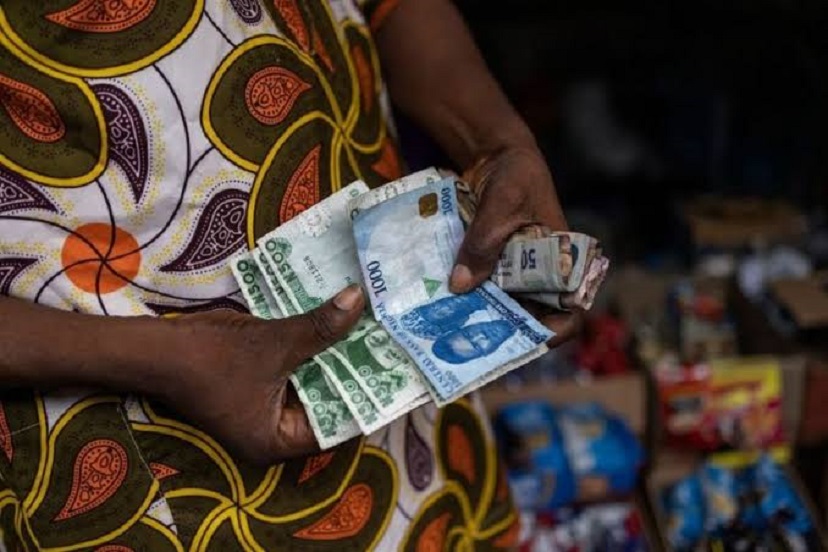
Justices Yellin Bogoro of the Federal High Court sitting in Lagos on Tuesday, July 16, dismissed a suit by a Lagos-based lawyer, Malcom Omirhobo, challenging the use of Arabic inscriptions on Naira notes.
According to the judge, “the Central Bank of Nigeria (CBN) is empowered by Section 53 (1) of the Banks and Other Financial Institutions Act (BOFIA) to print, design and issue the currency and compels the need to establish bad faith before an action can be brought to challenge the act or omission of the Federal Government or the apex court.”
The court also held that the suit challenging the Arabic inscriptions on Naira notes failed to establish that the CBN’s powers were exercised in bad faith.
Omirhobo had filed the suit against the CBN in Jan. 2020 contending amongst other things that Arabic is not one of the four official languages of Nigeria namely English, Yoruba, Hausa and Igbo. In the suit, the lawyer contended that Arabic is not indigenous to Nigeria and to have it on our country’s currency offends certain provisions of the Constitution.
The CBN, in its response, had filed a preliminary objection insisting that Omirhobo had no locus standi to file the matter. The bank also filed a defence.
Three other interested persons joined the suits as defendants, the Incorporated Trustees of the Muslim Rights Concern (MURIC), its Founder, Ishaq Akintola; and a Kebbi-based legal practitioner, Umar Kalgo.
Ruling on the case, Justice Bogoro first dismissed the CBN’s preliminary objection and held that Omirhobo had the locus standi to institute the action of being a taxpayer. The court also held that public interest actions must be encouraged.
The court, however, held that Omirhobo failed to prove that the CBN acted Mala Fide, in bad faith and accordingly dismissed the suit.
In his reaction to the judgment, Omirhobo said he had applied for a Certified True Copy of the judgement and would study the same to decide his next line of action.
The lawyer also said the court noted that Nigeria is a multi-ethnic and religious country and that no ethnic group or religion is superior to the other.
The lawyer claimed that the court held that Arabic is not Nigeria’s official Language and advised that for Nigerians to coexist in harmony, ‘perhaps it is time for the Central Bank of Nigeria and the Federal Government to remove the Arabic inscription on the N200, N500 and N1000 naira notes since it has been removed from the N5, N10, N50 and N100.’