

























Key players across Nigeria’s digital economy, telecommunications, and infrastructure ecosystem are set for the National Dig-Once Policy Forum to champion a new course towards increasing Nigeria’s digital backbone network to 125,000km of fibre-optic infrastructure.

PIAFo
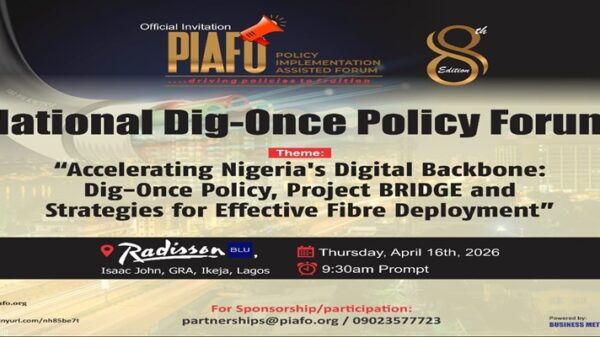
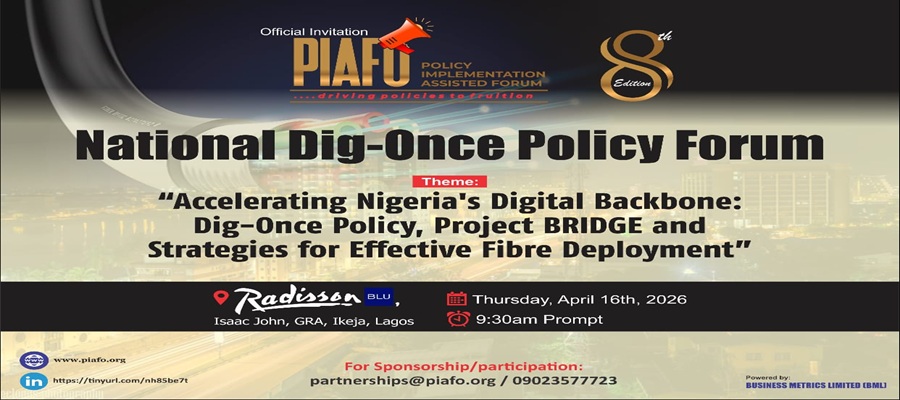
The event, which marks the 8th edition of Policy Implementation Assisted Forum (PIAFo), is a high-level industry dialogue aimed at accelerating the formulation and adoption of a National Dig-Once Policy as a critical enabler of safe, coordinated and cost-effective fibre infrastructure deployment in the country.
The forum, themed “Accelerating Nigeria’s Digital Backbone: Dig Once Policy, Project BRIDGE and Strategies for Effective Fibre Deployment,” is slated for Thursday April 16, 2026 at Radisson Blu Hotel, Ikeja GRA, Lagos.
According to the organisers, Business Metrics Limited (BML), the introduction of $2 billion Project BRIDGE initiative by the Federal Government to expand fibre infrastructure by additional 90,000km from 35,000km to 125,000km by 2030 requires some new measures to ensure successful implementation of the ambitious target and avoid mistakes of the past.
Industry stakeholders have identified that the success of a national connectivity backbone rollout depends largely on institutionalising a Dig Once Policy framework, which encourages the installation of fibre ducts and conduits whenever roads, railways, and other major public infrastructure are being constructed or rehabilitated.
According to industry data shared by the Nigerian Communications Commission, lack of such a framework is taking a toll on the telecoms sector and broadband drive as operators recorded over 50,000 fibre cut incidents across the country in 2024, with more than 60 per cent occurring during road construction and rehabilitation activities. These disruptions have resulted in billions of naira in repair costs, network outages, and service degradation.
Telecom operators in Lagos State alone said they spent over N5 billion in 2024 to repair and replace damaged fibre infrastructure in the state, while lamenting that the development continues to slow down network upgrade and expansion drive.
Beyond infrastructure damage, telecom operators also face challenges such as high Right of Way (RoW) charges, uncoordinated civil works, and repeated excavation of roads for fibre deployment.
PIAFo 8.0 aims to address these challenges by fostering collaboration among stakeholders responsible for planning, financing, constructing, and maintaining Nigeria’s digital infrastructure.
Specifically, the forum seeks to align federal, state, and local infrastructure planning around a unified Dig-Once framework; strengthen collaboration between telecom operators, infrastructure companies, and public works authorities; translate policy intentions into actionable guidelines and implementation timelines; and build stakeholder support for Project BRIDGE and complementary national fibre initiatives.
Speaking about the event, Team Lead at Business Metrics Limited, Omobayo Azeez, said Nigeria is being denied access to robust connectivity it should derive from up to eight high-capacity undersea cable networks landed on its shores because of difficulties around terrestrial fibre infrastructure expansion.
“The Project BRIDGE initiative should excite everyone because of ambitious targets. But for those who understand the operating terrain, and why it took the industry over 20 years to achieve around 35,000km of fibre network that the country currently operates for broadband connectivity, the project calls for a major shift in execution approach with the adoption of a National Dig-Once Policy as the starting point.
“PIAFo, now in its 8th edition, is again serving as the viable platform for representatives from government ministries and agencies, senior telecom executives, infrastructure companies, data centre operators, equipment manufacturers, state governments, and industry associations to chart the way forward.”
The forum will feature keynote addresses, expert panel discussions, and strategic networking sessions designed to drive pragmatic outcomes that will accelerate Nigeria’s journey toward a resilient and inclusive digital economy.