
















United States lawmakers on Wednesday examined global threats to religious freedom, with Nigeria emerging as a major focus of concern during a congressional hearing.
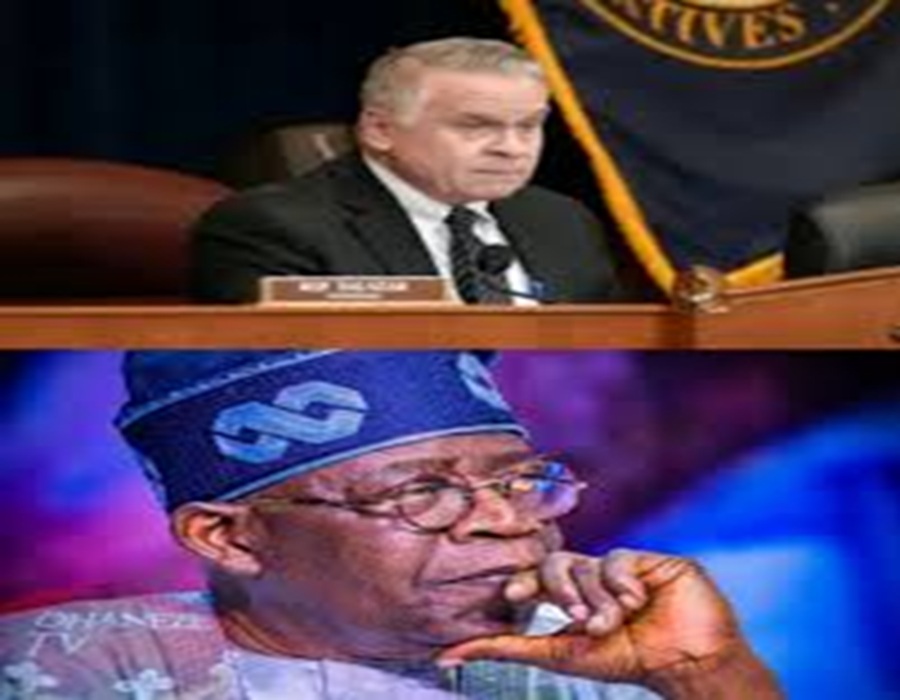
U.S. lawmaker
The session, convened by the House Foreign Affairs Subcommittee on Africa, revisited long-standing allegations of persecution against Christians in Nigeria—claims that Nigerian authorities have repeatedly denied.
Opening the hearing, subcommittee chairman Congressman Chris Smith cited the advocacy group Genocide Watch in describing Nigeria as “a killing field of defenceless Christians.”
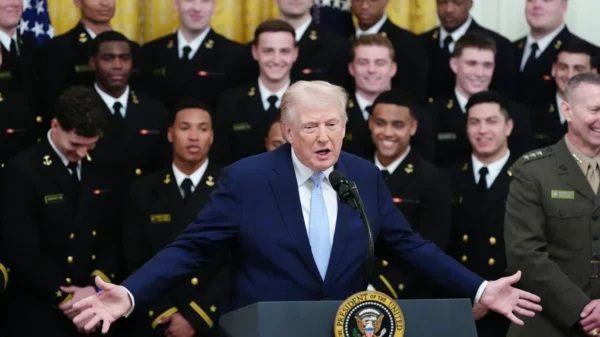
He welcomed the recent redesignation of Nigeria as a Country of Particular Concern (CPC) by the U.S. State Department, saying it corrected what he described as a previous policy failure.
“That wrong in our foreign policy has been righted with the President’s CPC designation. We commend and thank him for that action,” Smith said.
While acknowledging that Nigeria has taken what he called “small steps” to address the situation, Smith sharply criticised recent lobbying efforts by Nigerian-linked entities aimed at influencing U.S. policy.
He referenced reports of a $9 million contract between the Nigerian government and Washington-based lobbying firm DCI Group, as well as a separate $120,000-per-month agreement between a Nigerian security executive and lobbying firm Valcour Global.
“They hire these firms; they come up with very well-written talking points to say ‘nothing to see here,’” Smith said, adding that such actions suggest “a culture of denial by Nigerian officials persists.”
The hearing also featured debate over the effectiveness of past U.S. engagement with Nigeria. Congressman Joaquin Castro questioned the impact of U.S. military actions carried out during the previous administration, arguing that they were framed as protecting Christians while simultaneously reducing assistance programmes aimed at addressing religious discrimination.
Lawmakers further discussed the implications of Nigeria’s CPC designation. Some described it as largely symbolic—a “name and shame” measure—while others maintained that it plays an important role in sustaining international attention on religious freedom concerns in the country.