





























Dr. Jameelah Sharrieff-Ayedun, Vice President, Fintech Association of Nigeria (FintechNGR), has called for a shift in Nigeria’s digital finance conversation from transaction volume to fairness, stressing that the future of the country’s financial system depends not merely on payment speed, but on transparency, reliability, accessibility, and trust.

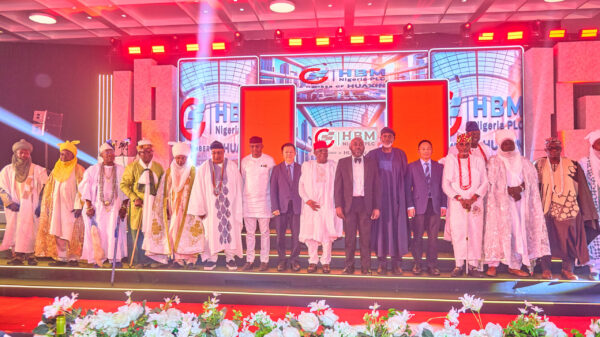
Speaking at the third edition of the Payments Forum Nigeria (PAFON 3.0), Dr. Jameelah Sharrieff-Ayedun who is also the Managing Director/Chief Executive Officer of CreditRegistry, described the forum as more than a policy conversation, calling it “a defining moment” for economic inclusion, financial dignity, and independence for millions of Nigerians.
Addressing stakeholders at the event, through a representative Mr. Chinedu Onyia, Manager, Professional Service at CreditRegistry, she noted that Nigeria has witnessed remarkable growth in digital finance over the past decade, with instant payment transactions surpassing ₦600 trillion in 2024, according to the Nigeria Inter-Bank Settlement System (NIBSS), positioning the country among the world’s most dynamic digital payment economies.
Dr Sharrieff-Ayedun also acknowledged improvements in financial inclusion, which has risen to about 64 per cent of Nigeria’s adult population, largely fuelled by mobile money, fintech innovation, and expanding agent banking networks.
However, she cautioned that these milestones should not obscure the reality that millions of Nigerians remain excluded or only partially integrated into the financial system.
“Progress must never be mistaken for completion,” she said, citing EFInA data showing that nearly 26 percent of Nigerian adults remain completely financially excluded, while many others operate at the margins of inclusion.
Describing this as Nigeria’s financial paradox, she argued that despite the country’s advanced payment infrastructure, inclusion remains uneven and vulnerable.
“Volume is not inclusion. Activity is not empowerment,” she stated, emphasizing that digital transactions that fail to create sustainable economic identity represent missed opportunities for growth and transformation.
Dr. Sharrieff-Ayedun stressed that fairness, rather than mere access, should be the central objective of Nigeria’s digital payment ecosystem.
“If digital payments are unreliable, unpredictable, or exclusionary, then they do not deepen inclusion; they erode it,” she warned.
According to her, fair digital payments are built on three essential pillars: transparency, where users understand all charges without hidden fees; reliability, where transactions are seamless and dependable; and accessibility, where systems are intentionally designed to serve all demographics, including underserved populations.
She said these pillars collectively foster trust, which she described as “the true currency of financial systems.”
Highlighting the growing significance of data in modern finance, she explained that every digital payment generates valuable financial footprints that can be transformed into structured identities and credit intelligence.
“This is the bridge between payments and credit. And this is where true financial inclusion is unlocked,” she said.
She underscored CreditRegistry’s role in converting transaction data into trust frameworks, financial behaviour into credit intelligence, and data into what she termed “dignity.”
“A decision without CreditRegistry is an incomplete decision,” she declared, reinforcing the company’s mission to provide deeper financial visibility that goes beyond transactional records to reveal character and creditworthiness.
Dr. Sharrieff-Ayedun maintained that inclusive financial systems must evolve beyond basic access to create pathways for credit, economic mobility, and generational wealth.
“We are not just building systems. We are building financial visibility for millions of Nigerians,” she said.
She concluded by urging policymakers, financial institutions, and industry stakeholders to prioritize systems that transform lives, rather than simply process payments.
“The future of Nigeria’s financial system will not be defined by how fast our payments are, but by how fair they are,” she said. “Because fairness builds trust. Trust drives inclusion. And inclusion unlocks prosperity.”