


























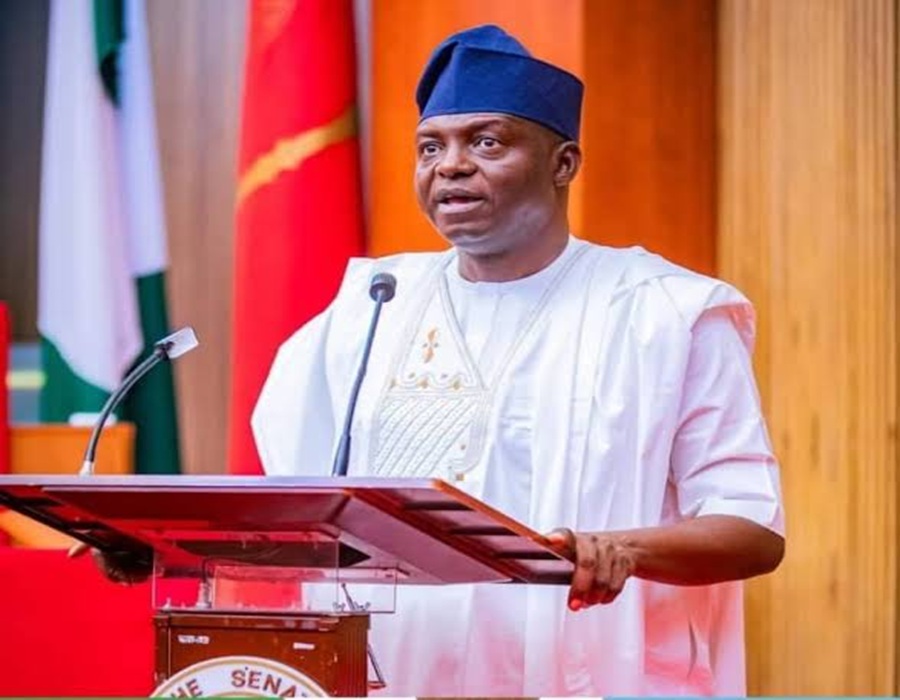
Prof. Nentawe Goshwe Yilwatda, National Chairman of the All Progressives Congress (APC), has stated that the party will make the digital economy a measurable pillar of its programme for 2027–2031, RaveNewsOnline reports.
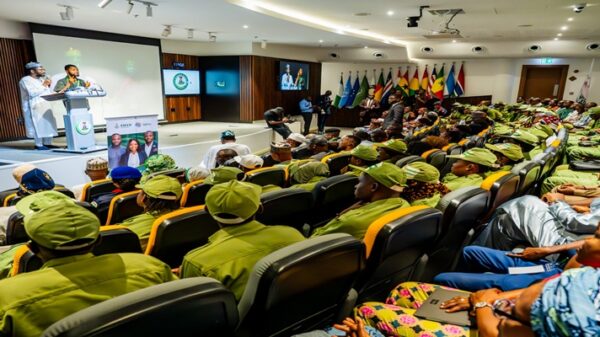
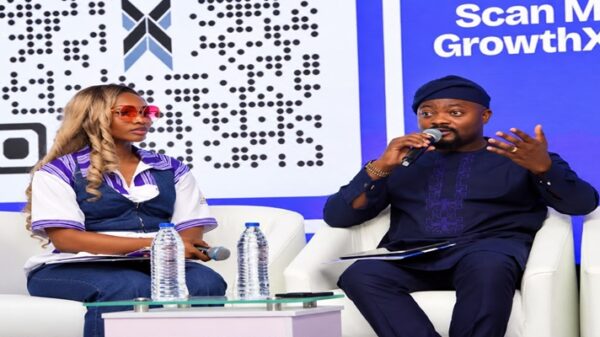
Yilwatda stated this in a keynote address at the National Digital Economy CEO Dialogue, organised by Knowhow Media International, publishers of IT Edge News, in partnership with the APC National Secretariat.
Speaking on the theme, “The Digital Political Imperative: How Leadership Can Transform Nigeria’s Technology Future,” he said Nigeria’s technology future would depend largely on the quality of political and institutional leadership.
According to him, leadership must provide investors with predictability, protect digital infrastructure, ensure citizens have access to technology and coordinate institutions responsible for the digital economy.
He identified six key tests for political leadership in the sector: vision, predictability, coordination, protection, capital and people.
Yilwatda said the digital economy could no longer be treated as the responsibility of a single ministry or group of agencies, noting its growing contribution to economic growth, national security, inclusion and sovereignty.
He cited Project BRIDGE, the Federal Government’s plan to deploy 90,000 kilometres of open-access fibre across Nigeria, as a major infrastructure initiative capable of transforming connectivity nationwide.
The Federal Government says the project is structured as a public-private partnership, with government holding between 25 and 49 per cent in the special purpose vehicle.
The APC chairman said political leadership must address challenges including inconsistent right-of-way charges, repeated permits and damage to telecommunications infrastructure during road construction and other civil works.
He pledged that the APC National Secretariat would work with governors of APC-controlled states to promote harmonised right-of-way terms and the protection of telecommunications infrastructure.
“Building a road and destroying a broadband link in the same month is not development. It is waste,” he said.
On artificial intelligence, cloud computing and data centres, Yilwatda said Nigeria must ensure that the country does not merely become a consumer of technologies developed elsewhere.
“The question for Nigeria is not whether AI will shape our economy. It will. The question is whether we will shape it, or simply rent it,” he said.
He called for stronger integration between digital policy and the power sector, noting that data centres and AI infrastructure require reliable electricity, while also advocating renewable energy, embedded generation and gas supply for digital infrastructure clusters.
On digital sovereignty, Yilwatda said Nigeria needed to strengthen its ability to control critical data, protect digital infrastructure and defend against cybersecurity threats.
He also called for responsible use of artificial intelligence in political communication, including measures to address disinformation, deepfakes and coordinated manipulation.
The APC chairman further advocated greater regulatory certainty, public consultation and regulatory impact assessments before major digital-economy regulations are introduced.
He proposed the principle of “one issue, one lead institution, one clear process” to address overlapping mandates among government agencies.
On digital skills, Yilwatda said Nigeria’s young population represented the country’s greatest digital asset, urging technology companies to provide internships, apprenticeships and employment opportunities for trained young Nigerians.
He also called for increased private-sector investment in digital infrastructure, including through infrastructure bonds, blended-finance vehicles and credit guarantees.
Yilwatda proposed a Digital Leadership Compact built around five principles: infrastructure as a national priority, one government with one front door, predictable rules, sovereignty with openness, and putting people at the centre of digital development.
He announced four commitments by the APC National Secretariat: establishing a standing Digital Economy Policy Engagement Desk, supporting digital-economy legislation, engaging governors on right-of-way harmonisation and infrastructure protection, and making the digital economy a clear and measurable pillar of the party’s 2027–2031 programme.
He said the objective should be to create an economy that includes Nigerians, a state that delivers services efficiently and an environment where a young person’s talent, rather than location, determines economic opportunity.