


























Dr Aminu Maida, Executive Vice Chairman of the Nigerian Communications Commission (NCC), has called for deeper connectivity, wider broadband access and greater digital inclusion as Nigeria marks 25 years of GSM services.
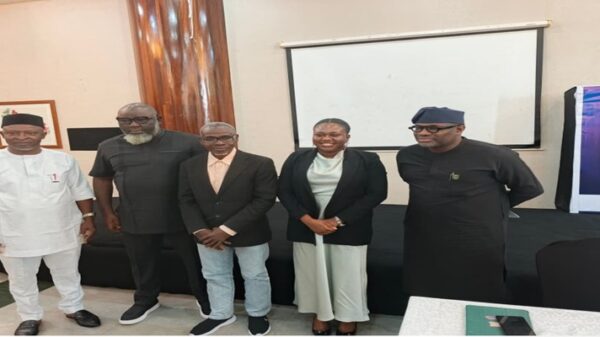
Maida made the call in remarks delivered on his behalf by Mojisola Saraki at the 12th eWorld Forum and book launch held on Thursday in Lagos to commemorate the 25th anniversary of GSM in Nigeria.
The forum, held at the Oriental Hotel, Victoria Island, had the theme, “The GSM Digital Milestones: 25 Years On.”
The event also featured the launch of books documenting Nigeria’s telecommunications journey and the contributions of individuals and organisations to the country’s digital transformation.
Reflecting on the evolution of telecommunications, Maida said the introduction of GSM 25 years ago had transformed communication and become a catalyst for changes across Nigeria’s social and economic sectors.
He said telecommunications had evolved from a relatively limited service into an essential foundation for banking, education, commerce, entertainment, entrepreneurship and other aspects of the digital economy.
According to him, 25 years ago, access to telecommunications was limited, with telephone lines scarce and communication outside immediate locations often difficult and expensive.
He said the introduction and expansion of GSM changed the situation, as mobile phones moved from being symbols of privilege to becoming everyday tools for millions of Nigerians.
Maida said the expansion of network coverage and increased access to mobile devices had helped connect communities, businesses and families on an unprecedented scale.
He noted that the impact of GSM extended beyond voice calls, with SMS, mobile internet and smartphones opening access to information and a growing range of digital services.
According to him, smartphones have transformed mobile phones into platforms for banking, commerce, education, entertainment, social interaction and entrepreneurship.
He said businesses now use mobile connectivity to reach customers and manage operations, while fintech companies have developed new services around digital connectivity.
The NCC boss also noted that young entrepreneurs were increasingly using mobile platforms to create and market businesses, while millions of Nigerians relied on digital services for work, education and everyday transactions.
He said the GSM revolution had also created a broader ecosystem involving infrastructure providers, technology companies, fintech firms, software developers, digital platforms and entrepreneurs.
Maida said the 25-year milestone should therefore serve as an opportunity to reflect on the sector’s achievements while addressing challenges that could shape its next phase.
He identified sustained investment in infrastructure, wider broadband access, improved quality of service, affordability, cybersecurity and digital inclusion as key priorities.
He also noted that emerging technologies such as 5G, artificial intelligence, cloud computing and the Internet of Things were creating new possibilities for Nigeria’s digital economy.
“The question for the industry is no longer simply how to connect Nigerians. It is increasingly about what Nigerians can do with that connectivity,” he said.
Maida said digital access must translate into opportunities for education, employment, innovation, entrepreneurship and broader economic participation.
The forum provided stakeholders with an opportunity to reflect on the history of the GSM revolution while examining the next phase of Nigeria’s digital development.
A major highlight of the event was the launch of Nigeria’s GSM Revolution at 25: The Hall of Digital Pioneers and Players, authored by veteran ICT journalist Aaron Ukodie.
The book chronicles the evolution of Nigeria’s telecommunications industry and documents the contributions of pioneers, regulators, operators, institutions and other stakeholders to the sector’s development.
Maida said the telecommunications industry’s progress over the past 25 years demonstrated the importance of connectivity to Nigeria’s development.
He said the next 25 years should focus on deepening connectivity, expanding digital inclusion and harnessing emerging technologies to create opportunities for citizens and businesses.
He noted that the GSM revolution was not merely about changing how Nigerians communicated, but about establishing connectivity as one of the foundations of modern Nigeria.