




More than 100 channels have signed on to broadcast free-to-air digital content under Nigeria’s Digital Switchover (DSO) programme, marking a major milestone in the country’s transition to digital broadcasting.
NBC
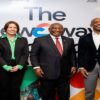
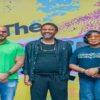
The National Broadcasting Commission (NBC) disclosed this in a statement on Wednesday, saying the development followed the unveiling of FreeTV, a free-to-air direct-to-home (DTH) national platform supported by satellite and Internet Protocol (IP) delivery.
According to the commission, the platform offers a broad mix of content targeted at Nigerian households.
It said the channel line-up includes 14 news and current affairs stations, 15 general entertainment channels, six kids and family channels, two lifestyle and talk shows, three music and entertainment channels, one business and finance station, and five movie channels.
The commission added that 57 of the channels are already live and accessible through the FreeTV app and the NigSat satellite platform.
It advised viewers to download the FreeTV application from Google Play Store to access the services.
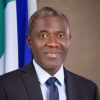
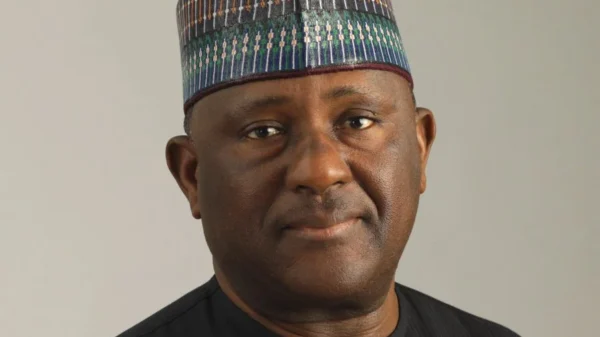
Director-General of NBC, Charles Ebuebu, said the initiative would improve television access and viewing quality for Nigerians.
“We will deliver digital TV with clearer pictures, more free channels, and opportunities for every family.
“It is one simple change for a better future,” he said.
Ebuebu noted that with over 100 stations onboard and a satellite-led strategy, Nigeria’s digital migration was making significant progress.
The DSO project was launched in 2008 following the Geneva 2006 Agreement (GE06) as part of efforts to modernise the nation’s broadcasting ecosystem.
Its objectives include improving picture and sound quality, freeing up spectrum space for broadband development, and supporting Nigeria’s creative industry.
The commission acknowledged that the project had faced delays despite its official launch in 2016 and an earlier pilot phase in Jos.
It said nationwide implementation had remained slow due to infrastructural and logistical challenges.
According to NBC, a major turnaround came after President Bola Tinubu approved a N10 billion intervention fund in August 2024 to accelerate the project.
The commission said the funding enabled the adoption of a new satellite-first model under a partnership between NBC and the Nigerian Communications Satellite Limited (NIGCOMSAT).
The strategy replaces the earlier terrestrial tower-heavy rollout with direct satellite broadcasting using the NigComSat-1R satellite.
“This technological leap is expected to accelerate nationwide rollout by over 65 per cent while avoiding infrastructure bottlenecks,” Ebuebu said.
He added that about 10 million Nigerian households already own satellite-ready televisions or DVB-S2 set-top boxes and can immediately access the channels.
For households without compatible devices, NBC said hybrid set-top boxes combining satellite reception and internet streaming would be introduced.
The commission added that the DSO initiative would also support local content creation, with 40 per cent of channel slots allocated to independent and regional producers.
It said plans were also underway for local production of five million set-top boxes annually, a move expected to generate more than 20,000 jobs.