




























Industry experts have identified cybersecurity, reliable power supply, data infrastructure expansion, and interconnectivity as critical factors for unlocking Africa’s digital economy potential.

The experts spoke at the IoT West Africa 2026 Conference and Data Centre Cloud Expo held in Lagos.
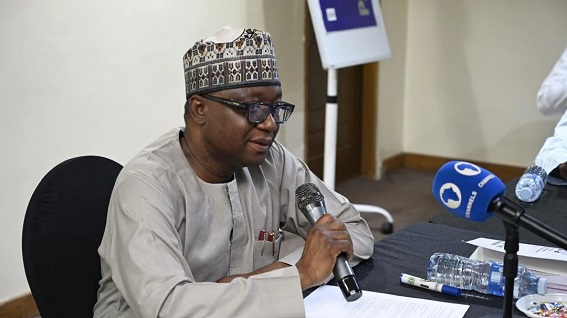
In his keynote address, the National Commissioner and Chief Executive Officer of the Nigeria Data Protection Commission (NDPC), Dr Vincent Olatunji, said Africa’s rapid digital transformation was being accompanied by growing cybersecurity threats.
Olatunji said cyberattacks now occur globally every 39 seconds, with annual cybercrime losses estimated at 10.5 trillion dollars.
According to him, Nigeria records over 4,000 cyberattacks weekly, accounting for about 45 per cent of incidents across Africa.
He added that financial losses linked to cybercrime in Nigeria exceeded ₦12 billion in 2024.
Olatunji said global data generation had reached approximately 402.89 million terabytes daily and was projected to increase from 181 zettabytes to 221 zettabytes.
“Data is now the new oil, driving everything from IoT to cloud services and digital platforms,” he said.
He noted that Nigeria’s digital economy was currently valued at 18.3 billion dollars and could double within the next five years.
During a fireside chat on “Role of Colocation in Enabling Africa’s Data Centre Transformation: Opportunities and Challenges,” stakeholders highlighted energy supply, affordability, and global-standard infrastructure as essential to sector growth.
Chief Executive Officer of Nxtra by Airtel, Yashnath Issur, said Africa’s data centre market must compete at international standards.
“This market is no longer local; it is a global business requiring global quality, scale and expertise,” he said.
Chief Executive Officer of Rack Centre, Lars Johannisson, described energy as the sector’s biggest growth challenge.
“Data centres are about power, cooling and people. Energy is the machine that will power our growth, and without fixing it, scaling will remain constrained,” he said.
Managing Director of Equinix West Africa, Wole Abu, stressed the importance of interconnectivity within digital infrastructure ecosystems.
“A data centre without interconnection is like a ship, but an interconnected one is a port that enables trade and economic growth,” he said.
Representing African Infrastructure Investment Managers, Akinsehinwa Akin-Taylor said capital remained available, but investors were now placing greater emphasis on bankability, quality assets, and strong operational records.
Also speaking, Ifeanyi Otudoh of MTN called for broader digital inclusion and stronger local capacity building.
“We must put digital capability in the hands of African innovators and ensure secondary cities are not left behind,” he said.
Gary Chomse of Vertiv noted that unstable electricity supply continues to influence data centre infrastructure design across Africa.
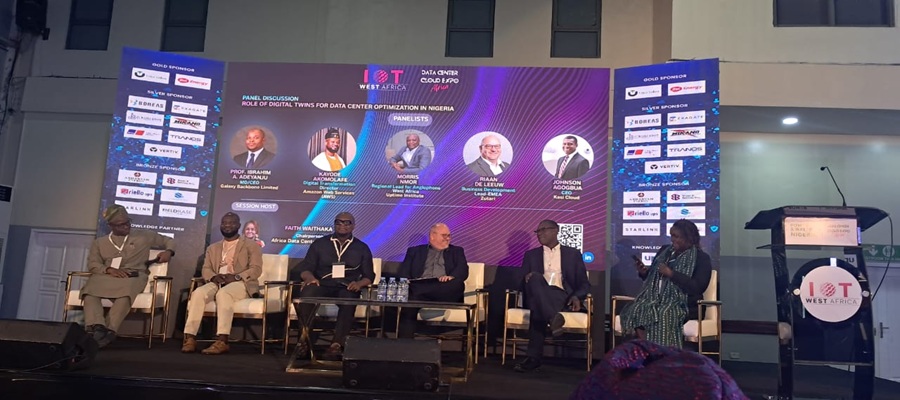
At a panel session on digital twins and data centre optimisation, experts said adopting digital twin technology could improve operational efficiency, predictive maintenance, and risk management.
Chief Executive Officer of Kasi Cloud, Johnson Agogbua, said digital twins could improve power optimisation and help operators detect issues before they escalate.
“The biggest headache in Nigeria is power. Digital twins help you understand how power behaves and visualise problems before they occur,” he said.
Morris Nmor of Uptime Institute said the technology could significantly reduce system failures and operational risks.
Experts also noted that digital twins could improve cooling systems, reduce operational costs, strengthen cybersecurity, and enhance energy efficiency.
They agreed that integrating stronger cybersecurity systems, data infrastructure, and emerging technologies would be essential to building Africa’s digital future.