






























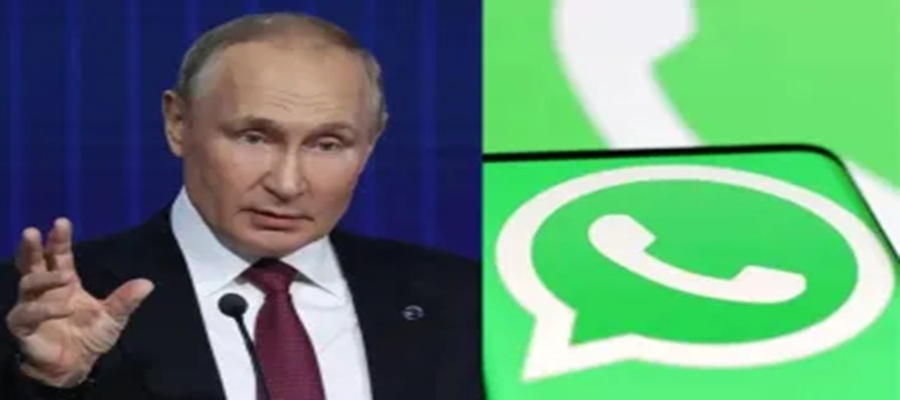
Russia has confirmed the blocking of popular messaging platform WhatsApp, directing its citizens to switch to the state-backed Max messenger, in a move escalating restrictions on foreign digital services.

Russia
The decision, announced by Kremlin spokesperson Dmitry Peskov on Thursday, stems from WhatsApp’s parent company Meta’s alleged failure to comply with Russian laws, though specifics were not disclosed.
This action follows days after authorities intensified curbs on Telegram, another widely used app among millions, including military personnel, officials and state media.
Peskov described Max as “an affordable alternative on the market for citizens, a developing national messenger,” emphasising its role in replacing non-compliant foreign platforms.
WhatsApp, owned by Meta—which also operates the already banned Facebook and Instagram—responded sharply, accusing Moscow of attempting a full block to force users onto a “state-owned surveillance app.”
The company stated: “Trying to isolate over 100 million users from private and secure communication is a backwards step and can only lead to less safety for people in Russia,” vowing continued efforts to reconnect users.
The block is not isolated. Earlier this week, Roskomnadzor, Russia’s communications regulator, announced further restrictions on Telegram for refusing to remove “criminal and terrorist” content, throttling its performance nationwide.
Telegram founder Pavel Durov countered that such pressures would not deter the platform’s commitment to “freedom of speech and privacy.”
This builds on prior measures, including August 2025 restrictions on video and voice calls on both WhatsApp and Telegram to combat criminal activity, which WhatsApp then decried as access limits.
Max, developed by VK and launched in beta in March 2025, positions itself as a WeChat-like super-app with messaging, voice/video calls, group chats up to 1,000 users, cloud storage, end-to-end encryption for private chats, payments via Russia’s Faster Payment System, and integrations for government services and identity verification.
Since September 2025, it has been pre-installed on all new smartphones, tablets and smart TVs sold in Russia, alongside the RuStore app store, as part of a broader “sovereign internet” strategy to monitor communications and replace Western tech amid geopolitical tensions.
Users report partial WhatsApp access via VPNs, but Russian authorities have ramped up countermeasures, restricting 439 VPN providers and enacting a September 2025 law banning ads for bypass tools while deeming VPN use an “aggravating circumstance” in crimes.
Fines for individuals deliberately accessing blocked content via VPNs reach 5,000 rubles (about $64). Critics warn these steps enhance state surveillance, while state media insists Max requires fewer user data permissions than rivals.
The clampdown reflects Moscow’s long-running push for digital control, with over 60 percent of VPN users previously accessing banned social media.
As Russia promotes domestic alternatives, the moves could reshape communication for its 100 million-plus messaging users, raising global concerns over privacy and internet freedom.