


















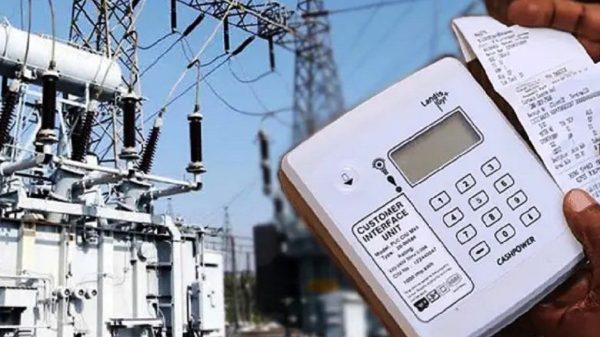


The African Development Bank (AfDB) says Africa accounted for only six per cent of global energy demand, a little more than three per cent of electricity demand.
Mr Kevin Kariuki, Vice President, Power, Energy and Green Growth of AfDB made the assertions at the second webinar series of the Africa Investment Roundtable (AIR) entitled: “Sustainability En route COP26” in Lagos.
Kariuki said the development spelt abject energy poverty in the continent, adding that out of 790 million people without access to electricity globally, 565 million (72 per cent) are in Africa.
While speaking on the Role of AfDB in Africa’s transition to clean energy, he said it has been projected that Africans, without access to electricity, would increase by 30 million in 2020 owing to COVID-19.
“Africa accounts for only six per cent of global energy demand, a little more than three per cent of electricity demand.
“This, I must observe is abject energy poverty, because out of 790 million people without access to electricity globally, 565 million (72 per cent) are in Africa.
“It has been projected that African without access to electricity will increase by 30 million in 2020 owing to COVID-19.
“Also, as a way of showing this abject electricity poverty, at 185kw hours per annum, the continent has the lowerest per capital electricity consumption in the world.
“Also, 900 million people in Africa lacks access to clean cooking which exclude them from economic and health benefits that come with access to clean cooking.
“We cannot be proud of this development, because lack to access clean electricity constraints modern economic activities and hampers improvements in the quality of lives of Africans,” he said.
Also, Ms Nadia Terfous, Managing Director, Economics of Mutuality (EoM), said aim of EoM was to create mutuality of benefits among all stakeholders.
Terfous said that Economics of Mutuality was a way of redefining the responsibility and performance of a company through purpose lens that drives strategic business decisions.
She said: “The Economics of Mutuality is a way of redefining the responsibility and performance of a company through the purpose lens that should drive strategy and all business decisions.
“It is not just about proving you are a good citizen as a company or managing your reputation or being compliant.
“It is fundamentally about the way you do business, operate to generate, not only positive impact, but also improve your financial performance and your resilience.
“Economics of mutuality aims at reconciling society responsibility and financial performance by developing innovative management practices.
“Our purpose is to complete capitalism and move away from the rudimentary financial capitalism that we have today to a much more stakeholder capitalism.
“That is to transform the economy by creating mutuality of benefits among all stakeholders.”
Meanwhile, Mrs Toyin Sanni, Co-Founder and Convener of the Roundtable, expressed satisfaction that the webinar series had garnered the desired effect.
Sanni hoped that the series would create the necessary pact on sustainability and climate change impacts.
(NAN)